
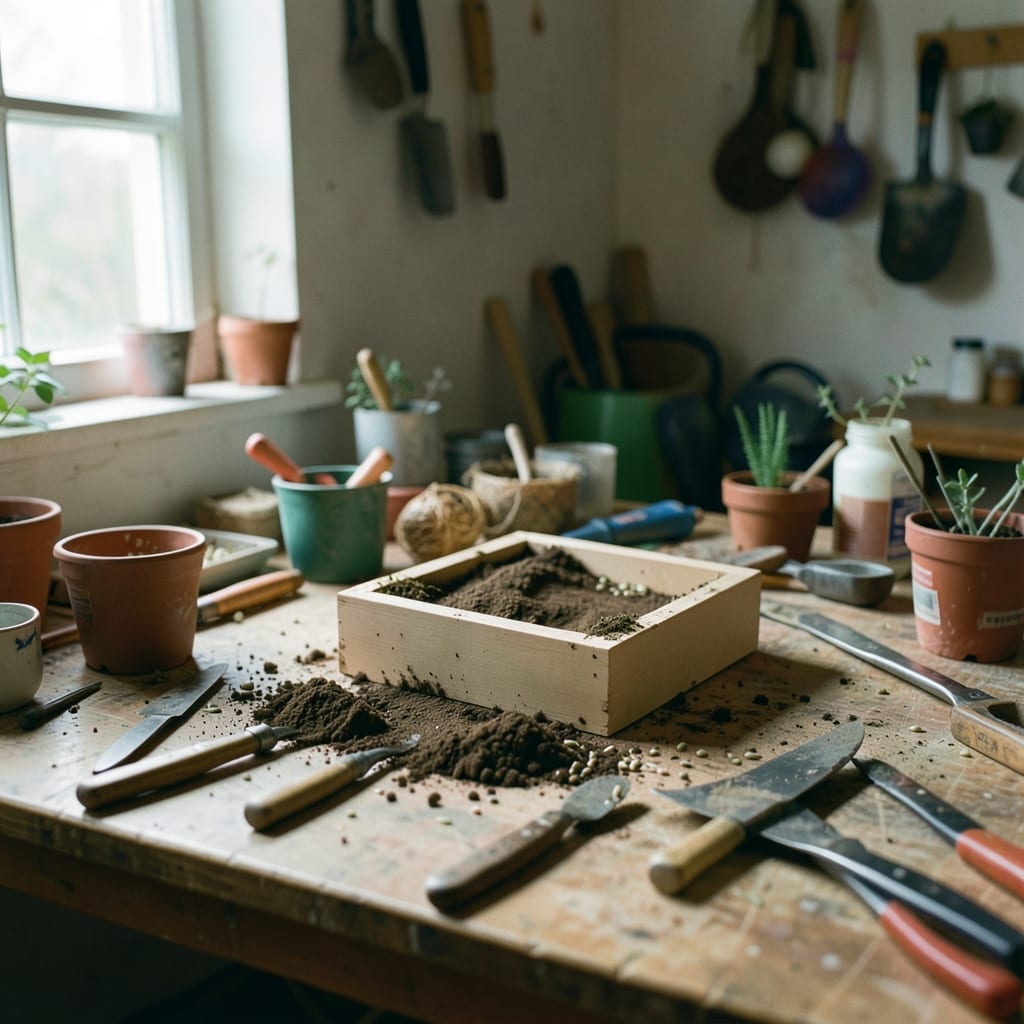
You have read a hundred of these
You’re right to assume we’re just another voice in the noise. Most gardening sites sell you the idea of success—sunny patches, perfect blooms, and soil so rich it looks like it’s been blessed by a fairy.
But we’ve spent years digging our own holes, only to watch seedlings rot in damp soil or perennials wilt under our overzealous watering. The difference? We don’t pretend those failures never happened.
This site exists because we’ve learned the hard way: the best advice comes from the mistakes, not the victories.
That’s why every tip here is stamped with the scars of real trials—whether it’s the third time we finally got the compost heap to heat properly, or the winter when half our roses froze because we ignored the frost charts.
If it sounds like we’re just telling you what *should* work, that’s because we’ve already lived through the ‘what actually does.’
The soil doesn’t lie. Neither do we.
This one’s worse because we’ve actually failed at the things we write about.
Anyone can write that they test things
Testing isn’t a checkbox. It’s a season of trial and error. Take our ‘perfectly drained’ potting mix recipe: we made it 17 times before the ratio of perlite to coconut coir to worm castings finally stopped turning our pots into soggy graves for seedlings.
Each batch cost us $8 in supplies and at least three hours of swearing at the pH meter. The ‘right’ mix? It’s the one where the basil didn’t yellow after a week.
Or the tomato cages: we bought six different styles before realizing the ‘aesthetic’ wrought-iron ones collapsed under the weight of a single beefsteak. The winning design? A repurposed wire clothesline from the hardware store, bent into a square.
It held 20 pounds of fruit without bending—and cost $12 instead of $45. That’s testing: not just trying things, but proving what *doesn’t* work first.
We keep a ‘graveyard’ section in our garden notes—photos of the plants that died, the soil amendments that backfired, and the tools that broke. You’ll never see it here. But every ‘tip’ you read has a corpse buried under it.
We’ve got a notebook full of dead plants, a freezer drawer of failed experiments, and a shed wall where we tape up the ones that *almost* worked.
About the author

Gustavo Novak is the one who still digs up the wrong plant by accident and the one whose hands are always black with soil under the nails.
The rules we work by
- 1Grow what dies here
We only write about plants that thrive in our climate—not the ones that look pretty in catalogs. If the zucchini vines collapsed in August, it’s not ‘your fault.’ It’s a rule. Cost: three years of failed melons and a shed full of broken trellises.
- 2Never trust a photo
Every ‘before’ shot here is taken at the same time of day, with the same light, and after we’ve watered the plant that morning. The ‘after’ shot? That’s what actually grew. Cost: a camera timer, a notepad full of scribbled notes, and the patience to wait for the ‘perfect’ bloom—even if it’s just one flower.
- 3Measure twice, dig once
Our soil tests are dated, the pH strips are stored in a sealed jar, and we never guess the depth of a hole. The first time we buried a rose bush too shallow, the roots baked in the sun. Now we use a ruler. Cost: a $15 soil kit, a lifetime of singed fingers, and the habit of measuring everything twice.
- 4Fail publicly, learn quietly
We post the mistakes first. The reader gets the lesson; we get the lesson of why it happened. Cost: embarrassment, lost subscribers, and the knowledge that the ‘perfect’ garden is a myth. But the ‘almost perfect’ one? That’s where the real work is.
- 5No shortcuts for seasons
We don’t rush spring or force summer. If the soil’s frozen, we wait. If the heatwave’s coming, we mulch like our lives depend on it. Cost: a calendar full of ‘not yet’ and the humility to admit that some things take time. Even us.
The only rule we break is the one about never writing about the failures. But we’ve done it twice. Once with the ‘self-watering’ planter that turned into a mosquito breeding ground. The other time? The time we swore by a ‘miracle’ fertilizer that killed every plant it touched.
Those are the exceptions. And they’re the ones that taught us the most.
This will not be right for everyone
Close this page if you’re looking for quick fixes or Instagram-worthy gardens that require no effort.
We don’t do ‘grow a tomato in two weeks’ or ‘decorate your patio in a day.’ This is for the people who’ve tried those promises and ended up with wilted leaves, empty pots, and a sinking feeling that gardening is just one big scam.
This is also for the stubborn. The ones who’ve killed a cactus by overwatering it, or watched their prized roses get munched by rabbits. The ones who show up with a trowel and a dream, only to leave with a head full of questions.
If you want a garden that looks like a postcard, there are better places. If you want one that *grows*—messy, alive, and full of things that surprise you—stay.
You could just be told what you want to hear
We could tell you that composting is easy, that pests are rare, and that every seed you plant will sprout.
But we’ve seen the compost heap that turned into a stinking swamp, the aphid infestation that wiped out an entire bed, and the packet of seeds that arrived ‘certified organic’ but produced nothing. Those are the truths we’d rather not admit—but they’re the ones that matter.
Worth telling us
- The plants that died in your first year—and what you did *wrong* that time.
- The one tool you bought that actually saved you money (and the one you wish you’d never purchased).
- The soil amendment that worked where the bag promised it would, and the one that didn’t.
The guides are grouped by category: Advice, Aphids, Blooming, Companion Plants, Container Gardens and Diseases.