Flowers
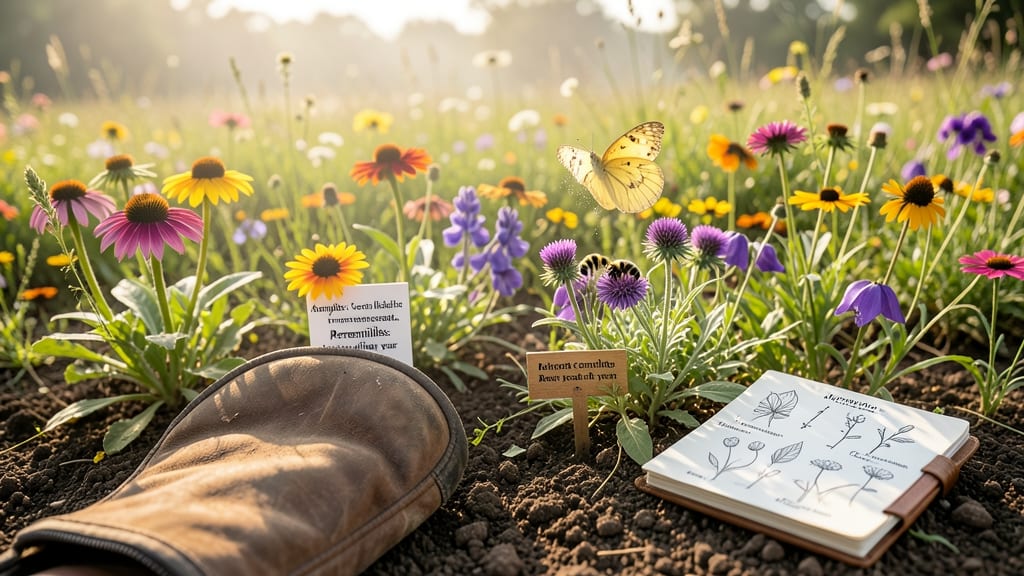
Wildflowers are either annuals or perennials, and knowing the difference can transform your garden from a seasonal splash of color into a year-round blooming paradise 🌼.
Picture this: you plant a wildflower meadow in spring, expecting a burst of color that lasts all summer. But by fall, the blooms are gone—leaving you wondering if you’ll need to replant every year.
The secret lies in their life cycles, and understanding whether your wildflowers are annuals or perennials is the key to planning a low-maintenance, vibrant landscape.
Annual wildflowers, like cosmos or zinnias, complete their entire life cycle in one season, blooming fiercely but disappearing by frost. Perennials, such as black-eyed Susans or coneflowers, return year after year, building stronger roots and offering more reliable color with minimal effort.
Mixing both types creates a garden that stays lively from spring to fall.
In this guide, I’ll break down how to spot the differences, share my favorite perennial wildflowers for long-term beauty, and reveal the best planting strategies to keep your garden in full bloom—no matter the season.
How to identify annual vs. perennial wildflowers by life cycle
Wildflowers can be tricky to classify at first glance, but their life cycle reveals everything. Annual wildflowers complete their entire growth cycle—from seed to flower to seed—in just one growing season, while perennials return year after year, often growing stronger with age.
This key difference affects how you plant, maintain, and enjoy them in your garden.
One of the easiest ways to tell them apart is by looking at their foliage and stems. Annuals often have soft, delicate stems and foliage that dies back completely after flowering, while perennials typically develop woody stems or thick basal rosettes that persist through winter.
Pay attention to whether the plant regrows from the same base each spring—that’s a sure sign of a perennial.
Another telltale clue is their seed production. Annuals produce seeds quickly after blooming, often forming dry seed heads that release thousands of tiny seeds. Perennials, on the other hand, may produce seeds but focus more on storing energy in their roots for next year’s growth.
If you see a plant dropping seeds but its foliage stays green, it’s likely a perennial.
Here’s a quick comparison to help you spot the differences at a glance:
| Feature | Annual Wildflowers | Perennial Wildflowers |
|---|---|---|
| Life Cycle | One growing season | Multiple years |
| Root System | Shallow, fibrous | Deep, woody, or tuberous |
| Foliage After Blooming | Dies back completely | Persists or regrows |
| Seed Production | Abundant, quick release | Moderate, stored for next year |
| Examples | Cosmos, Zinnias, Sunflowers | Coneflowers, Black-Eyed Susans, Bee Balm |
| Garden Use | Fast color, seasonal displays | Long-term structure, pollinator support |
If you’re still unsure, observe the plant over two growing seasons. Annuals will disappear completely after their first bloom, while perennials will return with vigor. For example, cosmos (annual) will vanish by winter, but purple coneflower (perennial) will send up new shoots from its roots every spring.
Another trick is to check the seed packet or plant label. Many wildflower seed mixes clearly state whether they’re annuals or perennials. If it’s not labeled, look for clues like biennial (two-year cycle) or short-lived perennial (3-5 years).
For instance, foxglove is a biennial, blooming in its second year before dying.
Understanding these differences helps you plan your garden for continuous color. Annuals are perfect for filling gaps or creating instant blooms, while perennials provide a low-maintenance backbone that returns year after year.
For example, plant annual sunflowers alongside perennial salvia to enjoy sunflowers in summer and salvia blooms the following spring.
Don’t forget to consider your climate zone. Some plants classified as perennials in warm climates (like dahlias) may act as annuals in colder regions. Always check the USDA hardiness zone for your area to avoid surprises.
With these tips, you’ll be able to identify wildflowers by their life cycle and design a garden that blooms beautifully from spring to fall.
🌼
Top 10 wildflowers that are perennials for year-round beauty
If you dream of a garden bursting with color that requires minimal effort, perennial wildflowers are your best allies. Unlike annuals that fade after one season, these hardy plants return year after year, reducing replanting work while attracting pollinators and adding natural beauty.
I’ve handpicked the top 10 perennial wildflowers that thrive in diverse climates and bring seasonal interest from spring to fall.
Perennial wildflowers like black-eyed Susan and purple coneflower not only save time but also support local ecosystems. Many of these plants are drought-tolerant once established, making them perfect for low-maintenance landscapes.
Below, I’ve outlined their key traits—including bloom times, sunlight needs, and USDA hardiness zones—so you can choose the best matches for your garden.
One of my favorite perennial wildflowers is the purple coneflower, which not only blooms from mid-summer to fall but also attracts butterflies and bees. Its deep roots make it incredibly drought-resistant, perfect for dry climates.
Plant it in full sun for the most vibrant blooms, and it will thrive for years with minimal care.
For early-season color, bee balm is a standout choice. Its pink, purple, or red flowers bloom in summer and are a magnet for hummingbirds. This hardy perennial grows well in USDA zones 4-9 and tolerates partial shade, making it versatile for different garden spots.
Just be sure to divide clumps every few years to keep it healthy.
If you’re looking for a low-maintenance ground cover, yarrow is an excellent option. It spreads easily, forms dense mats, and produces flat-topped clusters of tiny flowers in shades of white, yellow, or pink. Y