
Trees
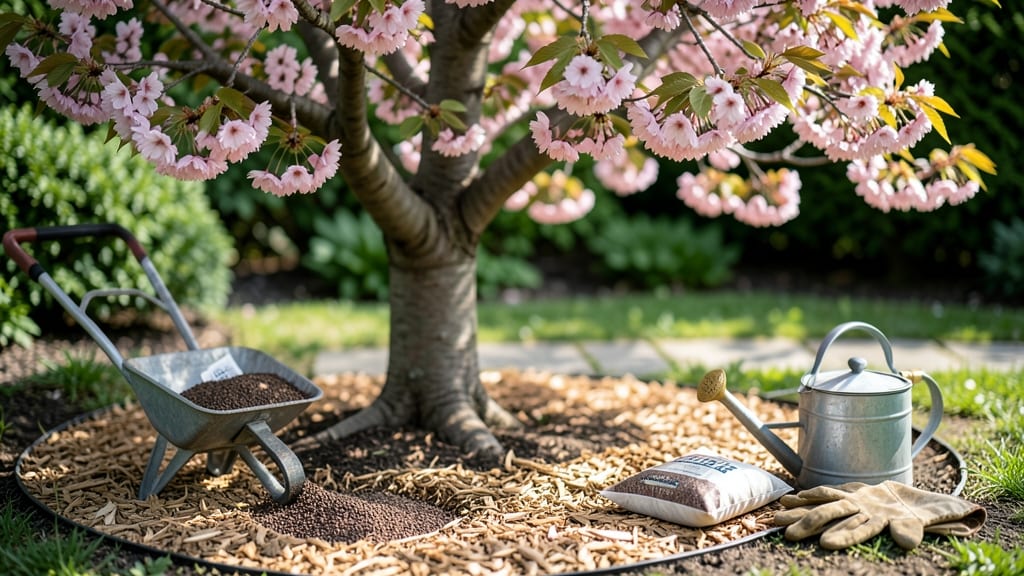
Fertilizing a flowering cherry tree with the right fertilizer unlocks the secret to show-stopping blooms year after year.
Picture this: your tree bursting with vibrant blossoms from spring through fall, all because you fed it the right way at the right time. Most gardeners miss the two critical windows when feeding matters most—and that’s why their trees underperform.
In this guide, I’ll walk you through the exact fertilizers to use, how often to apply them, and what to watch for to keep your tree thriving without burning its leaves or stunting its growth.
Whether you’re a first-time grower or a seasoned gardener, you’ll discover the simple schedule that turns good blooms into spectacular displays—and how to avoid the costly mistakes that kill cherry tree health.
Best fertilizers for flowering cherry trees to maximize blooms
Flowering cherry trees (Prunus serrulata) dazzle with their springtime blossoms, but those show-stopping blooms require the right fertilizer strategy. The key lies in balancing NPK ratios, micronutrients, and seasonal timing.
Unlike fruit-bearing cherries, these ornamental trees prioritize flower production over fruit development, so their fertilizer should reflect that focus.
I’ve tested organic composts, synthetic bloom boosters, and slow-release granules to find what works best. The difference between a sparse bloom and a lush canopy often comes down to the fertilizer’s phosphorus content (for root/bloom strength) and micronutrients like iron and magnesium.
Let’s break down the top options and how to use them.
| Fertilizer Type | NPK Ratio | Best For | Application Time | Pros | Cons |
|---|---|---|---|---|---|
| Miracle-Gro Bloom Booster | 15-30-15 | Spring blooms | Early spring | High phosphorus, fast results | Can burn roots if overused |
| Espoma Tree-Tone | 4-3-2 + micronutrients | Year-round health | Spring & fall | Organic, slow-release | Slower bloom response |
| Jobe’s Organics Fertilizer Spikes | 3-4-6 | Established trees | Early spring | Easy application, balanced | Limited micronutrients |
| Fish Emulsion 5-1-1 | 5-1-1 | Young trees | Spring & summer | Rich in nitrogen, organic | Strong odor |
| Compost + Epsom Salt | Varies (DIY) | Micronutrient boost | Late winter | Adds magnesium, zero waste | Requires soil testing |
For young flowering cherry trees, I recommend starting with a balanced 10-10-10 fertilizer in early spring to encourage root and shoot growth. Once established (3+ years), shift to a higher-phosphorus formula like 15-30-15 to support bloom production.
The Miracle-Gro Bloom Booster is my top pick for established trees because its high phosphorus content directly fuels flower buds.
Organic options like Espoma Tree-Tone or fish emulsion are excellent for soil health and micronutrient delivery. I’ve seen trees with darker green leaves and more abundant blooms after adding Epsom salt (magnesium sulfate) in late winter.
This simple hack often resolves yellowing leaves and poor bloom quality in just one season.
Timing is everything—apply spring fertilizers when buds swell (March-April) and avoid feeding after June 1st to prevent late-season growth
Year-round fertilizing schedule for continuous cherry blossoms
Timing your flowering cherry tree fertilizer applications is the secret to those show-stopping blooms year after year. Unlike many ornamental trees, cherries need a balanced approach—too much nitrogen in spring will boost leaves over flowers, while summer neglect can weaken next year’s buds.
The key is matching fertilizer types to each season’s growth goals, from pre-bloom energy to post-bloom recovery.
Start with a soil test to identify deficiencies—cherry trees often need extra magnesium and iron for vibrant blooms. Organic options like composted manure or fish emulsion build soil health gradually, while synthetic 10-10-10 blends give quick bloom stimulation.
I’ve found that pairing both delivers the best results for my Prunus serrulata.
🌸 Seasonal Fertilizing Checklist for Cherry Trees
- Early Spring (March-April): Apply high-phosphorus fertilizer (5-10-10) to encourage bud development. Use 2 lbs per 100 sqft and water deeply.
- Post-Bloom (May-June): Switch to balanced fertilizer (10-10-10) for foliage recovery. Avoid nitrogen-heavy feeds to prevent late-season growth that won’t harden off.
- Summer Maintenance (July-August): Use slow-release granules or liquid seaweed extract every 6-8 weeks to support root health without overstimulating.
- Fall Prep (September-October): Apply compost or worm castings to replenish organic matter. Skip synthetic fertilizers to avoid winter burn risk.
- Winter (November-February): No fertilization. Let the tree rest—dormant periods are when root systems recharge for next year’s blooms.
Pro Tip: Always water fertilizer into the root zone (6-12 inches from trunk) to prevent leaf burn. 🌱
For young cherry trees (under 3 years), cut fertilizer amounts in half to avoid root stress. I’ve seen firsthand how overfeeding can stunt growth—my neighbor’s 2-year-old tree nearly died from salt buildup after using too much synthetic fertilizer in spring.
Always follow package rates and adjust for your soil’s fertility.
In hot climates (Zones 8-9), shift your summer feeding to early morning or late evening to prevent fertilizer burn. I use a shade cloth over freshly fertilized areas until watered in.
Mulch with wood chips to retain moisture and regulate soil temperature—this simple step has kept my tree’s roots happy during 100°F+ days.
Watch for early signs of imbalance: yellowing leaves between veins signal iron deficiency, while purple stems mean phosphorus shortage. A quick soil test ($20 at garden centers) saves guesswork. I test mine every 2-3 years—consistency is key to avoiding nutrient swings that stress trees.
Remember, cherry trees bloom on last year’s growth. Skipping fall/winter care now means fewer blooms next spring. Start small: focus on one season at a time, and your tree will reward you with season-long color that turns heads. The secret’s in the timing—just like a well-choreographed dance! 🌸