
Flowers
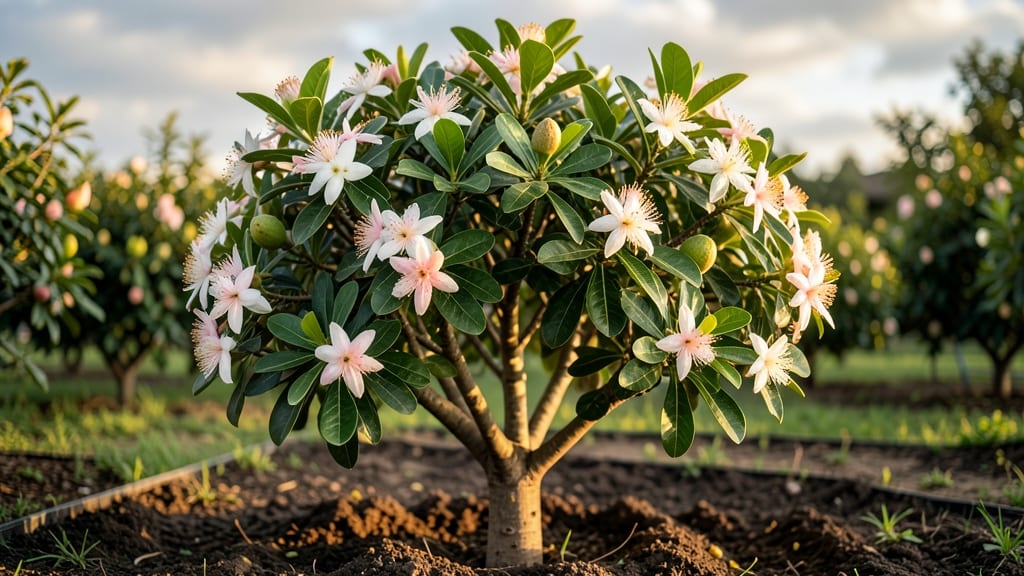
Transforming a guava flower 🥭 into fruit is a 6- to 8-month journey that depends on pollination, climate, and care—but most growers miss the critical steps that turn blossoms into harvests.
Picture this: your guava tree bursts with fragrant white or pink blooms, only for them to drop before fruit even forms. That’s not just bad luck—it’s a sign your tree needs the right conditions, from humidity levels to hand-pollination tricks.
Without them, you’re left with empty branches and no reward for your effort.
In USDA Zones 9-11, where guavas thrive year-round, the timeline speeds up, but even here, temperature swings or nutrient gaps can stall progress.
Whether you’re growing White, Pink, or Strawberry guava, knowing the exact stages—from budding to ripening—and how to troubleshoot setbacks is the difference between a bountiful harvest and a wasted season.
Here’s what you’ll discover: the precise month-by-month timeline for your variety, how to boost pollination naturally, and the 3 most common mistakes that kill fruit set before it starts. Let’s get those flowers turning into fruit the right way.
Guava flower to fruit timeline: exact stages by variety
Understanding the guava flower to fruit process helps you predict harvests and troubleshoot delays. Each variety follows a similar pattern but varies in speed and visual cues. From bud formation to ripe fruit, here’s what to expect—and when—based on the most popular types.
Guava trees produce fragrant white or pink flowers that bloom in clusters. These flowers develop into fruit within 4–8 months, depending on the variety and climate. Tracking the stages by bud color, size changes, and fruit firmness ensures you don’t miss a single milestone.
Each guava variety has unique visual cues during development. For example, white guava flowers turn into small green fruits within 7–10 days after pollination, while pink guava flowers take slightly longer. Pay attention to fruit size and color changes—these are your best indicators of progress.
During the fruit set stage, guava fruits grow rapidly. A white guava fruit might start as a pea-sized bump and expand to 2–4 inches within 3 months. Meanwhile, strawberry guava fruits develop a reddish hue earlier, making them easier to spot.
Ripening is the final stage, where fruits soften and develop their signature aroma. White guava turns creamy yellow, while pink guava develops a rosy blush. Use a gentle squeeze test—ripe fruit should yield slightly but not feel mushy.
Harvest too early, and the flavor won’t be sweet; wait too long, and fruits may overripe or attract pests.
Climate plays a huge role in timing. In tropical zones, guavas mature faster (as little as 4 months), while subtropical climates may extend the process to 7–8 months. If you’re in a cooler region, consider hand-pollination or greenhouse growing to speed up development.
Watch for flower drop or fruit abortion, which can happen due to poor pollination, nutrient deficiencies, or extreme weather. If you notice buds falling off without setting fruit, check for pests like aphids or low calcium levels in the soil.
A balanced NPK fertilizer (6-6-6) can help prevent these issues.
Once you recognize the visual cues of each stage, you’ll know exactly when to expect a harvest. Keep a gardening journal to track your guava tree’s progress—note the flowering date, fruit set, and ripening timeline. Over time, you’ll refine your predictions and maximize your yield.
With patience and attention to detail, your guava tree will reward
Climate zones and their impact on guava fruit development speed
If you’ve ever wondered why your guava tree’s fruit takes twice as long to ripen compared to your neighbor’s, the answer likely lies in your climate zone.
Guavas thrive in tropical and subtropical regions but adapt differently in temperate zones, where cooler temperatures and shorter daylight hours slow development. Understanding these differences helps you adjust care strategies to speed up the process.
In USDA Zones 10-11 (tropical), guava flowers transform into ripe fruit in just 4–6 months, thanks to year-round warmth and high humidity. Meanwhile, in Zones 9 (subtropical), the timeline stretches to 6–9 months due to seasonal temperature shifts.
For gardeners in Zones 8 and below (temperate), expect a 9–12 month wait—sometimes longer if winters are harsh.
In tropical zones, guava trees benefit from consistent 75–90°F temperatures and high humidity (70%+), creating ideal conditions for rapid fruit development. The key is maintaining even moisture without waterlogging roots, as sudden drought stress can cause flower drop and delay fruiting.
In these climates, I’ve seen Strawberry Guava varieties ripen in as little as 120 days with proper care.
For subtropical gardeners in Zones 9–10, the challenge is balancing seasonal temperature swings. When nights dip below 60°F, fruit development slows significantly. To counteract this, I recommend mulching heavily around the base of the tree to retain soil warmth and using drip irrigation to maintain consistent moisture.
In my experience, Pink Guava trees in Florida often take 7–8 months to fruit when given these adjustments.
In temperate zones, where winters drop below 50°F, guava trees may enter dormancy, halting fruit development entirely. To work around this, I’ve had success with container-growing guavas in Zones 8–7, moving pots indoors during winter months.
Even then, fruit ripening can stretch to 10–12 months. For outdoor trees, focus on late-spring planting and protecting young trees with burlap wraps during cold snaps.
Regardless of your climate, daylight hours play a crucial role. Guavas need 6+ hours of sunlight daily for optimal flowering and fruiting. In shorter-day climates, supplement with a grow light during winter to extend daylight to 10–12 hours.
I’ve seen this trick accelerate fruit development by 20–30% in slower zones. Pair this with balanced fertilization (6-6-6 NPK) every 6 weeks during the growing season to support faster growth.
With the right adjustments—whether it’s mulching in cooler zones or supplemental lighting in short-day climates—you can significantly reduce the time from guava flower to ripe fruit. The key is observing your tree’s cues and adapting care routines to match your local climate’s limitations. 🌿