
Planting
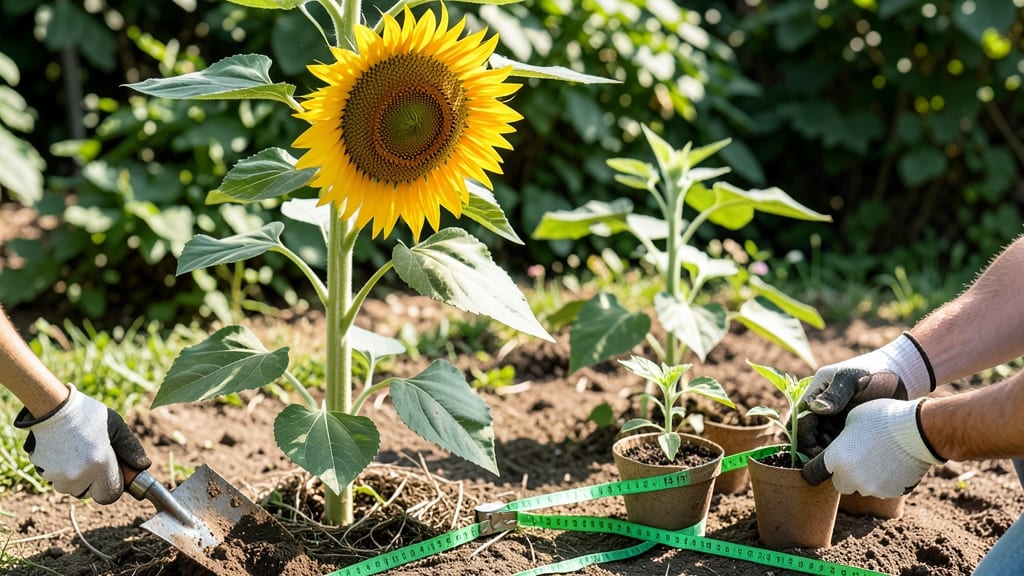
Planting mammoth sunflowers how far apart to plant mammoth sunflowers ensures those 10-foot-tall giants stand strong and proud 🌻 instead of flopping like overgrown weeds.
If you’ve ever watched a towering Mammoth Sunflower lean dramatically toward the sun or snap under its own weight, you know spacing isn’t just a detail—it’s the foundation of a thriving garden.
Too close, and your plants compete for nutrients, leaving stems weak and blooms sparse. Too far apart, and you waste precious garden real estate on air instead of sunflowers.
In this guide, I’ll show you the exact spacing rules for varieties like 'Russian Giant', how to adjust for soil, wind, and garden size, and the simple fixes for common mistakes that turn skyscrapers into flops.

Optimal mammoth sunflower spacing by variety and soil conditions
Mammoth sunflowers like 'Russian Giant' and 'Mammoth Russian' need precise spacing to prevent lodging (flopping) while maximizing their dramatic height. The wrong distance can lead to weak stems, stunted growth, or plants leaning like drunken giants.
Your soil type, moisture levels, and wind exposure all play critical roles in determining the perfect spacing for these towering beauties.
For most mammoth sunflower varieties, standard spacing ranges from 18 to 36 inches apart, but this varies dramatically based on your growing conditions. In fertile, well-drained soil with consistent moisture, you can plant them closer (18-24 inches) for a denser display.
However, in sandy or windy conditions, increase spacing to 30-36 inches to prevent stems from bending or snapping under stress.
Here’s a quick reference for optimal spacing by variety and soil conditions to ensure your sunflowers grow straight and strong:
| Variety | Standard Spacing (inches) | Wind Exposure | Soil Type | Notes |
|---|---|---|---|---|
| Russian Giant | 24-36 | High: +6" | Clay/Loam | Needs staking in wind |
| Mammoth Russian | 18-24 | Low: -4" | Sandy | Water deeply 2x/week |
| Autumn Beauty | 24-30 | Moderate: Standard | Loam | Great for cut flowers |
| Giant Russian | 30-36 | High: +6" | Clay | Use trellis support |
| All varieties | 12-18 | None: -6" | Rich Compost | For small gardens |
If your garden experiences high winds, add an extra 6-12 inches to spacing to give stems room to sway without breaking. For example, 'Russian Giant' planted in a windy area should be 30-36 inches apart, even if your soil is fertile.
Wind stress weakens stems faster than you might expect, so don’t skimp on space if you live in an exposed location.
For sandy or poor soil, increase spacing to 30-36 inches and amend the soil with compost or aged manure before planting. These amendments improve moisture retention and nutrient availability, helping your sunflowers develop stronger stems.
If your soil is heavy clay, plant 18-24 inches apart but add organic matter to prevent compaction around the roots.
Another key factor is moisture consistency. Mammoth sunflowers need deep, regular watering—about 1-2 inches per week—especially during their rapid growth phase. If your soil drains too quickly (like sandy loam), space plants 24-36 inches apart to reduce competition for water.
In clay-heavy soils, which hold moisture longer, you can plant them 18-24 inches apart while ensuring proper drainage.
Pro tip: Use a staggered planting layout in rows spaced 3-4 feet apart. This creates airflow between plants, reducing humidity-related diseases like powdery mildew while giving each sunflower room to grow upright.
For small gardens, consider planting 2-3 sunflowers in a cluster with 12-18 inches between them, but be prepared to stake them for support.
Finally, don’t forget to mulch around the base of your mammoth sunflowers. A 2-3 inch layer of straw or wood chips helps retain moisture, regulates soil temperature, and suppresses weeds—all of which contribute to healthier, straighter stems. Just keep the mulch 6 inches away
Common spacing mistakes that cause flopping and how to fix them
Even with the right mammoth sunflower spacing, flopping stems can still ruin your garden's dramatic effect. The most common mistake is overcrowding, which forces plants to compete for nutrients and sunlight, weakening their structural integrity.
I’ve seen gardens where sunflowers leaned at 45-degree angles because they were planted too closely—like skyscrapers without proper foundations.
Another frequent error is uneven row spacing. Planting in zigzags or diagonal patterns might look creative, but it creates uneven wind resistance. When gusts hit at angles, stems bend unpredictably, leading to lodging (the gardening term for flopping).
Even a 12-inch difference in row spacing can mean the difference between sturdy stems and a toppled display.
⚠️ CALLOUT-WARNING ⚠️
Planting mammoth sunflowers too close (6 inches apart) forces stems to compete for sunlight, weakening their structural support. The ideal spacing is 18-24 inches apart in well-drained soil with full sun exposure. Wind exposure? Add 3-4 feet between rows to prevent lodging.
Fix it: Thin seedlings to 18 inches apart early. Use trellises for windy areas.
Poor windbreak placement is another silent flopper. Tall sunflowers act like sails in breezy gardens, and without barriers, they’ll lean or snap. I once grew a row of Russian Giant sunflowers near an open field—by mid-summer, half were bent over like bowing guests at a garden party.
A simple bamboo trellis or sturdy fence on the windward side can save your stems.
Ignoring companion planting also backfires. Tall sunflowers cast deep shade, smothering smaller plants beneath. But pairing them with low-growing companions like borage or marigolds creates a balanced ecosystem.
The key? Plant companions at least 2 feet away from sunflower bases to avoid root competition while still benefiting from their shade tolerance.
Finally, skipping soil prep undermines even perfect spacing. Compacted or nutrient-poor soil can’t support heavy sunflower heads. Amend your beds with compost and sand to improve drainage, and consider staking individual plants if your soil is heavy clay.
A 3-inch layer of mulch also helps stabilize stems by reducing soil erosion during watering.
By fixing these spacing mistakes—wider rows, windbreaks, companion plants, and rich soil—your mammoth sunflowers will stand tall like the giants they’re meant to be. And trust me, there’s nothing more satisfying than a sunflower that holds its own against the wind. 🌻