
Planting
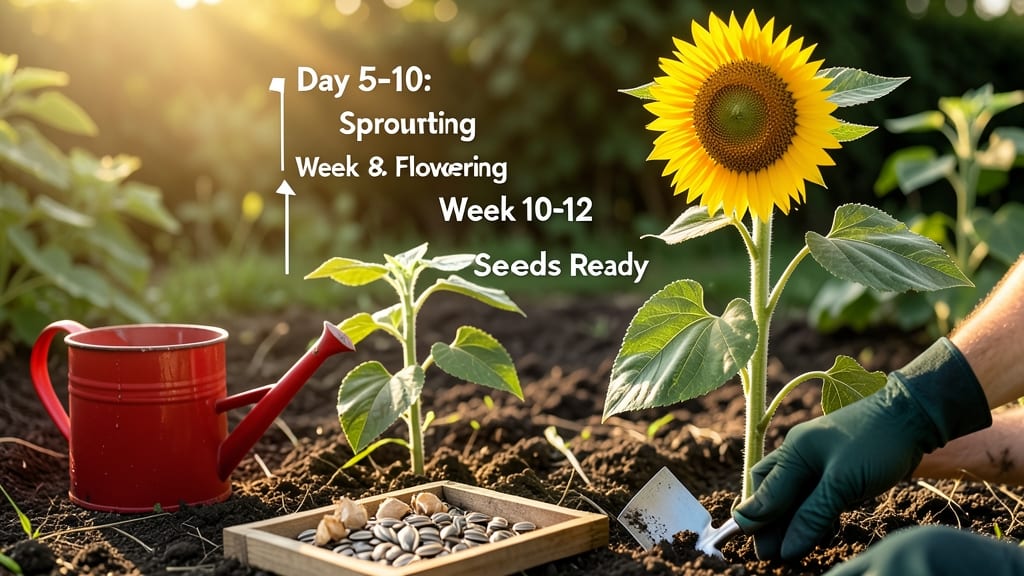
A sunflower seed takes 50 to 120 days to grow from sprout to full bloom, depending on the variety and growing conditions — and the first 7 to 14 days are the most critical for success.
Picture this: you’ve just tucked those tiny seeds into warm, loose soil, dreaming of towering 🌻 stalks by summer. But if you’re like most gardeners, you’ve probably checked the soil twice a day in those early weeks, wondering if anything’s happening below the surface.
The truth is, sunflowers are fast growers once they get going, but germination speed hinges on soil temperature, sunlight, and even the seed’s age.
In ideal conditions—warm soil (70°F or higher) and full sun—those first green shoots can appear in just 3 to 10 days, while cooler or shadier spots might stretch that to 2 weeks.
Below, I’ll break down the exact timeline by stage—from the first crack of the seed coat to the moment your sunflower reaches its full height—plus the 5 factors that can cut or double your growing time. Ready to plan your garden like a pro?

Sunflower growth timeline: exact days from seed to flower
Sunflowers are one of the fastest-growing plants in the garden, but their journey from seed to towering bloom follows a precise timeline. Understanding each stage helps you anticipate milestones like first sprouts, leaf development, and flowering.
With ideal conditions, most sunflower varieties reach maturity in 80–120 days, though dwarf types may bloom in as few as 50 days. Let’s break down the exact days you can expect at each growth phase.
From the moment you drop a sunflower seed into warm soil, germination typically occurs in 7–14 days, depending on soil temperature. Cooler soils (50°F) slow sprouting, while warmer soils (70–85°F) speed it up.
Once sprouted, seedlings emerge with two cotyledon leaves within 3–5 days, followed by the first true leaves in another 7–10 days. This early stage is critical—seedlings need consistent moisture but can’t handle soggy soil.
🌱
The vegetative stage (days 21–50) is where sunflowers show their true growth potential. During this phase, stems elongate rapidly, and leaves expand to maximize photosynthesis. This is when you’ll notice 6–12 inches of height gain per week under ideal conditions.
Adequate sunlight (8+ hours daily) and nitrogen-rich fertilizer fuel this explosive growth. If you notice yellowing leaves, it’s often a sign of overwatering or nutrient deficiency.
Around day 50, you’ll start seeing bud formation, marked by a noticeable swelling at the stem’s top. This bud will grow quickly, and within 10–14 days, it will burst into a vibrant bloom.
The flowering stage (days 70–120) is the most visually rewarding phase, but it also requires adjustments. Reduce watering slightly to prevent bud rot and remove spent flowers to encourage secondary blooms on some varieties like ‘Autumn Beauty.’
For dwarf varieties (e.g., ‘Teddy Bear’), the timeline shortens significantly—expect flowers as early as 50 days. In contrast, giant varieties (e.g., ‘Russian Giant’) may take 120+ days to mature. The key difference?
Dwarf types prioritize early flowering over height, while giants focus on stem elongation before blooming. Both benefit from full sun exposure and well-draining soil, but giants need extra staking to prevent toppling.
One common misconception is that sunflowers grow faster in container gardens than in-ground. While containers offer earlier planting in cooler climates, they can slow growth if roots become root-bound. To maximize speed, use large containers (12"+ diameter) with organic-rich soil and deep watering to mimic in-ground conditions.
In-ground sunflowers, on the other hand, can grow 3x faster when planted in loose, compost-amended soil with consistent moisture.
Temperature plays a surprising role in growth speed. Below 55°F, sunflower seeds may fail to germinate, while temperatures above 90°F can cause bolting (premature flowering). The sweet spot? 65–75°F for steady, healthy growth.
If you’re in a short-season climate, opt for early-maturing varieties like ‘ProCut’ (65 days) or ‘Moulin Rouge’ (70 days) to ensure blooms before frost. For longer
5 Critical factors that change sunflower growth speed
Sunflowers are fast growers, but their speed depends on five key factors you can control. From soil temperature to container size, each plays a role in how quickly your seeds sprout, grow leaves, and bloom.
Let’s break down what makes the biggest difference—and how to optimize each for faster, healthier sunflowers.
First, soil temperature is non-negotiable. Sunflower seeds need soil that’s at least 60°F (15°C) to germinate. If your soil is cooler, growth slows dramatically. In my Zone 6 garden, I always wait until late May to plant, when soil temps reliably hit this threshold.
A soil thermometer is your best friend here—skip it, and you’ll waste weeks waiting for sprouts.
Next up is sunlight exposure. Sunflowers crave full sun (6-8+ hours daily), but even partial shade can stretch their growth timeline. I’ve seen sunflowers in container gardens near south-facing windows take 20% longer to bloom compared to those planted in open beds.
If you’re growing in pots, rotate them daily to ensure even light exposure.
Watering frequency is another game-changer. Sunflowers need deep, infrequent watering—think 1-2 inches per week—not daily shallow drinks. I’ve seen seedlings wilt within hours if left in soggy soil, while those with consistent moisture grow 2 inches taller per week.
Use a moisture meter to avoid guesswork, especially in container gardens where soil dries faster.
Don’t overlook seed quality. Fresh seeds from reputable suppliers germinate 70-80% faster than old or treated seeds. Last year, I planted heirloom sunflower seeds stored in my pantry for 2 years—and they took 10 days longer to sprout.
If you’re saving seeds, store them in a cool, dark place with a silica gel packet to extend viability.
Finally, container size matters more than you’d think. Sunflowers in 5-gallon pots grow 2 weeks faster than those in 3-gallon containers because their roots have room to spread.
For giant varieties like ‘Russian Giant,’ opt for 10+ gallons or plant directly in the ground. And always use well-draining soil—sunflowers hate wet feet!
By tweaking these five factors, you can shave 2-4 weeks off your sunflower’s growth timeline. Start with soil temperature and sunlight, then fine-tune watering and container size. Before you know it, you’ll be harvesting seeds or cutting blooms for arrangements—all in record time! 🌻