
Flowers
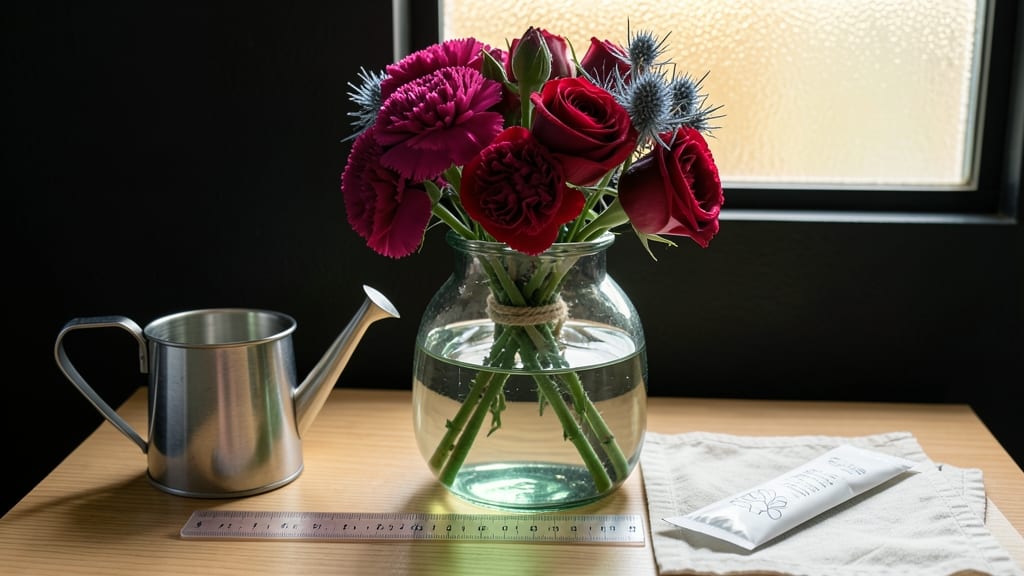
Mastering how much water in a vase for flowers is the first step to keeping your bouquets vibrant for days—too little causes wilting, while too much risks rot. 🌸
Struggling to keep your bouquets fresh longer? The secret isn’t just about the water—it’s about how much you use and when. Get the exact vase water ratio to extend bloom life by days, not hours.
Most vases need about 1-2 cups of water for every 6-12 inches of stem height, but roses and delphiniums demand more. I’ll break down the science-backed ratios by flower type, plus how to adjust for vase size and seasonal changes.
Ready to cut down on wilting and double your bouquet’s lifespan? You’ll also learn when to refresh the water (never on day one!), how to clean your vase like a pro, and which household tricks—like a splash of sugar—keep blooms thriving for up to two weeks.
The perfect water-to-flower ratio for different bloom types
Not all flowers drink the same! The water-to-flower ratio depends on bloom type, stem thickness, and even the number of stems in your vase. Delicate roses and orchids need precise hydration, while hardy sunflowers or alstroemeria can handle more.
Let’s break down the science-backed measurements to keep your bouquets thriving for 7-14 days or longer.
Start with a basic rule: 1 cup of water per 1-2 stems for most flowers. But this changes when you mix delicate blooms with thick-stemmed varieties.
For example, a single peony stem needs 1.5 cups, while a bunch of baby’s breath (20+ stems) might require 3-4 cups. The key is balancing hydration with stem capacity to avoid clogging or wilting.
Here’s the game-changer: stem thickness matters. Thick stems (like sunflowers or gladiolas) can absorb more water, so you can add 1 extra cup per vase without risk. Thin stems (like tulips or dahlias) need shallow water levels—just enough to cover the bottom inch—to prevent bacterial growth.
Always trim stems at a 45-degree angle before placing them in the vase to maximize water uptake.
🌸
For mixed bouquets, calculate water needs by grouping stems by thickness.
For example, if you have 3 roses (thin stems) + 2 sunflowers (thick stems), use: - 1.5 cups for roses (3 stems × 0.5 cups) - 3 cups for sunflowers (2 stems × 1.5 cups) - Total: 4.5 cups in a large vase (12"+) to accommodate both.
Pro tip: Adjust for vase size. A small vase (6-8") holds ~2 cups max, while a tall cylinder (14"+) can safely hold 6-8 cups. Overfilling can cause spills or bacterial buildup, so leave 1-2 inches of space at the top.
If your vase is narrow (like a mason jar), use a hydration pack or aluminum foil to create a wider base for thin stems.
Season also plays a role! In summer heat, increase water by 20% to compensate for evaporation. In winter, reduce by 10% since flowers absorb less. Always use room-temperature water—cold water can shock stems, while warm water (not hot) helps open buds faster.
Add 1 tsp of sugar + 1 drop of bleach (or a commercial flower food) to the water to slow bacterial growth and extend vase life.
💧
Test your ratio by monitoring stems daily. If leaves turn yellow or stems feel mushy, you’re overwatering. If petals droop by midday, add 0.5 cups more and trim stems again. The goal? A balanced vase** where every stem—whether a delicate peony or a sturdy sunflower—gets just the right
Step-by-step watering technique to maximize flower longevity
Cut flowers deserve the same care as your prized garden plants—especially when it comes to water. How much water in vase for flowers isn’t just about filling it halfway; it’s about creating the perfect hydration balance.
I’ve learned the hard way that overfilling or underfilling can shorten bloom life by half. The key is 1-2 cups of fresh water per standard vase, adjusted for stem thickness and flower type.
Timing matters just as much as quantity. Never change water on day 1—this shocks the stems. Instead, wait 24-48 hours to let them adjust. Dirty vases harbor bacteria that clogs stems faster than you can say "wilted petals."
A quick rinse with vinegar or bleach solution (1 part to 10 parts water) keeps your vase pristine and your flowers thriving.
- Standard vase (10-12"): 1 cup (240ml) for 5-7 stems
- Large vase (14"+): 2 cups (480ml) for 10+ stems
- Delicate blooms (roses, tulips): Add 1 tsp sugar + 2 drops bleach per cup
- Use sharp scissors (never dull knives)
- Remove lower leaves submerged in water
- Re-cut stems every 2 days for fresh uptake
- Day 1-2: Initial fill only
- Day 3+: Full refresh + clean vase
- Hot weather: Change daily to prevent bacteria
- Household mix: 1 tsp sugar + 2 drops white vinegar per cup
- Store-bought: Follow flower food packet instructions
- Avoid: Chlorine (let tap water sit 1 hour first)
My go-to household preservative mix is 1 teaspoon of sugar plus 2 drops of white vinegar per cup of water. The sugar feeds the stems while the vinegar acts as a natural antibacterial agent.
For hardy blooms like sunflowers or alstroemeria, you can stretch water changes to every 3 days—but delicate roses or orchids need daily refreshes in summer heat.
Pro tip: Keep your vase in a cool spot away from direct sunlight. Heat causes water to evaporate faster, forcing flowers to work harder to stay hydrated.
A spray bottle with room-temperature water can give blooms a quick refresh between vase changes, especially for large arrangements where stems can’t all reach the waterline.
Don’t forget to rotate your vase daily so all stems have equal access to water. Uneven hydration causes one side of your arrangement to wilt while the other stays perky.
With these steps, your cut flowers can last 2-3 times longer—sometimes even up to 2 weeks for hardy varieties like carnations or chrysanthemums.
Remember, the golden rule is: "Less is more" when it comes to vase water. Overfilling creates stagnant conditions that breed bacteria, while underfilling starves your stems. Start with 1 cup for small arrangements and adjust based on stem thickness and flower type.
Your blooms will thank you with vibrant color and crisp petals for days! 🌸💧