
Flowers
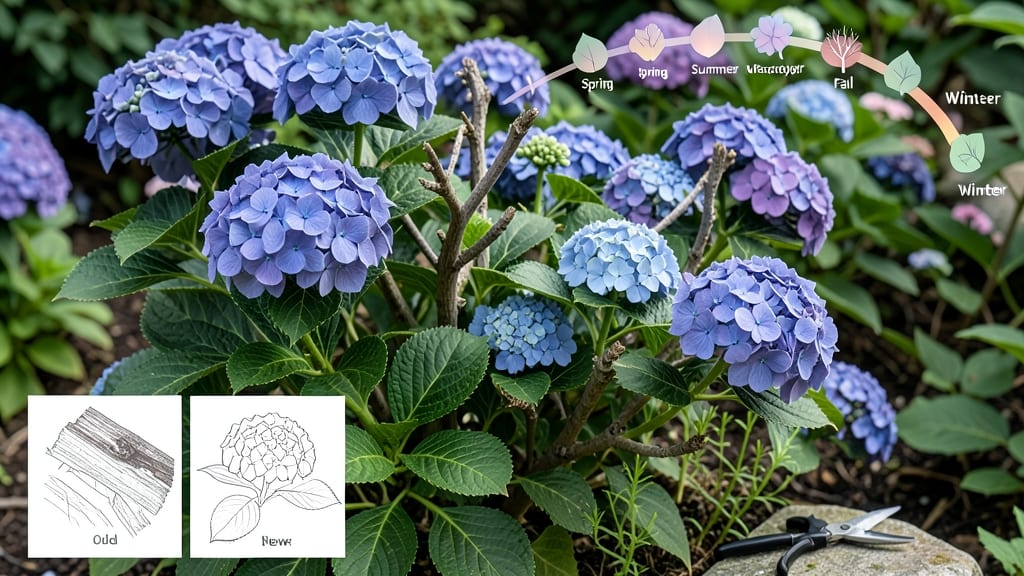
Hydrangeas flower once a year or multiple times, depending on the variety and how you prune them 🌸 — and getting this right is the difference between a showstopper shrub and a sad, bare stem.
If your hydrangeas are throwing out blooms like clockwork, you’re likely growing a reblooming type like mophead or panicle. But if they’re putting all their energy into a single summer flush, you might be dealing with an old-garden variety that’s stuck in its ways.
The key to encouraging more flowers lies in understanding your hydrangea’s blooming cycle, when to prune (and when to leave it alone), and how sunlight and water play a role. Some varieties need a late-winter haircut to spark new growth, while others will protest if you touch them at all.
In this guide, I’ll break down the blooming habits of the most popular hydrangeas, the pruning rules that control their flowering, and the simple fixes for when they refuse to cooperate—so you can enjoy those lush, colorful clusters year after year.
Hydrangea blooming frequency by variety: annual vs. once-in-a-lifetime flowers
If you’ve ever wondered why your hydrangeas bloom once and then disappear for months—or why some varieties seem to flower nonstop—I’ve got the answers. The truth is, hydrangea blooming cycles vary wildly by type, and understanding these differences can transform your garden from "meh" to "wow."
Some varieties produce once-in-a-lifetime blooms on old wood, while others rebloom like clockwork. Let’s break it down by the most popular types.
First, the big secret: blooming frequency depends entirely on whether a hydrangea flowers on old wood (last year’s growth) or new wood (current year’s growth). This distinction explains why some varieties need late-summer pruning to rebloom, while others should never be pruned after mid-summer.
Get this wrong, and you might end up with a shrub that looks like it’s taking a permanent vacation from flowering. 🌸
Mophead hydrangeas, like the beloved 'Endless Summer,' are the rebels of the group. They flower on both old and new wood, which means they can rebloom—if you play by their rules. Prune them right after flowering to encourage a second flush in late summer. Skip this step, and you’ll likely see just one once-in-a-lifetime bloom in early summer. 🌿
On the other hand, panicle hydrangeas (think 'Limelight' or 'Little Lime') are the overachievers. They bloom exclusively on new wood, so they’ll rebloom every year if you prune them late in winter before new growth starts.
These varieties are forgiving—they’ll even flower if you prune them in early spring, though timing matters for maximum blooms. ✂️
Oakleaf and lacecap hydrangeas are the divas of the garden. They flower only once per year on old wood, and pruning them at the wrong time (like after mid-summer) can leave you with no blooms at all. If you’ve got one of these, prune only in late winter—never after June, or you’ll sacrifice next year’s flowers. ⏰
Here’s the golden rule: Old wood bloomers (oakleaf, lacecap) need winter pruning to set buds for next year, while new wood bloomers (panicle, smooth) thrive with late-winter or early-spring cuts.
The reblooming mopheads are the exceptions—they can handle post-bloom pruning to coax a second round of flowers. Mix these up, and you’ll have hydrangeas flowering from June through September. ☀️
Pro tip: If you’re unsure which type you have, check the flowering season. Summer bloomers on old wood (like oakleaf) are one-and-done, while late-summer or fall bloomers (like panicle) are usually rebloomers.
And if your hydrangea is 'Endless Summer' or similar, you’ve got a wild card that can do both—with the right care, of course. 🌱
One more thing: light and water play a huge role in blooming frequency. Partial shade (4-6 hours of sun) and consistent moisture keep hydrangeas happy and encourage repeat flowering. Too much sun can stress them, while drought conditions will send blooms packing faster than you can say "pruning shears."
Keep them well-watered and in the right light, and you’ll maximize those show-stopping blooms. 💧
Now that you know the secrets, you can plan your hydrangea garden like a pro. Mix a few reblooming varieties with once-a-year
Pruning rules that control hydrangea flowering: when, how, and what to cut
Pruning hydrangeas correctly is the secret to controlling when—and how often—they flower. Different varieties bloom on old wood (last year's growth) or new wood (current year's growth), so timing matters. Get it wrong, and you might end up with a bush full of leaves and no flowers.
The key is understanding your hydrangea's blooming habit and pruning at the right time.
For example, mophead and lacecap hydrangeas (Hydrangea macrophylla) produce buds on old wood in late summer or fall. If you prune them in late winter or early spring, you'll cut off next year's flowers.
On the other hand, panicle and oakleaf hydrangeas (Hydrangea paniculata and quercifolia) bloom on new wood, so they thrive with late winter pruning to shape and encourage fresh growth.
⚠️ WARNING: Pruning Mistakes That Kill Blooms Pruning at the wrong time is the #1 reason hydrangeas fail to flower. Here’s what you must avoid: ✅ Old wood bloomers (mophead, lacecap): Never prune before late summer.
Buds form in late summer/fall for next year’s blooms. ✅ New wood bloomers (panicle, smooth): Prune in late winter to early spring before new growth starts. ✅ Reblooming varieties (like 'Endless Summer'): Light pruning after first bloom can encourage a second flush of flowers. 🌿
Start by gathering your tools: sharp bypass pruners, sterilized shears, and gloves to protect your hands. Disinfect your tools with rubbing alcohol or a 10% bleach solution to prevent spreading disease.
For larger branches, use loppers or a pruning saw. Always make clean cuts at a 45-degree angle, just above a bud or node facing outward.
For old wood bloomers, wait until late summer (after flowers fade) to prune. Remove dead or diseased branches first, then shape the bush by cutting back up to 1/3 of the oldest stems to encourage new growth.
For new wood bloomers, prune in late winter while the plant is dormant. Cut back 1/3 to 1/2 of the plant to its strongest stems, removing any weak or crossing branches.
If your hydrangea isn’t flowering, check your pruning habits. Over-pruning old wood bloomers in spring can leave you with no flowers for 2 years. For reblooming varieties, avoid heavy pruning—just trim spent blooms in late summer to encourage a second round.
And remember, panicle hydrangeas often produce more flowers with aggressive pruning, while mopheads need a gentler touch.
Pro tip: Take a photo of your hydrangea before pruning to reference its shape. And if you’re unsure which type you have, look at last year’s blooms—old wood bloomers will have wooden stems with buds, while new wood bloomers will have green stems with flowers at the tips.
Happy pruning! ✂️