
Watering
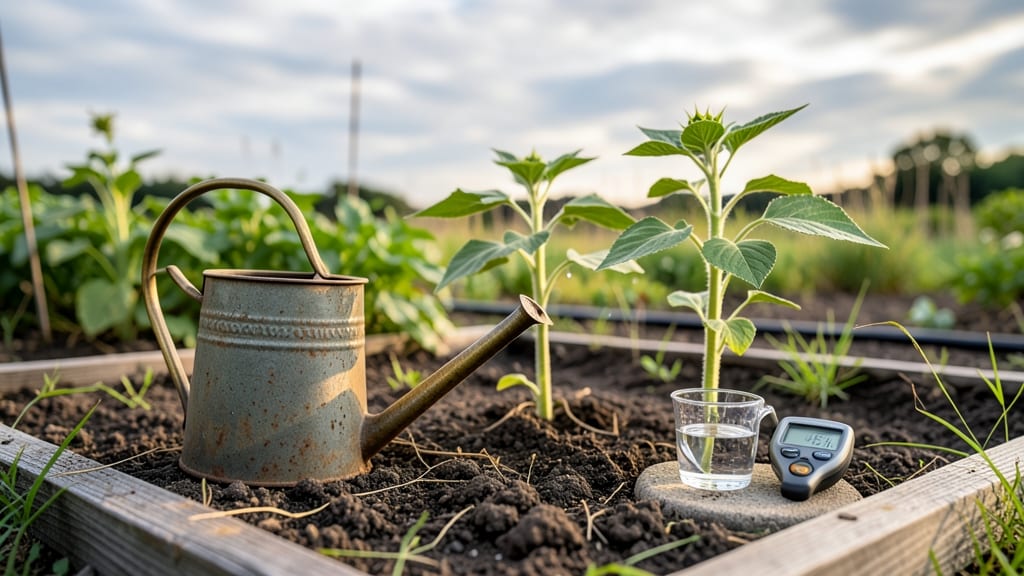
How often to water sunflower seedlings properly means keeping their soil consistently moist—not soggy, not dry—so they grow strong and tall from those first few weeks after sprouting.
Here’s the catch: Too much water drowns their delicate roots, while too little leaves them wilted and stunted. One wrong move can set your sunflowers back for weeks, especially in Zone 6a where spring weather swings between chilly mornings and sudden heat.
Instead of guessing, I’ll show you the finger test trick—a simple way to check soil moisture every 3 to 5 days (or daily in extreme heat) and adjust on the fly. No more overwatering, no more underwatering, just perfect moisture every time.
You’ll also learn how to spot the early signs of damping off (a fungal nightmare for seedlings) and tweak your watering based on whether your sunflowers are in pots or planted in the ground. Let’s get those 🌻 stems reaching for the sky the right way.
The perfect watering schedule for sunflower seedlings using the finger test
Sunflower seedlings need consistent moisture to establish strong roots, but overwatering can suffocate them just as easily as underwatering stunts their growth. The finger test is my go-to method for determining when to water—it’s simple, accurate, and prevents the guesswork that often leads to seedling stress.
By checking soil moisture at the right depth, you’ll keep your sunflowers hydrated without inviting fungal diseases or root rot. Let’s dive into the exact steps to master this technique.
First, understand that sunflower seedlings thrive with 1-2 inches of consistently moist soil. This depth allows roots to access water while preventing surface evaporation. The finger test works by inserting your index finger into the soil near the base of the plant.
If the soil feels dry at this depth, it’s time to water. If it’s damp or cool to the touch, wait another day or two. This method adapts to your local climate, soil type, and even container size, making it universally reliable.
How to Water Sunflower Seedlings Using the Finger Test
-
Step 1: Choose the Right Time
Water your seedlings in the early morning (before 10 AM) to reduce evaporation and fungal risks. Avoid evening watering, as damp foliage overnight can promote disease. -
Step 2: Insert Your Finger
Gently push your index finger 1-2 inches into the soil, about 1 inch away from the seedling stem. This depth mirrors where the roots are actively growing. -
Step 3: Check Soil Moisture
If the soil feels dry or crumbly, it’s time to water. If it’s cool and slightly moist, hold off for another day. Seedlings prefer consistent moisture, not soggy soil. -
Step 4: Water Deeply
When watering, apply enough to soak the soil 2-3 inches deep. Use a watering can with a gentle spray nozzle to avoid dislodging seedlings or compacting the soil. -
Step 5: Adjust for Climate
In hot, dry weather, you may need to water every 2-3 days. In cooler or rainy conditions, every 5-7 days is often sufficient. Always let the top inch of soil dry slightly between waterings. -
Step 6: Monitor Visual Cues
Watch for wilting leaves (underwatering) or yellowing stems (overwatering). Healthy seedlings have sturdy, upright stems and vibrant green leaves.
Container-grown seedlings dry out faster than those in garden beds, so check their soil moisture daily during the first 2 weeks. If the soil feels dry at the 1-inch mark, water immediately—containers lack the moisture-retaining benefits of in-ground soil.
For in-ground seedlings, the soil retains moisture longer, so you can typically stretch the time between waterings to 3-5 days, depending on rainfall. Always prioritize depth over frequency; shallow watering encourages shallow roots, which weaken as the plant grows.
Environmental factors play a huge role in your watering schedule. For example, sandy soil drains quickly, so you’ll need to water more frequently (every 2 days) compared to clay soil, which holds moisture longer (every 5-7 days).
If you’re in a high-humidity area, reduce watering slightly to prevent fungal issues like damping off, which is deadly for young seedlings. Conversely, in arid climates, mulch around the base of seedlings to lock in moisture and reduce evaporation.
One of the biggest mistakes I’ve seen is watering seedlings on a strict schedule without checking soil conditions first. This approach ignores the natural variability in weather, soil type, and plant needs. Instead, combine the finger test with observing your seedlings’ appearance.
Healthy sunflower seedlings have crisp leaves and a firm stem. If leaves feel limp or the soil pulls away from the pot edges, it’s a sign your seedlings need water. Conversely, if the soil is muddy or the leaves yellow and wilt, you’re overwatering.
To make the finger test even easier, keep a small notebook by your garden or seedling tray. Jot down the date, time of day, and soil moisture level each time you water.
Over a week, you’ll notice patterns—like how your seedlings respond to afternoon sun or how quickly containers dry out. This record-keeping helps you fine-tune your watering routine for peak efficiency.
For instance, you might discover that your seedlings need watering every 3 days in May but only every 6 days in June once they’re more established.
If you’re growing sunflowers in small pots or seedling trays, consider upgrading to larger containers (at least 3 inches in diameter) as soon as the first true leaves appear. Larger pots hold more moisture and give roots room to grow without becoming root-bound.
When transplanting, water the seedlings 1 day before moving them to reduce transplant shock. After transplanting, keep the soil consistently moist for the first 2 weeks, as new roots establish themselves in their permanent home.
Remember, the goal is to mimic the natural rainfall patterns sunflowers experience in their native habitats—deep, infrequent watering that encourages deep root growth.
By mastering the finger test and adjusting for your local conditions, you’ll give your sunflower seedlings the perfect balance of moisture they need to grow into those iconic, towering beauties. With patience and observation, your seedlings will reward you with vibrant blooms and a bountiful harvest.
Common sunflower seedling watering mistakes and how to avoid them
Sunflower seedlings are surprisingly delicate when it comes to watering. I’ve seen root rot from overzealous gardeners and stunted growth from those who think "watering less" means "watering less often."
The key is consistency—not drowning them but not letting them dry out either. Let’s fix these common mistakes before they derail your sunflowers.
First, the biggest mistake is watering on a schedule instead of checking soil moisture. Many gardeners assume "every other day" works, but climate, container size, and even soil type change the game.
For example, clay soil stays wet longer than sandy soil, while containers dry out faster than in-ground beds. Adjust based on your specific setup.
⚠️ callout-warning ⚠️
⚠️ How Often to Water Sunflower Seedlings
Check soil moisture daily—stick your finger 1-2 inches deep. If it feels dry, water deeply until moisture reaches 6 inches down. Morning watering prevents fungal growth, while evening water encourages rot. Containers need watering every 2-3 days; in-ground seedlings can go 5-7 days between waterings in cool weather.
Another critical error is shallow watering. A quick sprinkle on top leaves roots thirsty. Instead, aim for a deep soak that encourages roots to grow downward. I use a watering wand to gently saturate the soil around seedlings without disturbing them.
For container-grown sunflowers, place the pot in a tray of water for 10 minutes to ensure even moisture distribution.
In dry climates, low humidity can stress seedlings, causing them to wilt even if the soil feels moist. To combat this, I group seedlings together and place a shallow tray of water nearby to increase ambient humidity.
A lightweight row cover on hot days also helps retain moisture. Avoid misting leaves directly—this can lead to powdery mildew, a common fungal issue in sunflowers.
Finally, transplant shock often stems from inconsistent watering. If you’re moving seedlings outdoors, water them thoroughly the day before and again immediately after transplanting. Use a light mulch (like straw) to lock in moisture and protect tender roots.
Watch for yellowing leaves or wilting—these are red flags for either overwatering or underwatering.
Remember, sunflowers are resilient once established, but seedlings need your attention. By avoiding these mistakes and adjusting for your specific conditions, you’ll give your sunflowers the best start toward those majestic blooms we all love. 🌻