
Flowers
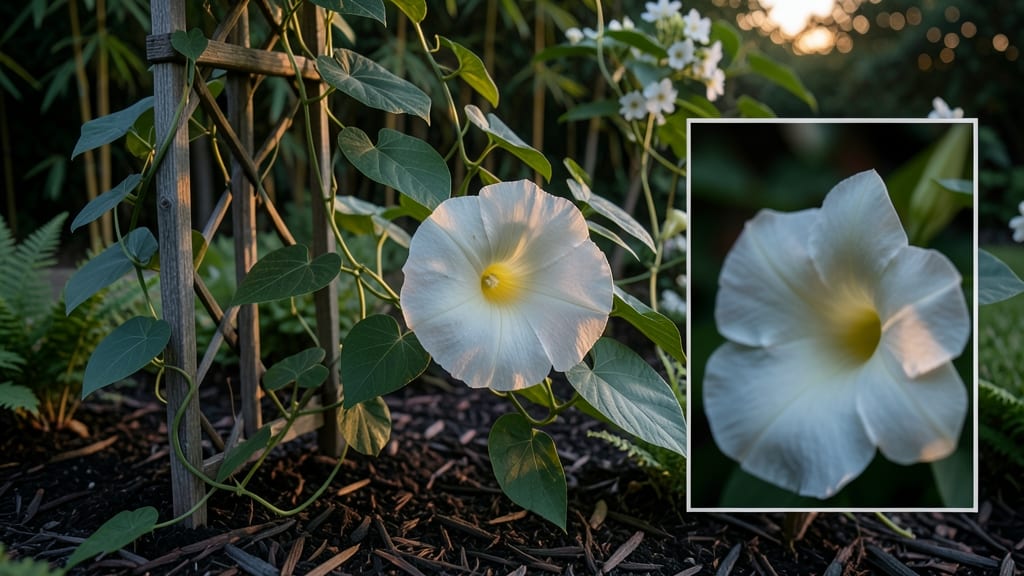
Moonflowers grow to a stunning 10–15 feet tall in a single season, turning your garden into a nighttime wonderland of fragrant white blooms.
Picture this: delicate 🌙 vines spiraling up a trellis, their moon-shaped flowers unfurling only after dark, filling the air with a sweet, intoxicating scent. But without the right support, those towering stems can flop or break under their own weight—especially in windy conditions.
If you’re planning a vertical garden or trellis setup, knowing how tall moonflowers grow helps you choose the best structure. In warmer climates like USDA Zone 6a, they thrive even faster, while cooler areas may see slightly shorter but still impressive vines.
Below, I’ll cover everything from trellis types to pruning tips, so you can enjoy these night-blooming beauties without the chaos of sprawling vines.


Moonflower height guide: how tall they grow & when to prune
Moonflowers (Ipomoea alba) are fast-growing annual vines that can reach 10 to 15 feet tall under ideal conditions, transforming your garden into a fragrant nighttime wonderland.
Their rapid vertical growth—up to 6 inches per day in warm climates—makes them perfect for trellises or fences, but their height can become unmanageable without guidance. Understanding their growth patterns helps you plan trellises, prune strategically, and keep your garden looking intentional rather than wild.
In tropical and subtropical zones (USDA 9-11), moonflowers grow the fastest, often exceeding 15 feet in a single season. Cooler climates (USDA 6-8) may see 5 to 10 feet of growth, especially if planted early in the season.
Their height varies by soil fertility, sunlight exposure, and water consistency, so adjusting care can help control their sprawl without sacrificing those iconic night-blooming flowers.
| Growth Factor | Height Range | Climate Notes |
|---|---|---|
| Mature Height (Annual) | 10–15 ft | Warmer zones (9-11) reach max height; cooler zones (6-8) may stay at 5–10 ft. |
| First Year Growth | 5–10 ft | Slower in spring; accelerates in summer heat. |
| Daily Growth Rate | 3–6 inches | Peaks in 75–90°F conditions with full sun. |
| Pruning Impact | 5–12 ft (controlled) | Regular pruning reduces height by 30–50% while boosting flower production. |
| Seasonal Variation | Summer: 12–15 ft; Fall: 8–10 ft | Growth slows as temperatures drop below 60°F. |
If you're wondering "how tall do moonflowers grow in containers?", the answer is far less dramatic—typically 3 to 6 feet—because root restriction limits their vertical expansion. However, container-grown moonflowers still thrive with 5-gallon pots or larger and consistent moisture.
For maximum height, plant them in well-draining garden soil with a sturdy trellis installed at planting time to guide their rapid ascent.
Pruning moonflowers isn’t just about controlling height; it’s also about encouraging more blooms. I recommend pruning after flowering (late summer) to remove overly long or leggy vines while leaving healthy stems with buds.
Cut back to 1/3 of the plant’s height to stimulate bushier growth and prevent the vines from becoming top-heavy. Avoid heavy pruning in early spring, as this can delay flowering.
One common mistake gardeners make is waiting too long to install a trellis. Moonflowers have twining vines that naturally spiral clockwise, but they need support early to avoid tangled, weak growth. Install your trellis or arbor at planting time and train the vines gently with soft ties.
For heavy blooms, opt for metal or wooden trellises that can support 10+ pounds of vine weight per plant.
In cooler climates (USDA 6-8), moonflowers may struggle to reach their full height if planted too late. Aim to sow seeds 4–6 weeks before your last frost date to give them a long growing season.
If you’re in a short-season area, choose faster-maturing varieties or start seeds indoors 6–8 weeks before transplanting. Even in cooler zones, moonflowers can still climb 8–10 feet with proper care and a south-facing trellis.
For a compact moonflower display, try the dwarf variety 'Moonlight', which typically reaches 5–8 feet and is ideal for smaller gardens or containers. However, even dwarf varieties benefit from regular pruning to maintain shape and encourage continuous blooming.
If you’re growing moonflowers for cut flowers, harvest stems in the evening when blooms are fully open—this preserves their fragrance and extends vase life.
Remember, moonflowers are annuals, so their height is a one-season investment. Plan your trellis placement carefully, as their vines can smother nearby plants if left unchecked.
Use mulch around the base to retain moisture and suppress weeds, which helps the plant focus its energy on vertical growth rather than competing with ground-level competition.
With the right support and care, your moonflowers will reach their full height potential while creating a breathtaking night garden. The key is balancing their natural vigor with strategic pruning and trellis support—so you can enjoy their magical blooms without the chaos of unruly vines.
Best trellis types & setup for moonflowers: maximizing vertical space
Moonflowers (Ipomoea alba) can reach 10–15 feet in a single season, making them perfect candidates for vertical gardening. Without proper support, their heavy vines risk breaking or sprawling uncontrollably.
The right trellis not only maximizes your garden’s vertical space but also protects delicate blooms from storms and wind damage.
Your trellis choice depends on your garden’s layout and moonflower’s growth habits. For small gardens, a simple 6-foot arbour works well, while larger spaces benefit from 10–15-foot pergolas or DIY lattice panels.
Heavy-duty materials like metal or thick wooden beams are essential to support the 10–20 lb weight of mature vines and flowers.
| Trellis Type | Max Height | Best For | Pros |
|---|---|---|---|
| Arbor | 6–10 ft | Small gardens, focal points | Aesthetic, easy to install |
| Pergola | 10–15 ft+ | Large spaces, pathways | Durable, shade support |
| DIY Lattice | Custom height | Budget-friendly, creative designs | Lightweight, adjustable |
When setting up your trellis, position it in full sun (6+ hours daily) and ensure the base is anchored securely. Use soft ties (like old T-shirts or twine) to gently guide vines upward—avoid wire or plastic, which can damage delicate stems.
Train vines in a spiral pattern to distribute weight evenly and prevent breakage during storms.
For extra storm protection, add horizontal crossbars every 3–4 feet to create a lattice effect. This not only supports the vine’s weight but also encourages more even flower distribution along the trellis. Prune back any overgrown sections after flowering to redirect energy into next season’s growth.
If you’re in a windy climate, opt for a freestanding trellis with a wide base or stake it deeply into the ground. Mulch around the base to retain moisture and stabilize the soil, which helps prevent uprooting during heavy rains.
With the right setup, your moonflowers will thrive vertically, creating a breathtaking nighttime display without taking over your garden.
Pro tip: Plant moonflowers near your trellis 4–6 weeks before the last frost date. Their fast growth means they’ll need support almost immediately once vines start climbing. Start training them early to avoid tangled messes later in the season.