
How To
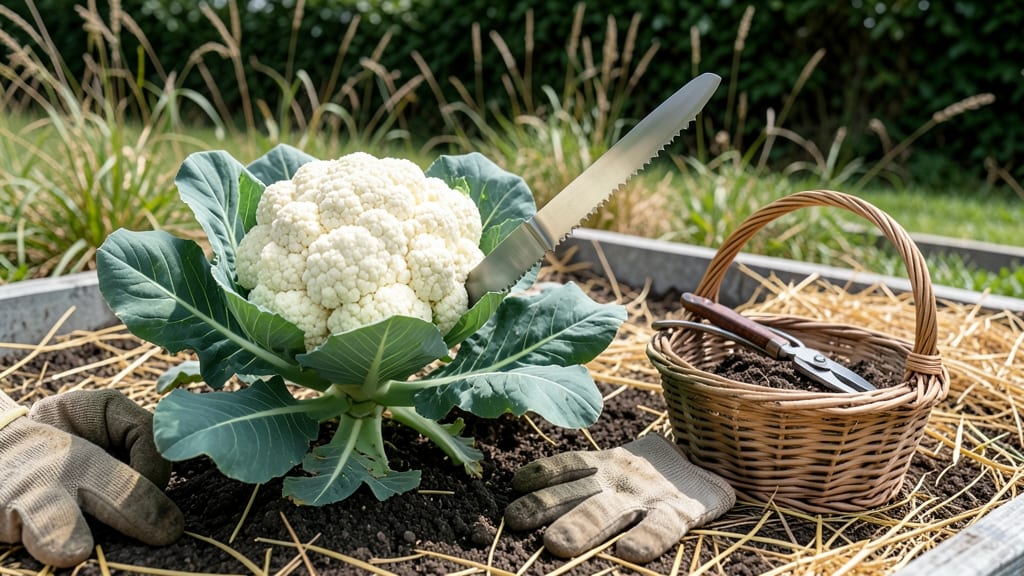
To harvest cauliflower at its peak—when the curds are firm, flavorful, and packed tightly like a snowball—requires knowing the exact moment to pull it from the plant.
Picture this: you’ve nurtured your 🥬 cauliflower all spring, and now the head is nearly ready. But wait too long, and those tender florets turn bitter or woody. Or harvest too soon, and you’re left with loose, underdeveloped curds that won’t impress at dinner.
The difference between a restaurant-quality harvest and a disappointing one often comes down to timing—and a few simple tricks to spot the perfect moment.
In this guide, I’ll walk you through the visual cues that signal your cauliflower is ready—like the color of the leaves, the firmness of the curds, and even the size of the head.
You’ll also learn how to cut it properly to keep the plant producing side shoots for a second harvest, plus what to avoid if you want to maximize your yield.
Ready to go from garden to table with tender, flavorful cauliflower? Let’s dive into the step-by-step process, so you never miss the window again.


When and how to harvest cauliflower for maximum flavor and texture
Harvesting cauliflower at the perfect moment transforms a good crop into a gourmet-quality harvest. The key lies in recognizing three critical cues: head size, color, and leaf condition. Miss these signs, and you’ll end up with either loose florets or bitter, overmature curds.
I’ve learned through years of trial and error that variety matters—purple and orange cauliflower mature slightly differently than white varieties, and weather plays a surprising role in timing.
For most white cauliflower varieties, aim for heads between 6 to 8 inches in diameter. The curds should feel firm to the touch but still yield slightly when pressed—like a ripe avocado.
If the florets separate easily, you’ve waited too long. Color consistency is another dead giveaway: the head should be uniformly colored (white, purple, or orange), with no yellowing or browning at the edges. This uniformity signals peak sweetness and texture.
| Harvest Cue | What to Look For | Action to Take |
|---|---|---|
| Head Size | 6–8 inches in diameter (varies by variety) | Harvest immediately if firm and compact |
| Curds Firmness | Tightly packed, slightly yielding when pressed | Use a sharp knife to cut stem cleanly |
| Leaf Condition | Outer leaves yellowing or dying back | Remove leaves before cooking for cleaner curds |
| Color Uniformity | No yellow/brown edges (white), or fully colored (purple/orange) | Store in cool, humid conditions post-harvest |
| Weather Impact | Harvest before forecasted heatwaves or frost | Adjust timing 1–2 days earlier in hot climates |
Weather is the wildcard in cauliflower harvesting. Hot temperatures above 85°F can cause heads to bolt or turn bitter within 24 hours. I’ve had to harvest early in my Zone 8 garden during heatwaves, even if the heads weren’t fully mature, to avoid spoilage.
Conversely, cool evenings (50–60°F) slow maturity, giving you a 2–3 day window to harvest without rushing. Always check the 5-day forecast before harvesting—if extreme heat or frost is predicted, prioritize your crop.
Now, let’s talk harvesting technique, because how you cut makes all the difference. Grab a sharp chef’s knife or pruners and cut the stem 2–3 inches below the head. Avoid twisting or pulling—the plant’s vascular system will leak nutrients, weakening future side shoots.
I’ve found that leaving a small stem actually encourages secondary heads to form, giving you a second harvest in 3–4 weeks. After cutting, remove the outer leaves (they’re tough and fibrous) and rinse the curds gently under cool water to remove dirt.
Post-harvest care is just as critical as timing. Store your cauliflower in a plastic bag with a damp paper towel to maintain humidity, and refrigerate at 32–40°F. If you’re not cooking it immediately, the curds will stay fresh for 5–7 days.
For long-term storage, blanch and freeze—this preserves texture and flavor for up to 12 months. I’ve even experimented with fermenting cauliflower leaves (like sauerkraut) to use the entire plant, reducing waste while adding probiotics to my diet.
Not all cauliflower varieties play by the same rules. Purple and orange varieties like ‘Graffiti’ or ‘Cheddar’ mature slightly slower than white types, often taking 75–90 days to reach harvest size.
These heirloom varieties also tend to have looser curds, so I recommend harvesting them when the outer leaves start yellowing—this is your cue that the head is ready, even if it’s not perfectly round.
For dwarf varieties like ‘Snowball Y Improved’, timing is tighter: these compact plants mature in 60–70 days and can go from perfect to overripe in 24 hours.
One mistake I see gardeners make is ignoring the stem’s condition. A woody, thick stem signals overmaturity—by this point, the curds are often bitter and stringy. Always check the stem’s firmness alongside the head’s appearance. Another pro tip: harvest in the morning when temperatures are coolest.
The curds will be firmer, and you’ll avoid the stress of cutting wilted heads later in the day. If you’re harvesting multiple plants, use a clean knife for each to prevent cross-contamination with diseases like black rot.
For gardeners in shorter growing seasons (Zones 3–5), extend your harvest window by choosing early-maturing varieties like ‘Snowball’ (60 days) or ‘Purple of Sicily’ (70 days). These varieties give you a head start before the first frost.
In longer seasons (Zones 9–10), succession planting every 2 weeks ensures a continuous harvest. I’ve had success with this method in my Zone 9a garden, staggering plantings from February to July to enjoy fresh cauliflower year-round.
Finally, don’t overlook the secondary harvest. After cutting the main head, cauliflower plants often produce 2–3 smaller side shoots from the leaf axils. These “baby heads” are sweeter and more tender than the primary harvest.
To encourage them, keep the plant well-watered and fertilized with a low-nitrogen feed (like 5-1
Common harvesting mistakes that ruin your cauliflower (and how to avoid them)
Harvesting cauliflower at the wrong time or using improper techniques can turn your perfect head into a bitter, woody mess. Even experienced gardeners sometimes make these costly mistakes—like waiting too long or cutting the stem incorrectly.
The good news? These errors are easy to avoid once you know the red flags to watch for.
Over-maturity is the #1 culprit behind ruined cauliflower. When heads stay on the plant past their prime, the curds loosen and develop a bitter, yellowish tint. Even worse, the center can turn brown and stringy, making it inedible.
Environmental stressors like heat waves or drought can also trigger premature bolting, where the plant sends up a flower stalk instead of producing a harvestable head.
⚠️ callout warning ⚠️
🚨 DON'T MAKE THESE HARVESTING MISTAKES!
- 🔪 Wrong cutting technique: Never twist or yank the head—always use a sharp knife to avoid damaging the stem.
- 🌡️ Ignoring heat stress: Cauliflower bolts (sends up a flower stalk) in temps above 80°F. Use shade cloth if your climate gets too hot.
- 💧 Skipping post-harvest care: Store harvested heads in the fridge with a damp towel to prevent drying out.
- 🟡 Waiting for yellow leaves: By the time leaves yellow, the curds may already be over-mature and bitter.
Pro Tip: Harvest when the head is firm, compact, and still wrapped in leaves—this is your sweet spot for flavor and texture!
One of the most frustrating mistakes is misjudging maturity. Many gardeners wait until the head is too large, assuming bigger means better. But oversized cauliflower heads often have loose, uneven curds and a woody core.
Instead, aim for heads that are about 6-8 inches wide with tightly packed florets. For purple or orange varieties, the color should be vibrant—not dull or fading.
Improper cutting techniques can also ruin your harvest. Using dull shears or pulling the head can crush the curds or leave the plant vulnerable to pests and disease. Always use a clean, sharp knife and cut the stem about 1 inch below the head.
Leave the outer leaves intact to protect the plant if you plan to harvest side shoots later.
Even after harvesting, many gardeners fail to store cauliflower properly, leading to rapid spoilage. Within 24 hours of harvest, place your cauliflower in the crispest part of your fridge (usually the bottom drawer) wrapped in a damp paper towel.
This slows moisture loss and keeps the curds fresh for up to 5 days. For longer storage, consider blanching and freezing—this preserves texture and flavor for months.
Finally, don’t overlook the signs of stress that can ruin your harvest before it even starts. Wilted leaves before the head forms? Your plant may be underwatered or nutrient-deficient. Yellowing leaves with brown spots?
Fungal disease or pest damage could be at play. Address these issues immediately—once the head starts forming, the plant’s ability to recover is limited.