
Shrubs
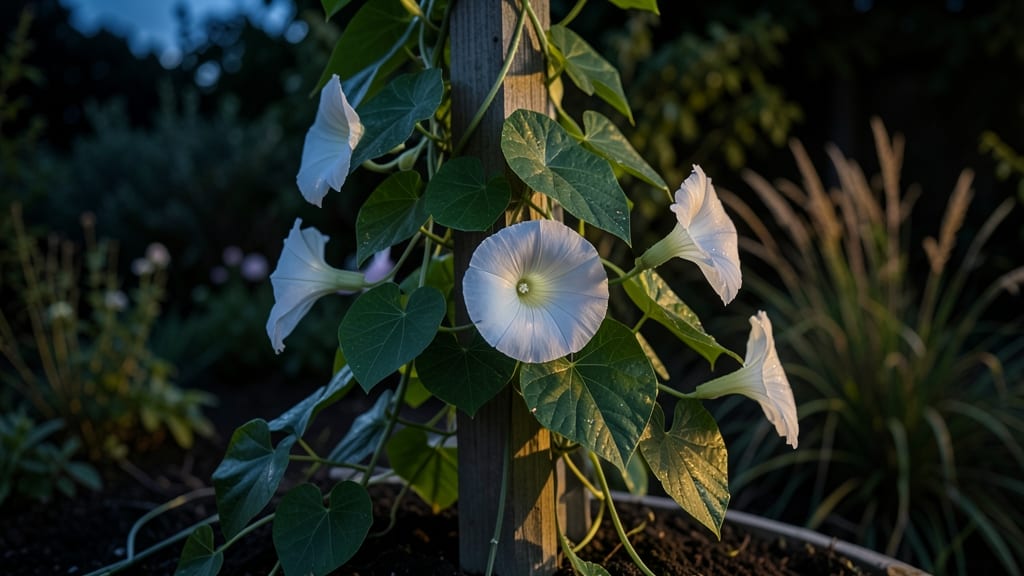
Moonflowers thrive in sun or shade with the right variety — but get the lighting wrong, and you’ll miss out on those magical nighttime blooms.
Picture this: your garden bathed in moonlight, the air thick with the sweet scent of 🌙 moonflowers opening just as the sun sets. Yet many gardeners struggle because they assume all moonflowers need full sun or deep shade.
The truth? Some varieties crave sunlight to burst into bloom, while others thrive in partial shade where heat would scorch their leaves.
In this guide, we’ll break down the best moonflower types for your light conditions, from sun-loving climbers to shade-tolerant beauties. You’ll learn how to spot the signs of ideal lighting, adjust care for indoor pots or outdoor trellises, and keep those night-blooming wonders coming back year after year.
Ready to turn your space into a nocturnal paradise? Let’s find the perfect light match for your moonflowers.
 Best Window Placement
Moonflower varieties that thrive in sun vs. shade conditions
Moonflowers (Ipomoea spp.) are nighttime garden superstars, but their light needs vary dramatically between species. The classic white moonflower (Ipomoea alba) thrives in full sun**, while the Japanese moonflower (Ipomoea nil) adapts better to partial shade.
Choosing the right variety ensures your vines grow strong and bloom spectacularly under moonlight—without wilting in harsh afternoon sun or struggling in deep shade.
I’ve grown both varieties in my USDA Zone 8 garden, and the difference in their resilience is striking. Sun-loving moonflowers produce larger blooms but need consistent moisture, while shade-tolerant types focus energy on prolonged flowering** rather than vine size.
Let’s break down the best options for your garden’s lighting conditions to maximize those dreamy nighttime displays.
The Ipomoea alba is my go-to for sun-drenched gardens because it produces the most dramatic blooms—each flower can reach 5-6 inches wide—but it demands consistent watering to prevent leaf scorch. I’ve seen it wilt dramatically in afternoon heat if not given afternoon shade, even in Zone 9.
For my east-facing trellis, I pair it with morning sun and afternoon dappled shade for best results.
On the other hand, Ipomoea nil thrives in my woodland garden where afternoon sun barely reaches. This variety trades bloom size for endurance—its 3-4 inch flowers may be smaller, but they last longer and handle partial shade beautifully.
I’ve had it bloom for 6-8 weeks in shade, while sun-exposed Ipomoea alba only lasts 3-4 weeks without proper care.
If you’re in USDA Zones 5-7, consider the tropical moonflower (Ipomoea purpurea)—it’s more cold-hardy and adapts to both sun and shade. I’ve grown it successfully under a pergola where it gets 3 hours of morning sun and still produces purple-hued blooms.
This variety is also heat-tolerant, making it ideal for southern climates where other moonflowers struggle.
For containers or small spaces, the cypress vine (Ipomoea quamoclit) is my top pick. It tolerates both sun and shade, though it blooms more prolifically in full sun.
What I love about it is its self-seeding habit—it’ll pop up year after year with minimal effort. Just be warned: it can become invasive if not contained!
When selecting moonflowers, pay attention to your garden’s microclimates. A south-facing wall might get enough sun for Ipomoea alba, while a north-facing patio would suit Ipomoea nil better. I always test a small section first to see how the plants respond before committing to a full trellis. And remember: moonflowers are annuals in most zones, so save seeds
How to choose and plant moonflowers for maximum nighttime blooms
Moonflowers (Ipomoea alba) are night-blooming stars that transform your garden into a fragrant evening paradise. But their success hinges on light exposure—whether you plant them in full sun or partial shade makes all the difference.
The right placement ensures vibrant blooms that open only under moonlight, creating a magical display. Let’s break down how to choose the perfect spot and plant them for maximum nighttime impact.
First, assess your garden’s sunlight patterns. Moonflowers thrive with 6+ hours of sunlight for robust growth and abundant blooms, but they can tolerate partial shade in hot climates. If your garden gets intense afternoon sun, opt for morning sun + afternoon shade to prevent wilting.
For cooler regions, full sun encourages stronger vines and more flowers. The key is balancing light intensity with temperature—moonflowers hate scorching heat.
Step-by-Step Planting Guide for Moonflowers
- Step 1: Choose Your Variety
- Sun-Lovers: Ipomoea alba (classic moonflower) thrives in full sun (6+ hours).
- Shade-Tolerant: Ipomoea nil (morning glory cousin) handles partial shade better.
- Step 2: Prepare the Soil
- Amend soil with compost for drainage.
- Ensure pH 6.0–7.0 (test with a kit).
- Avoid heavy clay—moonflowers hate soggy roots.
- Step 3: Plant After Last Frost
- Direct-sow seeds 1 inch deep, 6 inches apart.
- Wait until soil reaches 70°F+ (after April 15 in most zones).
- Step 4: Install a Trellis
- Use a 6–10 ft trellis (vines grow fast!).
- Train vines upward to maximize sunlight exposure.
- Step 5: Water Deeply at Dusk
- Soak soil every 3–5 days (deep watering encourages roots).
- Avoid wetting leaves to prevent fungal diseases.
- Step 6: Fertilize Lightly
- Use 5-10-10 balanced fertilizer every 4–6 weeks in summer.
- Stop fertilizing by early fall to prepare for dormancy.
Timing is everything when planting moonflowers. Aim for late spring to early summer (after your last frost date) to give vines 3–4 months of warm weather to establish. In USDA Zone 6a, this means planting between mid-May and early June.
If you’re in a hotter zone, start seeds indoors 4–6 weeks earlier to extend the blooming season. Pro tip: Mulch around the base with straw to retain moisture and regulate soil temperature.
For sun-exposed moonflowers, watch for heat stress—wilting leaves or brown edges signal they need afternoon shade. In shadier spots, vines may grow leggy; supplement with a small grow light (12 hours/day) if indoors.
Prune spent blooms regularly to encourage more nighttime flowers. The goal is to keep your moonflowers happy and climbing so they can open their fragrant blooms every evening.
With the right light conditions, soil prep, and trellis support, your moonflowers will reward you with stunning nighttime displays for weeks. The secret? Patience and consistency—these vines need time to establish before they burst into bloom.
Once they do, your garden will feel like a moonlit sanctuary every evening.