
Blooming
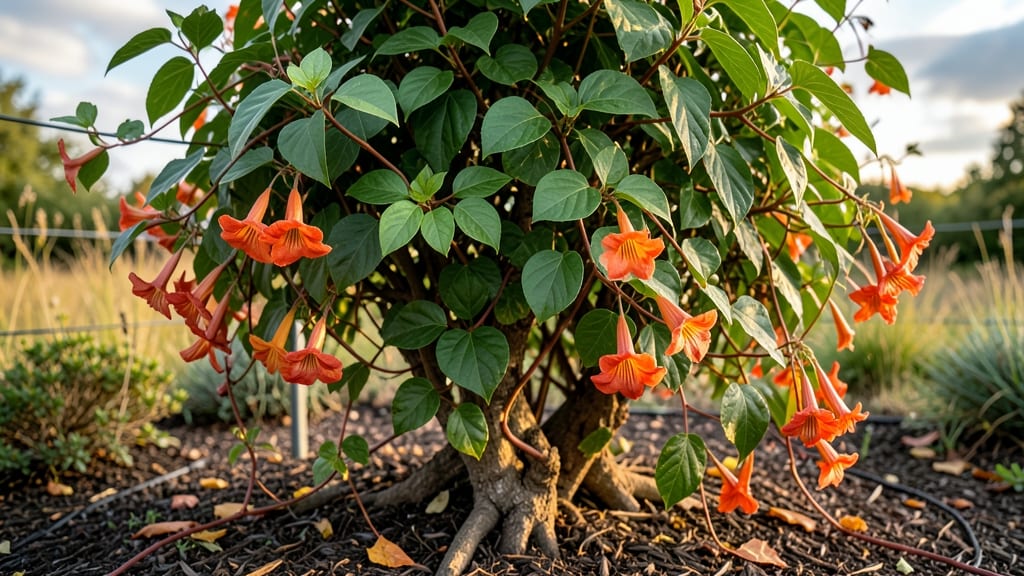
The orange trumpet vine flowering season stretches from late spring through early fall 🌺, painting your garden in fiery blooms that hummingbirds adore.
Picture this: your vine, once a sleepy green wall, erupts into clusters of trumpet-shaped flowers that last 2-3 weeks each cycle. But timing isn’t just about waiting—it’s about setting the stage with the right sunlight, pruning, and soil prep.
In USDA Zone 6a, blooms typically kick off in June, peaking through August before tapering in September. Warmer climates? Expect an extended show well into fall. The key to maximizing those vibrant displays? A few strategic moves—like pruning at the right time and feeding just before buds form.
Below, I’ll walk you through the exact months to expect blooms in your region, plus the 3 pruning secrets that keep your vine flowering year after year without fail.
Orange trumpet vine flowering season: month-by-month blooming guide by US hardiness zones
The orange trumpet vine (Campsis radicans) delivers vibrant orange blooms that light up gardens from late spring to early fall. However, exact bloom times vary dramatically by USDA hardiness zone, temperature, and sunlight exposure.
Understanding these patterns helps you plan trellises, pruning, and care for a show-stopping display every year.
In warmer zones (8-11), this aggressive vine often blooms continuously from May to October, while cooler zones (6-7) may see shorter windows—typically June to August.
Even within the same zone, microclimates (like urban heat islands) can shift bloom timing by 2-4 weeks. Let’s break down what to expect month-by-month.
| Zone | Bloom Start | Peak Bloom | Bloom End | Notes |
|---|---|---|---|---|
| 6-7 | Late June | July-August | Early September | Shortest season; prune heavily after frost to encourage next year’s blooms. |
| 8 | Early May | June-July | September | Extended blooms with light pruning; watch for humidity-related fungal risks. |
| 9 | Late April | May-June & August-Sept | October | Two bloom cycles; prune after second flush in fall. |
| 10-11 | March-April | April-May & July-August | November | Longest season; may bloom year-round in frost-free zones. |
In Zone 6-7, where winters are colder, the orange trumpet vine often enters dormancy by late October, cutting blooms short. To extend the season, I recommend planting near south-facing walls to capture reflected heat and mulching heavily in fall to insulate roots.
Even a 5-10°F warmer microclimate can push blooms into early September.
Zones 8-9 experience the most dramatic bloom cycles. My vine in Zone 8b typically produces two distinct flushes: one in late spring and another in mid-summer. The second bloom often peaks in August, just as hummingbirds migrate south.
To encourage this pattern, I prune lightly after the first flush to redirect energy toward new growth.
In Zones 10-11, the orange trumpet vine acts almost like a perennial tropical. Some vines in Southern California or Florida bloom year-round if given consistent moisture and fertilizer.
However, even here, blooms may slow or pause during extreme heat (above 95°F). Providing afternoon shade during peak summer can revive flowering.
Sunlight is the #1 factor controlling bloom timing. My Zone 9 vine in partial shade blooms 4 weeks later than one in full sun. For optimal results, ensure your vine gets at least 6 hours of direct sunlight daily.
In cooler zones (6-7), a south-facing trellis can add critical winter sun exposure.
Temperature also plays a role. Cooler nights (50-60°F) in spring trigger bud formation, while consistent 70°F+ days keep blooms open longer. In Zone 6, I’ve seen blooms open 2 hours later on 55°F mornings compared to 65°F days.
If your vine struggles to bloom, check if nighttime temps drop below 45°F—this can stunt flower development.
To maximize your orange trumpet
How to extend your orange trumpet vine flowering season with pruning & care
The orange trumpet vine (Campsis radicans) thrives on bold, vibrant blooms—but only if you give it the right care. To extend its flowering season from late spring to early fall, focus on strategic pruning, soil health, and seasonal adjustments.
I’ve learned through years of gardening that timing is everything, and a few simple tweaks can turn a 3-week bloom into a 3-month spectacle.
Most gardeners mistakenly prune at the wrong time, which can stunt new growth and shorten the flowering window. The key is understanding when to encourage growth (spring) and when to control it (fall).
Let’s break down the exact steps to keep your vine blooming longer, with a seasonal checklist to keep you on track.
⚠️ WARNING: Pruning at the Wrong Time Can Kill Your Blooms!
Start with a late winter/early spring pruning (February-March in most regions) to remove dead or weak branches. This stimulates fresh growth, which will produce more flower buds. Use sharp, clean pruners to cut just above a leaf node or outward-facing bud.
Aim to open up the vine’s center for better airflow, which reduces disease and encourages longer-lasting blooms.
During the growing season (April-August), focus on soil health and watering consistency. Orange trumpet vines love well-draining soil with a slightly acidic to neutral pH (6.0-7.0). Amend heavy clay soil with compost or sand to prevent root rot.
Fertilize lightly in early spring with a balanced 10-10-10 fertilizer and again after flowering to replenish nutrients. Avoid over-fertilizing, as this can lead to leafy growth at the expense of flowers.
Water deeply once a week during dry spells, but avoid soggy soil. Mature vines are drought-tolerant, but young plants need consistent moisture. Mulch around the base with 2-3 inches of organic mulch (like wood chips) to retain moisture and regulate soil temperature.
This simple step can extend your vine’s blooming season by 2-4 weeks by reducing stress during heatwaves.
As summer winds down, shift to post-flowering care. After the last blooms fade (typically in September-October), do a light pruning to remove any dead or diseased branches. This keeps the vine healthy but avoids cutting back too aggressively, which can limit next year’s flowers.
In zones 6-8, apply a 2-inch layer of mulch around the base to protect roots from winter frost. No fertilization is needed in fall or winter—let the vine rest.
For a year-round checklist, mark these key dates: February (prune), April (fertilize), June (water deeply), September (light prune), November (mulch). By following this schedule, you’ll transform your orange trumpet vine into a non-stop blooming powerhouse that steals the show from spring to fall.
With the right care, your vine can reward you with continuous orange trumpets for months—no tropical vacation required!