
Trees
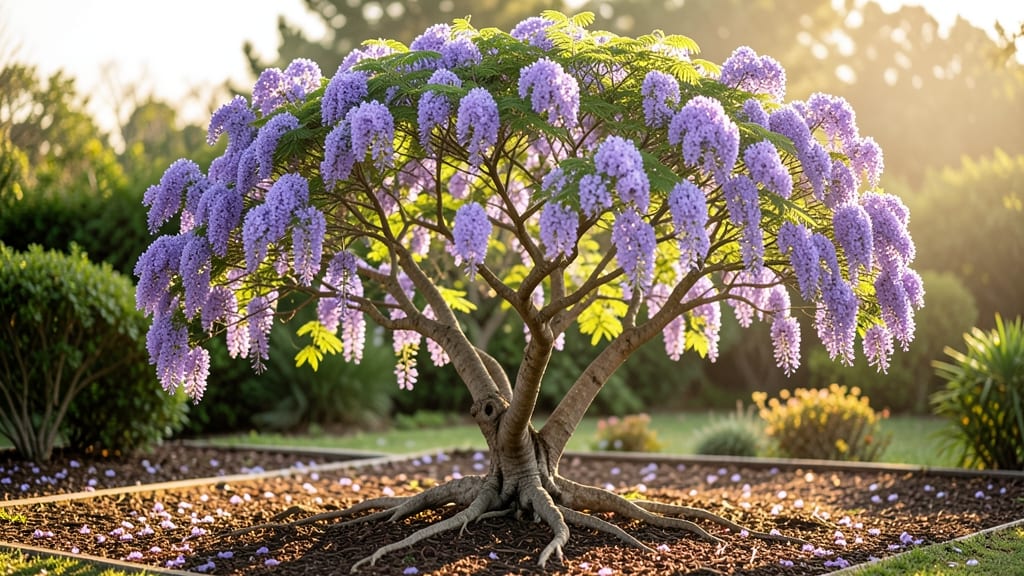
The purple jacaranda mimosifolia flowering tree 🌸 brings a breathtaking spring canopy that turns neighborhoods into dreamy purple paradises—but planting it at the wrong time can leave you waiting years for those iconic blooms.
Picture this: your yard transformed into a sea of lavender and violet, where every breeze carries a whisper of romance. That’s the magic of a well-timed jacaranda, but miss the planting window, and you’re stuck with a slow-growing tree that never quite lives up to its potential.
In USDA Zone 9b and beyond, the best time to plant your jacaranda is during the winter months—December through February—when the soil is cool but workable and the risk of extreme heat or frost has passed.
Below, I’ll walk you through the exact steps to plant your jacaranda for maximum flowering, from soil prep to sunlight secrets, so you can enjoy that stunning purple spectacle year after year.
Best planting seasons for jacaranda mimosifolia by climate zone
The purple jacaranda (Jacaranda mimosifolia) thrives when planted during its optimal frost-free window, ensuring strong root establishment before extreme heat or cold. Since this tree is native to subtropical and tropical climates, its planting timeline varies dramatically across USDA zones 5-11.
Planting too early risks frost damage, while planting too late may delay flowering. Let’s break down the best times by zone to guarantee those iconic purple blooms every spring.
For seed planting, timing is even more critical—jacaranda seeds need warm soil (70°F+) to germinate properly. Saplings, however, offer more flexibility but still require careful attention to local frost dates.
Whether you’re starting from seed or transplanting a young tree, understanding your USDA zone is the first step to success. Let’s explore the ideal planting windows for each region.
| USDA Zone | Best Planting Window | Soil Temp Requirement | Seed Germination Window | Key Consideration |
|---|---|---|---|---|
| 5-6 | Late May - Early June | 65°F+ (18°C+) | July - August | Wait until all frost risk passes; use frost cloth for young trees. |
| 7-8 | March - April | 60°F+ (15°C+) | April - May | Plant after last frost date; mulch heavily to retain warmth. |
| 9-10 | November - January | 68°F+ (20°C+) | December - February | Avoid summer planting; opt for cooler months to reduce transplant shock. |
| 11 | Year-round (best in winter) | 70°F+ (21°C+) | Any month | No frost risk; prioritize well-draining soil to prevent root rot. |
In USDA zones 5-6, where frost is a real threat, timing is everything. Plant your jacaranda saplings only after the last frost date, typically in late May or early June.
For seed planting, wait until soil temperatures reach at least 65°F (18°C), usually in July or August. Young trees in these zones need extra protection, like mulch blankets or frost cloth, to survive the first winter.
Gardeners in zones 7-8 have a broader window, with ideal planting times spanning March through April. The key is ensuring the soil is warm enough—60°F (15°C) or higher—to encourage root growth.
If you’re planting seeds, aim for April or May when daytime temperatures are consistently mild. These zones also benefit from heavy mulching to retain moisture and regulate soil temperature.
For zones 9-10, the best time to plant is during the cooler months, specifically November through January. This avoids the intense summer heat, which can stress young trees.
Seeds should be sown in December or January when soil temperatures are ideal for germination. In these warmer climates, prioritize well-draining soil to prevent waterlogging, which jacarandas hate.
If you live in USDA zone 11, you’re in luck—jacarandas can be planted year-round! However, the best time is still during the cooler winter months to minimize transplant shock.
Since there’s no frost risk, focus on soil preparation and ensuring your tree gets full sun exposure from day one. Seeds can germinate anytime, but winter planting often yields stronger, healthier trees.
No matter your zone, always acclimate your jacaranda to outdoor conditions before planting. If you’re transplanting a sapling, harden it off for 7-10 days by placing it outside during the day and bringing it in at night.
This gradual adjustment reduces shock and sets your tree up for vibrant spring blooms. With the right timing, your purple jacaranda will reward you with a dreamy canopy of flowers for years to come.
Pro tip: Use a soil thermometer to monitor temperatures, especially in transition zones (7-8). Aim for consistent warmth—jacarandas despise cold soil, which can stunt root growth and delay flowering. With these guidelines, you’ll be well on your way to cultivating a stunning jacaranda specimen that steals the
How to time jacaranda flowering: month-by-month growth calendar
The purple jacaranda (Jacaranda mimosifolia) follows a predictable seasonal rhythm that gardeners can harness to time its stunning spring blooms. Understanding its 12-month growth cycle helps you anticipate bud formation, peak flowering, and pruning windows for maximum impact.
Southern climates (USDA zones 9-11) experience earlier blooms, while northern plantings (zones 7-8) may see delayed but equally dramatic displays.
Your jacaranda’s flowering timeline begins in late winter when buds form on last year’s growth. By spring, these buds swell into vibrant purple clusters that transform your landscape.
Pruning at the right time—just after flowering—stimulates next year’s blooms while maintaining the tree’s airy, umbrella-like shape. Let’s break down each month to optimize your tree’s performance.
🌸 Jacaranda Growth Calendar
- 1
- 2
- 3
- 4
- 5
- 6
For northern plantings (zones 7-8), delay pruning until late spring to avoid frost damage to fresh cuts. In southern zones (9-11), prune immediately after flowering to capitalize on the longer growing season. Always use sterilized tools to prevent disease transmission during cuts.
Adjust your care routine based on your local microclimate. Urban areas may experience earlier blooms due to the "heat island effect," while coastal regions might see delayed flowering from maritime breezes. Monitor your tree’s response and tweak your schedule accordingly for consistent purple displays year after year.
Pro tip: Mark your calendar for March 15th—this is when most southern jacarandas begin their 6-week flowering window. Northern trees typically bloom 4-6 weeks later, so adjust your expectations accordingly. With this timeline, you’ll be ready to celebrate your jacaranda’s spring spectacle like a pro! 🌷