
Planting
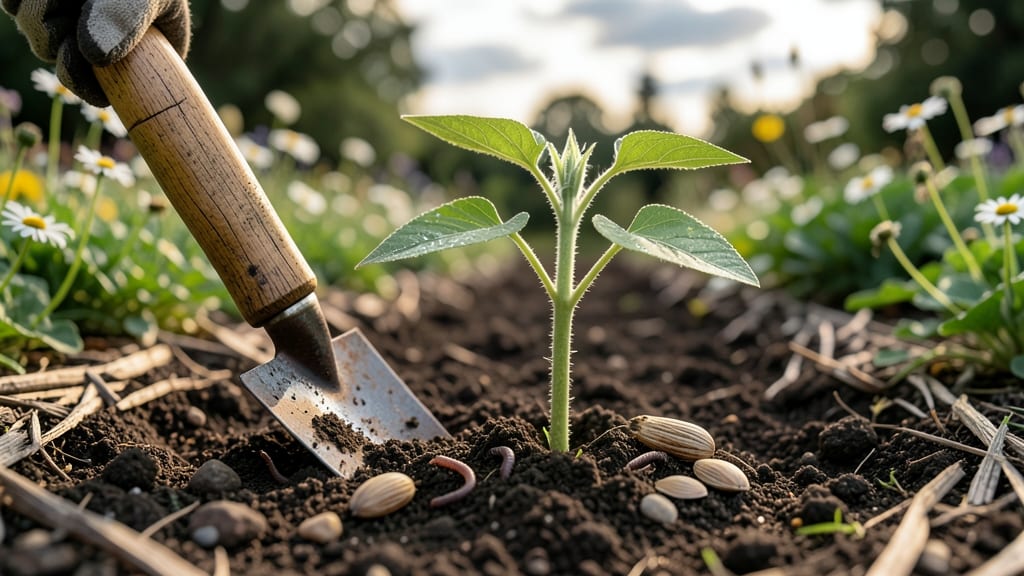
Planting sunflowers at the right depth—just 1 inch below soil—is the fastest way to ensure strong stems and quick germination.
Struggling with sunflowers that refuse to sprout or grow weak stems? The secret lies beneath the surface—planting depth makes all the difference. Too shallow, and seeds dry out; too deep, and they rot before they even sprout.
Get the exact inches for sunflower success, and you’ll watch your giants thrive from seed to towering bloom.
In Zone 6a, where spring planting kicks off in April, the ideal planting depth keeps seeds moist but not waterlogged. Whether you’re growing towering 16-foot varieties or compact 2-foot dwarfs, consistency is key.
Below, I’ll break down the exact measurements, soil prep tricks, and spacing tips to set your sunflowers up for fast growth and robust stems.
Discover how to adjust for heavy clay, sandy soil, and even rocky terrain—plus the one common mistake that stunts germination before it starts. By the end, you’ll know exactly how deep to plant for faster sprouts and stronger plants every time.

Optimal sunflower planting depth by seed type: exact inches for best germination
If you've ever planted sunflower seeds only to watch them fail to sprout or grow into weak, leggy stems, you're not alone. The planting depth is one of the most overlooked factors in sunflower cultivation, yet it directly impacts germination rates and stem strength.
Sunflower seeds need precise placement to access moisture while avoiding rot or stunted growth. Let’s dive into the exact inches for planting based on seed type, soil conditions, and climate.
Sunflower seeds are surprisingly delicate when it comes to depth. Planting too shallow exposes them to drying out, while burying them too deep can suffocate the emerging sprout.
The ideal planting depth for most sunflower varieties is 1 inch deep, but this can vary slightly depending on whether you’re growing giant sunflowers, dwarf varieties, or hybrids. Even the soil temperature plays a role—cooler soils may require shallower planting to encourage faster germination.
| Seed Type | Optimal Depth | Soil Temp for Germination | Germination Time | Common Mistakes |
|---|---|---|---|---|
| Giant Sunflowers (e.g., 'Mammoth', 'Russian Giant') | 1–1.5 inches | 60–70°F (15–21°C) | 7–14 days | Planting too deep (stunted growth) |
| Dwarf Varieties (e.g., 'Teddy Bear', 'Sunspot') | 0.75–1 inch | 55–65°F (13–18°C) | 5–10 days | Overwatering shallow seeds (rot) |
| Hybrid Seeds (e.g., 'Autumn Beauty', 'ProCut') | 1 inch | 65–75°F (18–24°C) | 6–12 days | Inconsistent depth (uneven sprouting) |
| All Types in Cool Climates | 0.5–1 inch | 50–60°F (10–15°C) | 10–20 days | Planting before soil warms (slow germination) |
For giant sunflower varieties, like 'Mammoth' or 'Russian Giant,' a slightly deeper planting of 1–1.5 inches helps protect the larger seeds from drying out in hot climates. These varieties also thrive in warmer soil temperatures (60–70°F), which speeds up germination.
If your soil is cooler, like in early spring, reduce the depth to 0.75–1 inch to avoid delays.
Dwarf sunflowers, such as 'Teddy Bear' or 'Sunspot,' are more forgiving with depth but still prefer 0.75–1 inch. Their smaller seeds germinate faster in cooler soils (55–65°F), making them ideal for early spring planting.
The key here is to avoid overwatering shallow seeds, which can cause rot before the sprout even emerges.
Hybrid sunflower seeds, like those from 'Autumn Beauty' or 'ProCut,' strike a balance and typically require 1 inch of depth. These varieties are bred for consistency, so maintaining uniform planting depth is critical.
Inconsistent depth leads to uneven sprouting, which can weaken your entire sunflower patch. Use a seed spacing tool or your finger to mark consistent grooves in the soil.
One of the most common mistakes gardeners make is planting sunflower seeds too deep, which forces the sprout to push through compacted soil, resulting in weak stems. Conversely, planting too shallow exposes the seed to drying out, especially in sandy or well-draining soils.
Always loosen the soil slightly before planting to create an ideal environment for root establishment.
Soil temperature is just as critical as depth. Sunflower seeds won’t germinate well in soils below 50°F (10°C). Use a soil thermometer to check temperatures—if it’s too cool, consider starting seeds indoors or using a black plastic mulch to warm the soil faster.
Warmer soils (70°F+) speed up germination to as little as 5–7 days, while cooler soils may take 2–3 weeks.
To maximize your sunflower’s potential, pair the right depth with proper spacing and sunlight. Plant seeds 6–12 inches apart in rows spaced 1
How to adjust planting depth for different soil types and climates
Your sunflower seeds might be perfectly viable, but if your soil type or climate zone isn't accounted for, you're fighting an uphill battle before the first sprout appears.
The 1-inch rule works for average garden soil, but heavy clay, sandy loam, or rocky terrain demand adjustments to ensure roots establish properly. Let's dive into how to tweak your planting depth for maximum success.
In hot, dry climates like the Southwest U.S., sunflowers need slightly deeper planting—1.25 inches—to protect delicate seeds from rapid moisture loss. Meanwhile, in cool, wet regions like the Pacific Northwest, shallow planting (0.75 inches) prevents rot from excess moisture.
Your local soil drainage and temperature fluctuations are the real game-changers here.
⚠️ WARNING: Common Mistakes That Stunt Growth ⚠️
Planting Too Deep in Sandy Soil
Sunflowers planted 1.5+ inches deep in sandy soil suffocate—roots can't push through compacted grains. Result? Stunted stems and poor germination (30-50% failure rate). Always adjust to 0.5 inches max in loose, fast-draining sands.
Ignoring Frost Risks in Cool Climates
Planting 1 inch deep in Zone 5 or cooler? Seeds may rot if spring frosts linger. Instead, use 0.5-inch depth and cover with row fabric until soil warms to 55°F+.
For heavy clay soils, the key is creating pockets of air around seeds. Use a garden fork to loosen soil to 6 inches deep before planting, then place seeds at 1.5 inches depth.
Mix in compost or perlite to improve drainage—this prevents root rot and encourages faster germination (cutting wait time by 2-3 days).
Rocky terrain presents unique challenges. If your garden bed has surface rocks, plant seeds in shallow trenches (0.5 inches deep) and cover with mulch to retain moisture.
For deeper rock layers, use container gardening with well-draining cactus mix and plant seeds at 1 inch depth—this mimics ideal conditions without soil struggles.
Climate also dictates watering adjustments. In arid zones, deeper planting (1.25 inches) helps seeds access moisture from deeper soil layers. Conversely, in humid areas, shallow planting (0.75 inches) reduces fungal risks.
Always water deeply after planting—this settles soil and ensures consistent moisture contact with seeds.
Troubleshoot poor germination by checking three things: depth, soil temperature, and moisture. If seeds aren't sprouting within 7-14 days, dig up one to check—it should be moist but not soggy, with no signs of mold.
Adjust your planting depth by 0.25 inches shallower or deeper based on your soil's drainage test results.