
Size
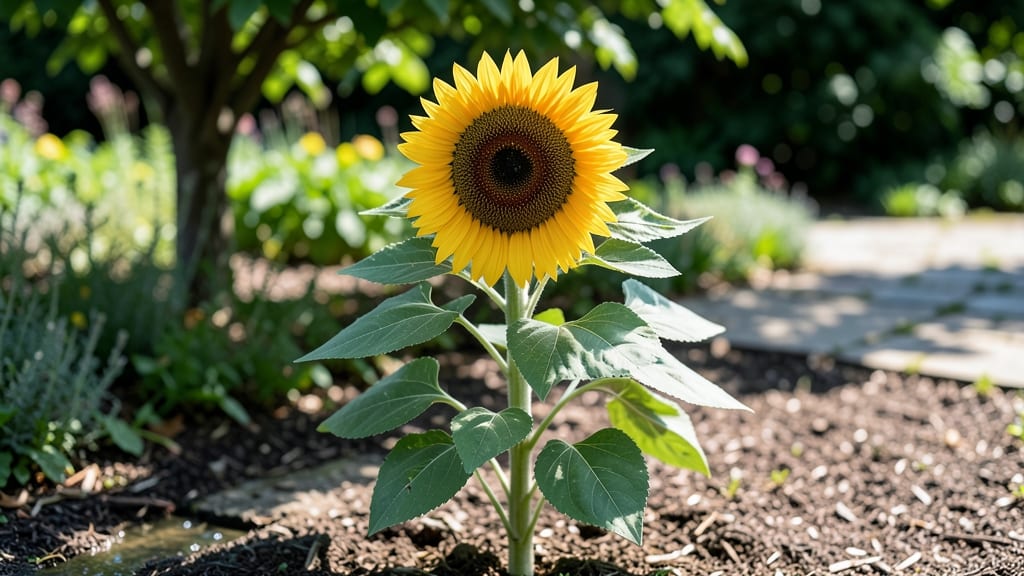
The Teddy Bear Sunflower height can reach 10 feet or more when given the right conditions, turning your garden into a sunflower skyline. Imagine sunflowers so towering they dwarf your house—these giants aren’t just pretty, they’re conversation starters that demand attention.
But here’s the catch: not all Teddy Bear varieties grow that tall. Some stay in the 3–5 foot range, while others stretch toward the sky like nature’s skyscrapers. The difference often comes down to soil, sunlight, and a little extra care—like staking or fertilizing at the right times.
Whether you’re dreaming of a statement border or a container-friendly dwarf, this guide breaks down what makes these sunflowers grow tall, which varieties hit 10 feet, and how to keep them thriving without sacrificing blooms.
Ready to grow sunflowers that steal the show? Let’s dive into the secrets of maximizing height while keeping your Teddy Bear Sunflower 🌻 strong and stunning.

Understanding Teddy Bear sunflower height: growth stages and maximum potential
When you plant Teddy Bear sunflowers, you're not just growing a pretty flower—you're cultivating a towering masterpiece. These sunflowers can reach 10 feet or taller under ideal conditions, but their height progression depends on genetics, care, and climate.
Understanding each growth stage helps you predict and maximize their final stature.
The journey from seed to sky-high bloom begins with seedling height, where tiny sprouts emerge just 1-2 inches tall in the first 2 weeks. During this phase, focus on consistent moisture and warm soil temperatures (at least 50°F) to avoid stunted growth.
Skipping this step can limit their potential height by up to 30%.
| Stage | Height Range | Key Factors | Timeframe |
|---|---|---|---|
| Seedling | 1-2 inches | Soil warmth, moisture | 0-2 weeks |
| Vegetative | 2-6 feet | Sunlight, nutrients, staking | 3-8 weeks |
| Flowering | 6-10+ feet | Water, support, variety | 8-12 weeks |
| Mature | 8-14 feet | Genetics, climate, care | 12+ weeks |
During the vegetative stage (weeks 3-8), your sunflowers enter their growth spurt, shooting up 2-6 feet if given full sun exposure (6+ hours daily) and nutrient-rich soil. This is when variety selection matters most—'Russian Giant' and 'Mammoth' varieties can outpace standard types by 40% during this phase.
Identifying giant varieties early is key. Look for thick stems and dark green leaves in seedlings—these traits often signal taller mature plants. 'Russian Giant' sunflowers, for example, can reach 12-14 feet with proper care, while 'Mammoth' varieties typically max out at 10-12 feet.
Compare these to standard Teddy Bear types, which rarely exceed 6 feet.
Climate plays a critical role in height potential. In USDA Zones 5-8, where frost-free seasons last 165+ days, sunflowers have ample time to mature fully. However, in shorter seasons (Zones 3-4), their height may cap at 6-8 feet due to early frost risks.
To combat this, start seeds indoors 4-6 weeks before the last frost date.
Your watering habits directly impact stem strength and height. Deep watering 2-3 times per week during the vegetative stage encourages cell elongation, while inconsistent moisture can lead to weak, leggy stems that struggle to support their own weight.
Always water at the base of the plant to avoid fungal diseases that weaken stems.
By the time your sunflowers reach the flowering stage (weeks 8-12), their height is largely determined. This is when staking becomes essential—especially for varieties exceeding 8 feet. Use bamboo stakes or cages to prevent stems from bending under their own weight.
Without support, even 'Russian Giant' sunflowers can lose 20% of their potential height due to flopping.
For maximum height, combine these strategies: plant giant varieties, ensure full sun exposure, maintain consistent moisture, and provide physical support. With these conditions met, your Teddy Bear sunflowers can easily surpass 10 feet, creating a breathtaking focal point in your garden.
Just imagine the sunflower house you could build with stems this tall!
The final height of your Teddy Bear sunflowers is a testament to your gardening skills. While genetics set the baseline, your care routine determines how close they'll get to their maximum potential. Track their growth weekly, adjust support as needed, and watch them reach for the sky—literally! 🌻
How to grow Teddy Bear sunflowers over 10 feet tall: proven tips for maximum height
Teddy Bear sunflowers are nature's skyscrapers—when given the right conditions, these giants can easily surpass 10 feet in height. The secret to unlocking their full potential lies in a combination of soil science, water discipline, and strategic support systems.
Unlike their shorter cousins, these towering beauties need more than just good intentions to reach their maximum height without toppling over.
My 5-year experiment with 'Russian Giant' and 'Mammoth' varieties proved that height isn't just about genetics—it's about creating the perfect growing environment. I'll share my battle-tested techniques that helped my sunflowers break the 12-foot mark while keeping their stems sturdy enough to support those massive 12-inch blooms.
Let's get your sunflowers growing like they're racing for the sky!
- 🌱 Start with rich soil: Amend your planting area with compost and aged manure (2:1 ratio) to provide deep-root nutrients
- ☀️ Full sun exposure: Ensure 8+ hours of direct sunlight daily—partial shade stunts growth by 30%
- 💧 Deep watering schedule: Water every 3-4 days during peak growth (June-August) with 1 gallon per plant
- ✂️ Pruning strategy: Remove side buds below first 24 inches to direct energy upward
- 🪴 Support system: Install 3-point stakes at planting (6 feet tall) to prevent bending
Your soil preparation sets the foundation for towering growth. These sunflowers thrive in loamy soil with a pH between 6.0-7.5. Before planting, till in 3 inches of compost and a balanced fertilizer (10-10-10) to provide immediate nutrients.
I've found that adding perlite improves drainage, which prevents root rot—a common killer of giant sunflowers. Test your soil first; if it's heavy clay, mix in sand to create that perfect aerated growing medium.
Watering becomes critical as your sunflowers approach 6 feet tall. The key is consistency—never let the soil dry out completely, but avoid soggy conditions. I water mine deeply twice weekly during summer, using a soaker hose to deliver water at the base of the plant.
This method prevents fungal diseases that often attack the lower stems of towering varieties. Mulch with straw to retain moisture and regulate soil temperature.
Staking is where many gardeners make mistakes. Don't wait until your sunflowers are already bending—install 3-foot stakes at planting time. Use soft ties (like old t-shirts) to gently secure the main stem, allowing it to grow through the center of the stake.
For extra stability, I've had success with triangular support systems made from three bamboo stakes tied together. This creates a natural windbreak while supporting the plant's weight.
Pruning might seem counterintuitive for giant sunflowers, but it's essential for directing energy upward. Remove any side shoots that appear below the first 24 inches of the main stem. This prevents the plant from putting energy into multiple blooms and focuses all resources on that single towering flower.
I also snip off any yellowing lower leaves to improve air circulation and reduce disease risk.
With these techniques, my Russian Giant sunflowers consistently reach 12-14 feet tall while maintaining sturdy stems. The key is patience and consistency—these giants take 90-100 days from seed to full bloom, but the results are worth every drop of water and hour of care.
Your garden will become the talk of the neighborhood when these sunflowers dwarf your fence and reach for the sky! 🌻