
Flowers
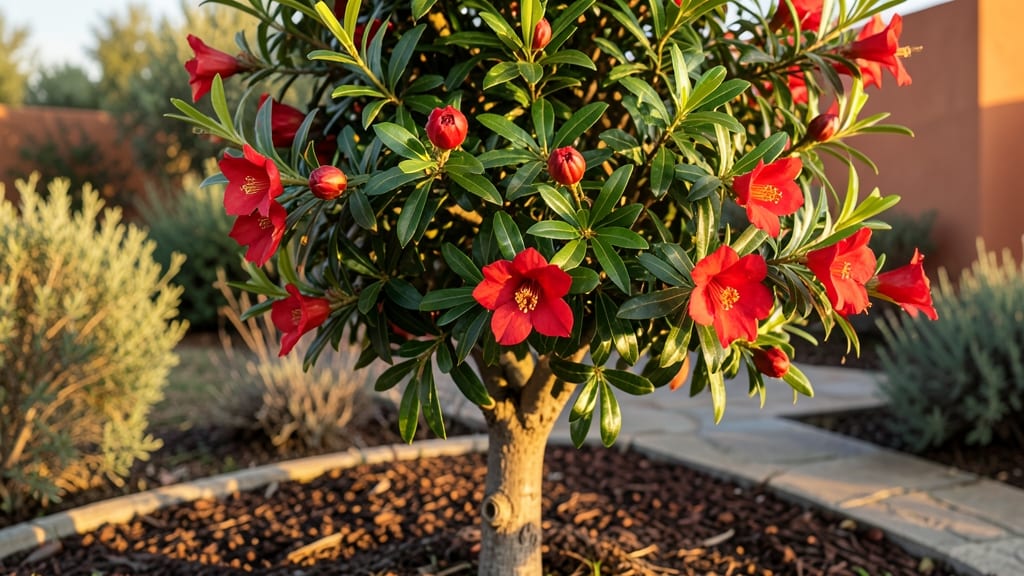
Pomegranates flower in late spring, typically between April and June in most of the U.S., but the exact timing depends on your climate zone and the variety you’ve planted.
Wondering why your pomegranate tree isn’t blooming—or when to expect those stunning red flowers? Timing is everything, and climate plays a starring role in triggering these vibrant blooms.
In warmer zones like 9-11, blooms often appear as early as February or March, while cooler zones (7-8) may see flowers in May or even June. Some varieties even produce a second flush of blooms in late summer, setting the stage for a second harvest.
Below, I’ll break down the exact months for your zone, how to encourage earlier or later blooms, and what to do if your tree seems stuck in a no-flower rut.
Pomegranate flowering timing by USDA climate zones
Pomegranate trees (Punica granatum) burst into stunning crimson blooms each year, but the timing varies dramatically depending on your USDA climate zone. In cooler zones like Zone 7, blooms appear later in spring, while tropical Zone 11 trees may flower as early as February.
Understanding these patterns helps you anticipate—and even encourage—those show-stopping flowers.
Temperature is the primary trigger for flowering. Pomegranates need a period of cool winter dormancy (chilling hours) followed by warm spring temperatures to break dormancy and bloom.
In warmer zones, this transition happens earlier, while cooler zones require more time. Let’s break down exactly when to expect those vibrant bell-shaped flowers in each zone.
| USDA Zone | Typical Bloom Window | Key Temperature Trigger | Notes |
|---|---|---|---|
| Zone 7 (0-10°F) | Late April–early June | 50–60°F sustained for 2+ weeks | Late bloomers; needs full winter chill. |
| Zone 8 (10-20°F) | Mid-April–May | 55–65°F for 3+ weeks | Moderate chill requirement; reliable blooms. |
| Zone 9 (20-30°F) | March–April | 60–70°F after mild winter | Early bloomers; may flower twice/year. |
| Zone 10 (30-40°F) | February–March | 50–60°F with no frost risk | Minimal chill; blooms early but sensitive to cold snaps. |
| Zone 11 (40°F+) | January–February | Consistent 65–75°F | Tropical varieties; may bloom year-round in ideal conditions. |
In Zone 7, where winters are cold, pomegranates often wait until late spring to bloom, aligning with the last frost date. The 50–60°F temperature threshold signals the tree to push out buds after its winter dormancy.
If you’re in Zone 8, expect blooms to arrive a month earlier, typically in mid-April, as the soil warms and frost risk diminishes.
Gardeners in Zone 9 enjoy the earliest blooms, often as early as March, thanks to milder winters. Some varieties, like 'Wonderful', may even produce a second flush of flowers in late summer if conditions are ideal.
In Zone 10 and 11, the bloom window shifts to winter months, with flowers appearing as early as January when temperatures stabilize above 50°F.
Temperature fluctuations can delay or advance blooming. For example, an unexpected frost in Zone 9 might damage early buds, pushing blooms into May instead. Conversely, an unusually warm winter in Zone 7 could trigger premature budding, which may get nipped by late frosts.
Monitoring your local 10-day forecast helps you predict bloom timing more accurately.
Not all pomegranate varieties bloom at the same time within a zone. 'Eversweet', a cold-hardy cultivar, often flowers 2–3 weeks earlier than 'Mollar de Elche', which prefers warmer climates. If you’re growing multiple varieties, staggering bloom times can extend your visual interest and even your harvest window.
Light exposure also plays a role. Pomegranates need 6+ hours of direct sunlight daily to set buds properly. In shadier microclimates (e.g., near a north-facing wall), blooms may be sparser or delayed.
If your tree isn’t flowering on schedule, check its sun exposure and consider relocating it to a sunnier spot.
For gardeners in Zone 11, where blooms arrive in winter, protecting flowers from unexpected cold snaps (even in warm zones) is key. A light frost cloth can safeguard buds if temperatures dip below 32°F.
In contrast, Zone 7 gardeners should avoid pruning until after blooms appear, as late-season pruning can remove next year’s flower buds.
Knowing your zone’s bloom window helps you plan for pest control and pollination support. Pomegranate flowers attract bees and hummingbirds, but in cooler zones, you might need to hand-pollinate if weather delays bloom synchronization.
Keep an eye on aphids or scale insects, which thrive on new growth and can stress your tree before it even flowers.
If your pomegranate isn’t blooming on time, don’t panic—it could be due to insufficient chilling hours, over-fertilization, or poor drainage. Next, we’ll cover how to encourage earlier or later blooms based on your climate.
For now, mark your calendar and enjoy the spectacular show when those red blooms arrive! 🌸
How to encourage earlier or later pomegranate blooms
Pomegranates are finicky about timing—they need just the right balance of chill hours, sunlight exposure, and pruning strategies to trigger blooms when you want. If your tree is flowering too late (or not at all), don’t worry—small adjustments can shift those stunning red flowers to your preferred season.
The key lies in understanding your tree’s dormancy requirements and how to manipulate its natural cycle.
Most pomegranates bloom in late spring, but with targeted techniques, you can coax earlier spring blooms or even fall flowers in warmer climates. For example, winter chilling (300–600 hours below 45°F) is critical—without it, your tree may skip flowering entirely.
If you’re in a mild zone like Zone 9 or 10, you’ll need to simulate chilling or choose low-chill varieties like ‘Wonderful’ or ‘Eversweet’ to encourage blooms.
🌱 5 Key Ways to Adjust Pomegranate Blooms
- 1. Prune in late winter to remove old wood and stimulate new growth, which blooms earlier.
- 2. Provide artificial chilling (e.g., refrigerator storage for potted trees) if your zone lacks winter chill.
- 3. Adjust sunlight exposure—morning sun + afternoon shade can delay blooms in hot climates.
- 4. Fertilize with high-phosphorus (e.g., 5-10-10) in early spring to boost flower production.
- 5. Mulch heavily in fall to protect roots and encourage stronger dormancy for next year’s blooms.
Pruning is your most powerful tool for timing blooms. In late winter or early spring, cut back overgrown branches to redirect energy toward new flowering wood. Focus on removing crossing branches and dead wood, which can delay blooming.
For earlier flowers, prune heavily in late winter—this forces the tree to push out new growth that will bloom sooner. Conversely, light pruning in summer can delay blooms until fall in warm zones.
Soil and water play hidden roles too. Pomegranates thrive in well-draining, slightly acidic soil (pH 5.5–7.0). If your soil is too alkaline or waterlogged, blooms will suffer. Amend with compost or sulfur to adjust pH, and ensure deep watering (2–3 gallons per tree) during drought stress.
Overwatering in winter can prevent dormancy, so reduce irrigation once temperatures drop below 50°F.
Sunlight is another game-changer. Pomegranates need 6+ hours of direct sun, but in hot climates, afternoon shade can delay blooms until fall. If you want spring blooms, ensure full morning sun and partial afternoon shade.
For container-grown trees, move pots to a sheltered spot in winter to protect them from frost damage, which can disrupt flowering cycles.
Pro tip: If your tree blooms too late, try strategic fertilizing. Apply a balanced fertilizer (e.g., 10-10-10) in early spring to jumpstart growth, then switch to a high-phosphorus blend (e.g., 5-10-10) when buds form.
Avoid nitrogen-heavy fertilizers—they promote leafy growth over flowers. And remember, patience is key: it can take 2–3 years for a young tree to establish and bloom reliably.