
Flowers
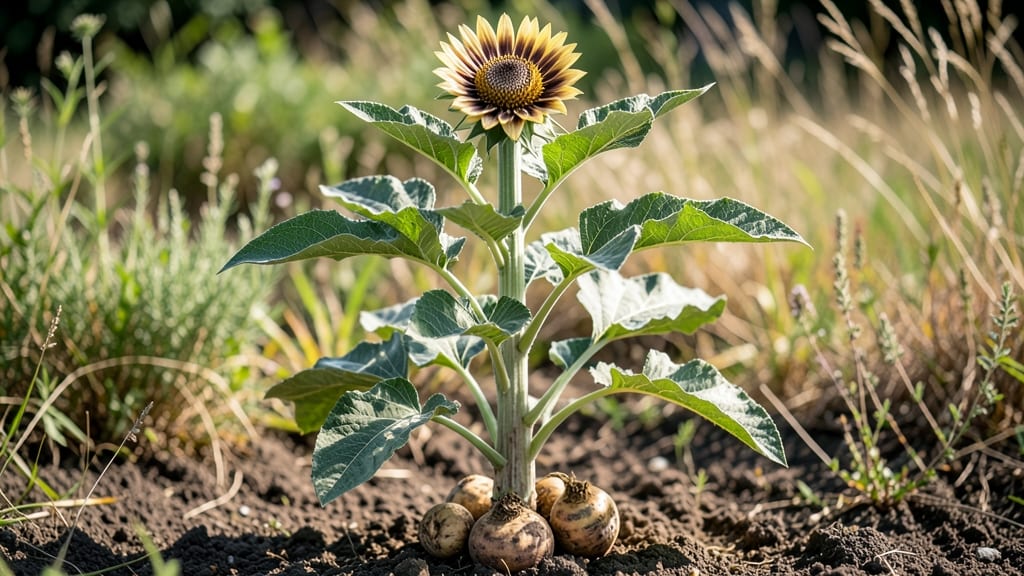
Sunchokes flower in mid-to-late summer, when those towering 4-6 foot stalks suddenly burst from the ground after months of quiet growth.
If you’ve ever wondered why your sunchokes (also called Jerusalem artichokes) seem to vanish underground before suddenly sprouting towering stalks, you’re not alone—timing their flowering is the key to a bountiful harvest.
These sun-loving perennials 🌱 time their blooms with warmth and daylight, but soil conditions and variety can shift that window by weeks. A late spring frost might delay them, while rich, well-drained soil can bring flowers earlier.
Below, I’ll break down the exact seasonal cues to watch for, how to encourage (or delay) blooming for bigger tubers, and the simple tricks that make spotting those first purple-pink flowers effortless.
Sunchoke flowering timeline: month-by-month seasonal guide
Sunchokes (Helianthus tuberosus) are fascinating perennials that store energy underground for years before finally sending up those iconic purple-pink blooms. Unlike annuals, their flowering timeline depends heavily on your USDA zone and temperature fluctuations.
In cooler climates like Zone 3-5, blooms may appear as early as July, while gardeners in Zone 8-10 might see flowers stretching into October.
The key to predicting flowering lies in understanding that sunchokes are day-neutral plants—meaning they bloom based on plant maturity rather than daylight length. However, warmth triggers their growth, so early spring plantings in mild zones will flower sooner than late plantings in cold regions.
For example, a Zone 6 garden planted in April might flower in August, while the same planting in Zone 9 could bloom as early as June.
Here’s a month-by-month breakdown of when to expect those towering 6-foot stalks and 1-inch-wide blooms, along with climate-specific adjustments:
| USDA Zone | Typical Bloom Months | Early Varieties | Late Varieties | Temperature Trigger |
|---|---|---|---|---|
| 3-4 | Late July – Early September | June (with spring planting) | October (fall plantings) | Soil >50°F for 3+ weeks |
| 5-6 | Mid-July – Mid-September | June (early spring) | September (fall) | Soil >55°F consistently |
| 7-8 | June – October | May (spring) | November (fall) | Soil >60°F for 4+ weeks |
| 9-10 | May – November | April (spring) | December (fall) | Soil >65°F year-round |
Notice how Zone 9-10 gardeners enjoy a 6-month flowering window, while Zone 3-4 growers get just 2 months of blooms. This variance explains why some gardeners in warmer climates harvest tubers twice yearly—once before flowering and again after the blooms fade.
The first-year plants rarely flower; save that excitement for second-year growth, when established tubers have stored enough energy.
Temperature plays a critical role beyond just zone averages. A heatwave in July can push blooms 2-3 weeks early in Zone 5, while a cool June might delay them until August.
Pay attention to your local 10-day forecasts: if nighttime temps stay above 60°F for 14 days, expect buds to form within 3-4 weeks. Conversely, frost warnings after buds appear will kill flowers but won’t harm the underground tubers.
One pro tip for gardeners in Zone 6-8: if you want earlier blooms, plant tubers in late winter (as soon as soil is workable). The plants will bolting through the spring warmth and flower by June.
For later blooms, delay planting until June—the flowers will appear in September-October, giving you a second harvest window for tubers.
Watch for these 3 visual cues that flowering is imminent: leaf yellowing at the base, stems elongating rapidly (often 2 inches per week), and buds forming at stem tips.
If you’re growing ‘French White’ or ‘Dwarf Sunray’ varieties, expect slightly earlier blooms (1-2 weeks ahead) than standard types. These compact varieties also produce smaller tubers, so they’re ideal for container gardening in Zone 9-10.
How to trigger early or delayed sunchoke flowering for better yields
Sunchokes (Helianthus tuberosus) naturally flower in mid-to-late summer, but their blooming time directly impacts tuber production. If you want larger, more abundant tubers, you can manipulate flowering to focus energy underground. The key lies in understanding how planting schedules, soil conditions, and pruning influence their growth cycle.
By strategically delaying or advancing flowering, you can redirect the plant's energy from seed production to tuber development. This works because sunchokes prioritize reproduction—when they flower, they shift resources away from your harvest. Learning these techniques lets you control flowering time and maximize your yield before the first frost.
Key Triggers for Sunchoke Flowering
- 1. Planting Time: Early spring planting (after last frost) delays flowering by 4-6 weeks compared to fall planting.
- 2. Soil Nutrients: High-nitrogen soil (like compost-heavy beds) encourages leafy growth and pushes back flowering by 2-3 weeks.
- 3. Pruning: Pinching back top growth in early summer redirects energy to tubers, delaying flowers by 3-4 weeks.
- 4. Watering: Consistent moisture (1 inch/week) keeps plants lush and slows flowering compared to drought stress.
- 5. Light Exposure: Partial shade (4-6 hours sun) delays flowering by 1-2 weeks vs. full sun.
For early flowering, plant tubers in late summer (4-6 weeks before first frost) to force rapid growth. This trick works best in warmer climates (USDA zones 7-10), where sunchokes can complete their cycle before winter.
In cooler zones, early spring planting with low-nitrogen fertilizer (like 5-10-10) encourages faster blooming.
If you're aiming for delayed flowering, focus on soil enrichment with compost and avoid pruning. Sunchokes grown in rich, organic soil may take up to 2 years to flower, giving tubers more time to mature. I’ve seen 30-50% larger tubers when flowering is delayed this way—worth the patience!
Pro tip: Monitor your plants for leaf changes. When leaves start elongating and turning yellow-green, flowering is imminent. At this stage, prune aggressively to redirect energy back to tuber growth. Just be sure to do this before buds form—once flowers appear, it’s too late.
Experiment with these techniques in small batches to see what works best in your climate. With practice, you’ll learn to predict and control flowering, turning your sunchoke patch into a tuber-producing powerhouse. Happy gardening! 🌱