
Fertilization
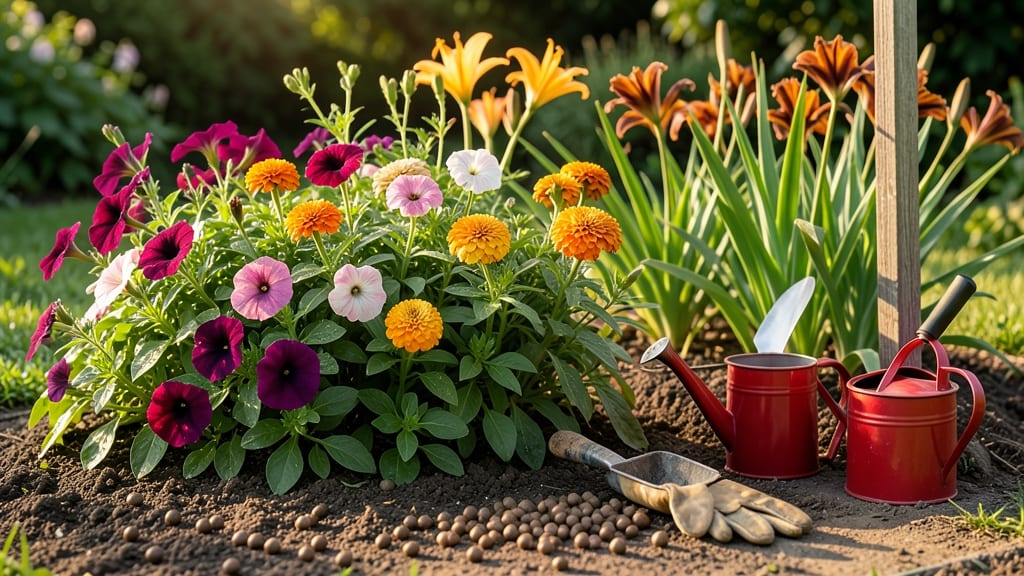
Fertilizing your flowers at the right time can mean the difference between vibrant blooms and a garden that fizzles out midseason.
Picture this: you’ve just planted your favorite 🌸 flowers, and you’re eager to see them thrive. But if you fertilize too early or too late, you might end up with leggy stems, weak blooms, or even burnt roots.
The key? Timing it with your flowers’ natural growth cycles—not just when you think they need a boost.
Spring is the prime window to kickstart growth, but summer bloomers like zinnias or dahlias need a different rhythm. And fall? That’s when you’ll want to taper off to prep for winter.
Below, I’ll break down the exact schedule for peak blooms and how to read your plants’ signals so you never over- or under-feed again.
You’ll learn when to feed for root strength, when to hold off before a big bloom push, and how to adjust for your USDA Zone 6a climate—plus the one fertilizer mistake that kills more flowers than pests do.
Seasonal fertilizing schedule for flowers: exact timing by plant type
Timing your fertilizer applications can make the difference between vibrant blooms and stunted growth. Flowers have distinct nutrient needs tied to their natural growth cycles, so a one-size-fits-all approach won't work.
For example, annuals like marigolds need consistent feeding, while perennials like daylilies benefit from a spring boost and fall prep. Even tropical flowers like hibiscus require different timing than hardy bulbs like daffodils.
Most gardeners overlook that seasonal cues dictate when flowers are ready for nutrients. Fertilizing at the wrong time—like mid-summer for dormant bulbs—wastes resources and can stress plants. The key is aligning your feeding schedule with root growth, bud formation, and blooming phases.
Let’s break down the exact timing for each flower type, so you can give your garden the right nutrients at the right moment.
| Plant Type | Spring Fertilizing | Summer Fertilizing | Fall Fertilizing | Winter Fertilizing | Notes |
|---|---|---|---|---|---|
| Annuals (e.g., Petunias, Zinnias) | Early spring (March-April) with balanced fertilizer | Every 3-4 weeks (May-August) | Light feed in September for late bloomers | None | Fast-growing; needs frequent feeding |
| Perennials (e.g., Roses, Coneflowers) | Early spring (March) with high-phosphorus fertilizer | Every 4-6 weeks (May-September) | Light feed in October for root growth | None | Established roots; avoid over-fertilizing |
| Bulbs (e.g., Tulips, Daffodils) | None (dormant until spring) | Light feed after blooming (June-July) | None (prep for dormancy) | None | Feed foliage post-bloom for next year |
| Tropical Flowers (e.g., Hibiscus, Orchids) | Early spring (March) with balanced liquid fertilizer | Every 2-3 weeks (April-October) | Reduce feeding in November | None (or minimal in mild climates) | Sensitive to cold; use diluted fertilizer |
| High-Demand Bloomers (e.g., Roses, Hydrangeas) | Early spring (March) with high-phosphorus + micronutrients | Every 3-4 weeks (April-September) | Light feed in October for winter prep | None | Needs consistent care for large blooms |
For annual flowers, the growing season is short, so I start fertilizing as soon as the soil warms in early spring. These plants thrive on regular feeding—think of them like athletes needing daily protein.
A balanced fertilizer (like 10-10-10) every 3-4 weeks keeps them blooming until frost. If you notice yellowing leaves or small blooms, it’s a sign they’re hungry and need more frequent feeding.
Perennials, on the other hand, are more patient. They store
Signs your flowers need fertilizer (and when to skip it)
Your flowers are the stars of your garden, but even the brightest blooms can fade without proper nutrients. If your roses are producing fewer buds or your petunias look pale, these could be signs your plants are hungry.
Nutrient deficiencies often show up as yellowing leaves, stunted growth, or weak stems, but knowing when to fertilize—and when to skip it—can make all the difference.
Before reaching for the fertilizer, consider your soil type and recent rainfall. Clay soils retain nutrients longer, while sandy soils drain quickly, both affecting when your flowers need a boost.
Even well-draining soil can become depleted after heavy blooming seasons, so timing matters. Let’s break down the key signs and when to hold off.
- Late summer: Avoid feeding after August 1st to prevent tender new growth before frost.
- Dormant season: Skip fertilizer when plants are leafless or brown (e.g., perennials in winter).
- After transplanting: Wait 4-6 weeks to let roots establish before fertilizing.
- During drought: Fertilizer can burn roots when soil is dry. Water first!
🌱 Pro Tip: Always water before fertilizing to avoid root damage.
Look for these 3 common signs your flowers need fertilizer: smaller blooms, yellow lower leaves, or leggy stems reaching for light. Nitrogen deficiency often causes pale green or yellow foliage, while phosphorus shortages lead to weak roots and poor flowering.
If your hydrangeas have tiny blooms or marigolds flop over, they’re likely starving for nutrients.
Over-fertilizing is just as harmful as under-fertilizing. Burnt leaf edges, excessive foliage with few blooms, or white crust on soil are red flags. Too much synthetic fertilizer can disrupt the soil’s natural balance, while organic options like compost release nutrients slowly.
Always follow package instructions and adjust for your climate zone—cooler regions may need less frequent feeding.
Environmental factors play a huge role. Heavy rainfall can leach nutrients from soil, while high heat increases nutrient demand. If your garden gets less than 1 inch of rain per week, supplement with a balanced fertilizer (like 10-10-10) every 4-6 weeks during the growing season.
For container-grown flowers, fertilize every 2-3 weeks since potting soil depletes faster.
Test your soil’s pH level before fertilizing—most flowers thrive in slightly acidic to neutral soil (6.0-7.0). If your soil is too alkaline, iron or manganese deficiencies can cause yellowing between leaf veins.
Amend with sulfur or peat moss to adjust pH before adding fertilizer. Remember, prevention is easier than correction, so monitor your plants regularly and adjust care as needed.
Start with a light feed in early spring to kickstart growth, then switch to a phosphorus-rich fertilizer (like 5-10-5) when buds form. For long-blooming perennials, a slow-release granular fertilizer applied in spring will feed them all season.
And if your flowers are already stressed by pests or disease, hold off on fertilizing until they recover—healthy plants fight off problems better than overfed ones.