
Flowers
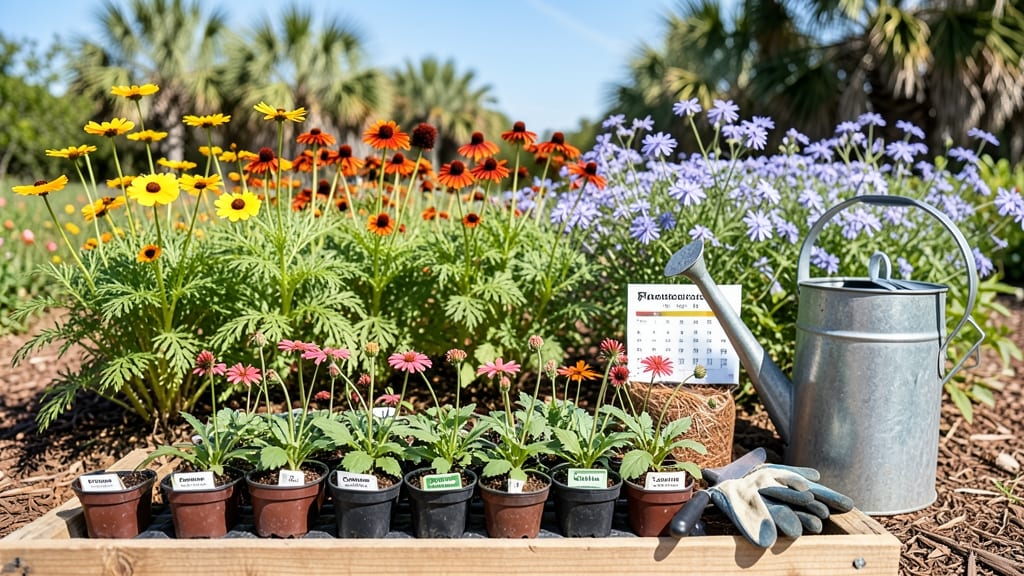
To plant flowers in Florida at the perfect time, aim for fall or early spring—when humidity is lower and heat stress is minimal—so your 🌸 blooms thrive year-round.
Florida’s warm climate lets you enjoy blooming flowers almost year-round—but timing still matters to beat heat stress, pests, and missed seasons.
North Florida’s cooler winters mean frost-sensitive varieties like bougainvillea should wait until March, while South Florida’s frost-free zones let you plant tropicals like hibiscus anytime after summer’s peak heat.
Below, I’ll break down the best months for annuals vs. perennials, regional tweaks, and a quick-reference calendar to keep your garden vibrant without the guesswork.
Florida planting zones: best months for annuals vs. perennials by region
Florida’s diverse climate zones mean your planting calendar should shift dramatically from North to South Florida. While South Florida (Zone 10a-11) enjoys year-round growing, North Florida (Zone 8a-9a) faces occasional frost—even in Jacksonville or Gainesville.
Understanding these differences helps you avoid heat stress in summer or frost damage in winter.
For annual flowers like impatiens or marigolds, timing is critical to beat summer humidity and pests. Meanwhile, perennials such as hibiscus or plumbago thrive when planted during cooler months when roots establish before peak heat. Let’s break it down by region to maximize your bloom time.
Soil temperature is another key factor—most flower seeds germinate best when soil reaches 60-70°F. In North Florida, this happens by late March, while South Florida can plant almost any month. Humidity spikes in summer also demand well-draining soil to prevent root rot in heat-loving varieties.
In North Florida, spring (Feb–March) is prime for annuals like marigolds, which bloom before summer heat peaks. Fall (Sept–Oct) offers a second chance to plant cool-season favorites like pansies. Meanwhile, perennials should go in late fall or winter to establish roots before spring growth.
Central Florida’s longer frost-free season lets you plant annuals year-round, but August–September is ideal for perennials like firebush, which thrive with established roots before winter rains. Succession planting in spring and fall ensures continuous blooms.
For South Florida, timing is flexible—but hurricane season (June–Nov) demands container readiness. Plant annuals like vinca in spring or fall to avoid storm damage, while perennials such as bougainvillea handle year-round planting with minimal stress.
Soil prep is non-negotiable: amend sandy soil with compost and mulch heavily to retain moisture. North Florida gardens need extra winter protection, while South Florida benefits from raised beds to improve drainage in humid summers.
Pro tip: Use shade cloth (30-50%) for heat-sensitive annuals in summer, and row covers for early spring plantings in North Florida. This small adjustment can double your bloom time!
Remember, Florida’s microclimates vary even within regions—coastal areas stay warmer than inland. Adjust your planting schedule
Seasonal flower planting calendar: what to plant each month for nonstop color
Florida’s year-round growing season means you can enjoy blooms in every month, but the key is planting at the right time to avoid heat stress or pest pressure.
Cool-season flowers like pansies and snapdragons thrive in fall and winter, while lantana and salvia dominate summer’s heat. This calendar keeps your garden vibrant without gaps.
For North Florida (Zones 8a-9a), focus on fall planting for cool-season flowers, while South Florida (Zones 10a-11) can plant year-round. Use succession planting—sow new seeds every 3-4 weeks—to ensure continuous blooms. For example, replace spring pansies with summer marigolds to avoid colorless patches.
Pro Tip: Always check soil temperatures—60°F+ is ideal for most seeds, while 70°F+ triggers faster growth. Use a soil thermometer to avoid waiting too long in spring or rushing in fall.
| Month | Plant | Notes |
|---|---|---|
| January | Pansies, Snapdragons, Sweet Alyssum | Cool-season stars; mulch to protect roots |
| February | Calendula, Stock, Violas | Early bloomers; avoid overwatering |
| March | Petunias, Geraniums, Zinnias | Transition to heat-tolerant picks |
| April | Lantana, Salvia, Pentas | Drought-resistant; full sun required |
| May | Marigolds, Sunflowers, Cosmos | Succession plant every 2 weeks |
| June–August | Bougainvillea, Plumbago, Hibiscus | Heat-lovers; water deeply 2x/week |
| September | Mums, Asters, Dianthus | Fall prep; fertilize lightly |
| October–December | Pansies, Sweet Peas, Calendula | Cool-season repeat; protect from wind |
For succession planting, start with fast-growing annuals like zinnias (seed to bloom in 60 days) and follow with longer-blooming perennials like hibiscus. In North Florida, plant cool-season flowers in September for winter color, while South Florida can stagger plantings every 6 weeks for nonstop blooms.
Watch for pests like aphids in spring and whiteflies in summer. Neem oil or insecticidal soap keeps blooms healthy without harming pollinators. Deadhead spent flowers regularly to encourage new blooms—this works especially well for petunias and geraniums.
Use mulch (2-3 inches) to retain moisture in summer and insulate roots in winter. For container gardens, choose heat-tolerant varieties like lantana or portulaca, which thrive in full sun and drought conditions. 🌸