
Flowers
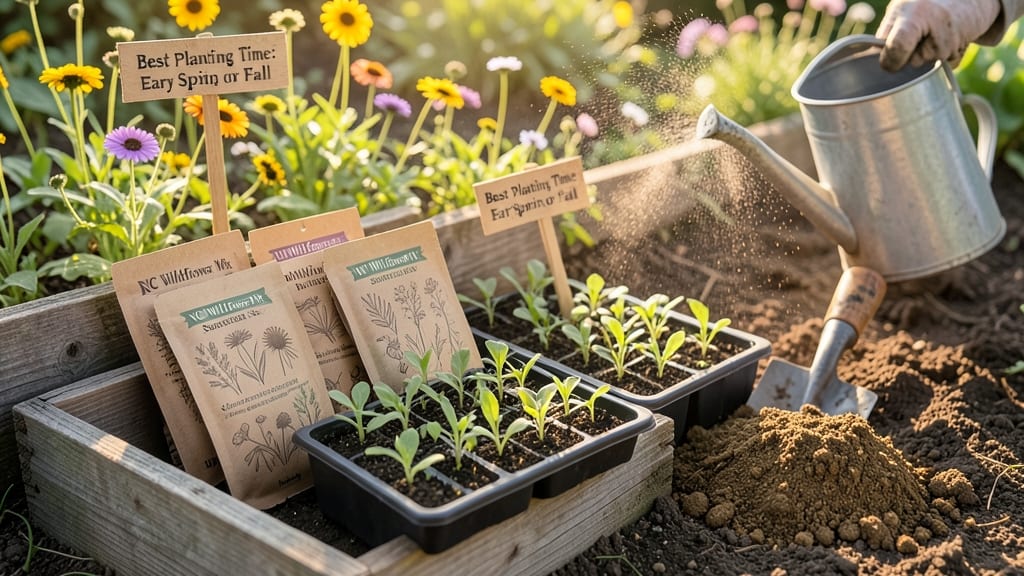
Planting wildflowers in North Carolina at the right time means the difference between a burst of color and a season of disappointment.
If you’ve ever scattered seeds in February only to watch them bake under March sun—or waited until May and missed the ideal window—you know timing matters.
North Carolina’s USDA zones 6a through 8b have wildly different frost dates, and planting too early or late can leave your wildflowers 🌸 struggling to take root.
For most of the state, the sweet spot is late winter to early spring (February through April) for cool-season varieties, or late summer to early fall (August through September) for warm-season blooms.
But whether you’re in the Piedmont’s Zone 7a or the Coastal Plain’s Zone 8b, local microclimates can shift that window by weeks.
Below, I’ll break down the exact frost-date calendar by zone, plus pro tips to stretch your planting window and keep your meadow blooming from spring to fall.
NC wildflower planting calendar by USDA Zone (with frost dates)
North Carolina’s diverse USDA zones 5b through 8a create unique challenges for wildflower planting. The Piedmont region (Zones 6b-7a) experiences earlier frosts than the Coastal Plain (Zones 7b-8a), while the Mountains (Zone 5b-6a) have shorter growing seasons.
Timing your planting to avoid late spring frosts or early fall chills ensures strong germination and vibrant blooms.
For cool-season wildflowers (like bluebells and violets), aim to plant 4-6 weeks before your last frost date. In warm-season zones (7b+), fall planting in August-September gives seeds time to establish roots before winter. Always check microclimate variations—a sheltered valley may frost later than an exposed hillside.
Average frost dates vary dramatically across NC: - Zone 5b (Mountains): Last frost April 15, first frost October 20 - Zone 7a (Piedmont): Last frost March 20, first frost November 5 - Zone 8a (Coastal): Last frost February 28, first frost December 15 Adjust these dates by 1-2 weeks based on your specific location.
| USDA Zone | Last Frost Date | First Frost Date | Spring Planting Window | Fall Planting Window |
|---|---|---|---|---|
| 5b (Mountains) | April 15 | October 20 | March 1 - April 15 | August 15 - September 15 |
| 6a (Mountains) | April 1 | October 30 | February 28 - April 1 | August 1 - September 15 |
| 7a (Piedmont) | March 20 | November 5 | February 15 - March 31 | August 15 - October 1 |
| 7b (Piedmont) | March 1 | November 15 | February 1 - March 31 | August 15 - October 15 |
| 8a (Coastal) | February 28 | December 15 | January 15 - March 15 | September 1 - October 31 |
In Zone 5b, prioritize fall planting for wildflowers like black-eyed Susans and coneflowers, as spring windows are tight. For Zone 8a, you can plant annuals like cosmos as late as March 15 for summer blooms. Always test soil temperature—seeds need 40-60°F for germination.
Coastal areas benefit from extended growing seasons, but humidity and salt spray can stress young seedlings. Use drought-tolerant varieties like coreopsis or beardtongue in these zones. In the Piedmont, well-draining soil is critical—amend heavy clay with compost or sand before planting.
For staggered blooms, mix early spring bloomers (like wild columbine) with late summer varieties (such as goldenrod). This creates a continuous pollinator buffet from April through October. Always water deeply after planting to encourage root growth before establishing dormancy.
If you’re in a transition zone (like 7a/7b), err on the side of earlier planting. A frost blanket can protect tender seedlings if late frosts threaten. Monitor local weather forecasts—unpredictable Polar Vortex events can push frost dates 2-3 weeks earlier than average.
Pro tip: Mark your calendar for 2 weeks before your last frost date—this is your final window for spring planting. For fall, aim to finish by October 15 in Zone 7a to allow roots to establish before winter dormancy. Native wildflowers thrive with minimal intervention once planted correctly!
🌱
Best wildflower types for NC’s climate and when to sow them
North Carolina’s varied climate—from the humid Coastal Plain to the drier Piedmont—makes selecting the right wildflowers crucial. Native varieties like black-eyed Susan and coreopsis thrive in NC’s Zone 6a–8b conditions, offering year-round color while supporting pollinators.
Unlike invasive species, these drought-tolerant plants adapt to NC’s hot summers and mild winters with minimal fuss.
Timing your sowing is everything. Annuals like cosmos and marigolds need spring planting (March–April) for summer blooms, while perennials such as milkweed and purple coneflower benefit from fall sowing (August–September) to establish roots before winter. For Zone 7b+, prioritize deep-rooted varieties like butterfly weed to withstand summer droughts.
- 🌱 Early Spring (March–April): Plant annuals like zinnia and sunflower for summer blooms. Ideal for Zone 5b–7a.
- 🌿 Late Spring (May): Scatter perennial seeds (e.g., bee balm) after last frost. Zone 7b+ can start earlier.
- ☀️ Summer (June–July): Avoid planting—focus on watering established wildflowers. Drought-resistant varieties thrive.
- 🌧️ Early Fall (August–September): Best for perennials like black-eyed Susan. Seeds germinate in cool soil.
- ❄️ Late Fall (October–November): Zone 6a–7a can sow winter-hardy varieties (e.g., wild bergamot) for spring blooms.
For drought-prone areas (common in Zone 8a), opt for deep-rooted natives like goldenrod or partridge pea. These low-maintenance flowers require minimal watering once established and attract butterflies and bees year-round.
In shadier microclimates (e.g., woodland gardens), try wild columbine or Virginia bluebells, which tolerate partial shade.
Pro tip: Stagger your sowing by planting 1/3 in spring, 1/3 in summer, and 1/3 in fall to ensure continuous blooms. This technique works especially well for mixed wildflower meadows in Zone 7b+, where summer heat can stress young plants.
Always lightly cover seeds with soil (¼ inch max) to prevent bird scatter.
If you’re in Zone 5b (e.g., Mountain regions), wait until after the last frost date (typically mid-April) to plant annuals. For perennials, fall sowing in September gives roots time to establish before winter.
In Coastal NC (Zone 8a), you can push spring planting to February for earlier blooms, but avoid late-summer sowing due to humidity risks.
Remember: Native wildflowers are the easiest and most rewarding choice for NC gardens. They require no fertilizer, little water, and zero pesticides—just sun, soil, and time.
Start small with a 5x5-foot plot, mix 3–5 varieties, and watch your pollinator paradise flourish in just one season! 🌻