
Container Gardens
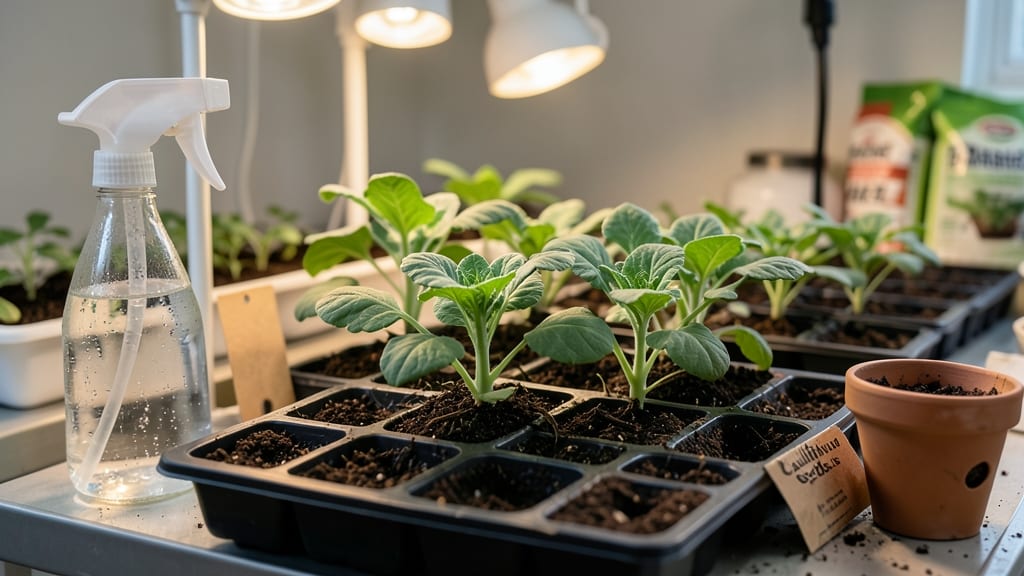
To start cauliflower seeds indoors, aim for 8 weeks before your last frost date—a window that balances seedling strength and outdoor readiness. 🥬
Timing your cauliflower seeds indoors can mean the difference between a thriving harvest and wasted effort—get it wrong, and your plants may bolt before summer arrives.
For most gardeners in Zone 6a, that means sowing in late January or early February, but regional adjustments are key. A late frost? Push it to March. Early varieties? You might start as early as January.
Below, I’ll break down the 8-week timeline, how to spot ready seedlings, and how to tweak your schedule for your specific climate—so you’re not left with leggy, overgrown starts or plants that rush to flower too soon.
Optimal indoor starting dates for cauliflower by last frost date
Getting your cauliflower seeds indoors at the right time ensures strong, healthy seedlings ready for transplant just as the soil warms. Since cauliflower thrives in cool weather, timing is critical—start too early, and seedlings may become leggy; too late, and they won’t mature before heat sets in.
The key is an 8-week indoor timeline before your last frost date, adjusted for your USDA hardiness zone.
Most cauliflower varieties take 75–90 days from seed to harvest, but cooler climates (like Zone 5) need earlier starts than warmer ones (like Zone 10).
For example, in Zone 5, where frost lingers until May 15, I start seeds indoors by March 1 to ensure transplants are ready by late April. Meanwhile, in Zone 10, with mild winters, I delay until January 15 to avoid bolting from heat stress.
Here’s how to calculate your perfect window: subtract 8 weeks from your last frost date, then adjust for early vs. late varieties. For instance, Purple cauliflower (faster-maturing) might start 1–2 weeks later than Romanesco (slower-maturing).
Always double-check your zone’s frost dates—local weather stations or USDA zone maps are your best tools.
| USDA Zone | Last Frost Date | Indoor Start Date | Transplant Window | Notes |
|---|---|---|---|---|
| Zone 3–4 | May 1–15 | March 1–15 | April 20–May 1 | Use cold-hardy varieties; extend with row covers. |
| Zone 5–6 | April 15–May 1 | February 15–March 1 | April 1–15 | Ideal for early varieties like ‘Snowball Y Improved.’ |
| Zone 7–8 | March 1–15 | January 1–15 | February 20–March 15 | Avoid late starts; heat stress risks bolting. |
| Zone 9–10 | January 1–February 1 | November 15–December 15 | January 1–15 | Grow fall/winter crops; use shade cloth in summer. |
For Zone 5 gardeners, like me, I’ve found that starting seeds around February 20 gives seedlings enough time to develop 4–6 true leaves and a sturdy root system before transplanting in early May.
In Zone 10, where winters are mild, I opt for a fall start (November) to harvest before summer heat arrives. Always monitor your local 10-day forecast—unexpected cold snaps can delay planting.
Adjust your timeline if you’re growing heirloom or slow-maturing varieties. For example, Romanesco takes 90+ days, so I start those seeds 2 weeks earlier than standard varieties.
Conversely, Purple cauliflower matures in 60–70 days, allowing a later start. Label your seed packets with days to maturity and work backward from your frost date.
Pro tip: Use a seedling heat mat (set to 70–75°F) to speed up germination, especially in cooler zones. This shaves off 3–5 days from your timeline, giving you a buffer for unexpected delays.
Just avoid letting soil temps exceed 80°F, or seeds may rot. A simple thermometer near your seed tray keeps things safe.
If you’re in a transition zone (e.g., Zone 6b with erratic frosts), err on the side of starting seeds 1 week earlier than the table suggests. I’ve learned this the hard way—last year, a late frost in Zone 6 wiped out my early transplants.
To hedge your bets, keep a few seedlings as backups and transplant in stages over 2 weeks
Key signs your cauliflower seedlings are ready for transplant (not too early, not too late)
Transplanting cauliflower seedlings too early or too late can ruin your entire harvest. Ideal seedlings should be 4-6 weeks old with 3-4 true leaves and a sturdy stem.
These milestones ensure they’re strong enough to handle outdoor conditions without shock or bolting. Root-bound seedlings with tangled roots also signal readiness—just be gentle when handling them!
Pay close attention to stem thickness and leaf size. Seedlings with stems as thick as a pencil lead and leaves about 2-3 inches wide are perfect for transplanting.
Smaller stems risk stunted growth, while overly large leaves indicate the plant may have outgrown its indoor space and needs fresh soil.
Environmental cues matter just as much as physical traits. Daylight hours should be increasing—aim for 12+ hours of light daily—to prevent leggy growth. Check your soil temperature: transplant only when the ground reaches 45°F or warmer. Cold soil shocks roots, delaying establishment and increasing disease risk.
Another critical sign is root development. Gently remove the seedling from its pot and check for white, fibrous roots filling the root ball. If roots are circling or tightly packed, it’s time to transplant. Overcrowded roots compete for nutrients, stunting growth and making seedlings vulnerable to pests.
Transplant too early when nights are still chilly (below 50°F) and your seedlings will linger, becoming weak and prone to damping off. Transplant too late after bolting triggers (heat + long days) kick in, and you’ll get bitter, seed-stalk-heavy plants instead of curds.
Pro Tip: Harden off seedlings for 7-10 days before transplanting—gradually expose them to outdoor conditions (wind, sun, temperature swings) to toughen them up.
Timing your transplant also depends on your cauliflower variety. Early varieties (like Snowball) can handle slightly cooler soils, while late varieties (like Romanesco) need warmer conditions. Always check your seed packet for days to maturity and adjust your transplant window accordingly.
Finally, watch for color changes in the leaves. Healthy seedlings have deep green leaves with no yellowing.
If you spot pale or wilted leaves, it’s a sign of transplant stress—wait a few more days or adjust your outdoor conditions (e.g., shade cloth for hot days). Yellowing leaves often mean the plant is nutrient-deficient or overwatered.
When all these signs align—4-6 weeks old, 3-4 true leaves, thick stems, fibrous roots, and warm soil—your cauliflower seedlings are ready to thrive in the garden. Transplant at dusk or on a cloudy day to reduce stress, and keep soil consistently moist for the first 2 weeks to help roots establish.