
Planting
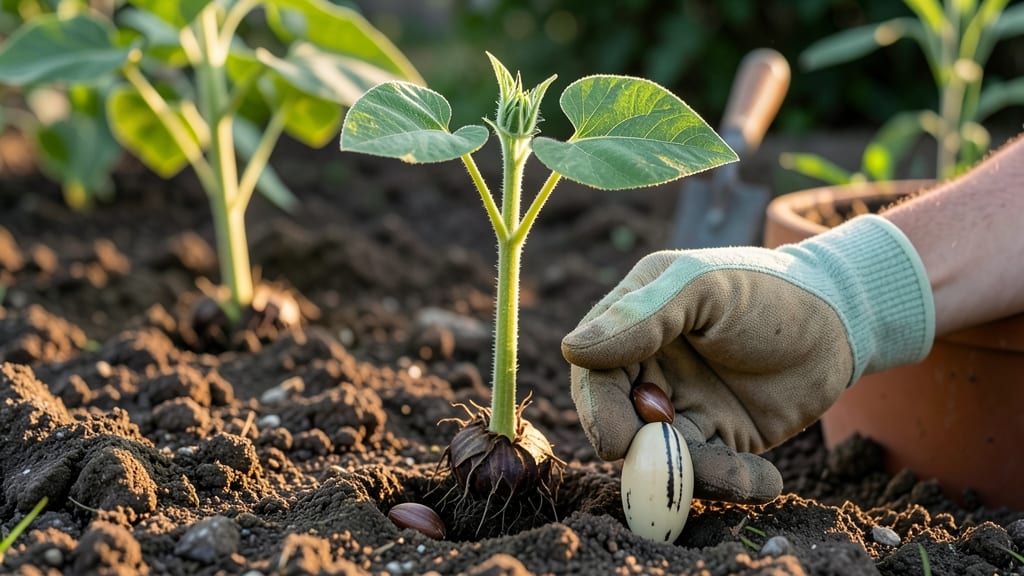
Planting sunflower seeds the right way up ensures straight, sturdy stems that reach for the sky ☀️—no more crooked stalks ruining your summer blooms.
Struggling with lopsided sunflowers? The secret lies in how you place the seed before covering it with soil. One tiny detail—like planting the pointy end down instead of sideways—can make all the difference between a 6-foot giant and a weak, leaning mess.
Most gardeners assume seeds don’t care which way they’re planted, but sunflowers are picky about orientation. A seed planted upside-down or sideways will still sprout, but it’ll fight gravity, wasting energy and leaving you with a stem that bends under its own weight.
Here’s the simple trick: learn how to spot the pointy end (the radicle) and plant it down, just 1 inch deep. I’ll walk you through the visual clues, common mistakes, and pro tips to guarantee your sunflowers grow tall, strong, and ready for harvest in July or August.

How to tell which way up to plant sunflower seeds (with visual clues)
Sunflower seeds might look simple, but planting them the wrong way up can lead to crooked stems or poor germination. The key is understanding their natural orientation—most seeds have a pointy end and a flat side, and sunflowers are no exception.
I’ve planted hundreds of sunflowers, and this one trick saves me from wasted effort every time.
Sunflower seeds are dicotyledonous, meaning they have two halves that split when germinating. The pointed end is where the radicle (the first root) emerges, while the flat side contains the seed leaves.
Planting the pointy end down ensures the root grows downward and the shoot upward, giving you that perfect straight stem we all love.
Here’s the visual trick I use: Hold the seed between your thumb and forefinger. The pointy end should face downward into the soil, while the flatter side stays on top. Think of it like a cone—the tip points to the ground, just like a tree root grows downward.
If you’re still unsure, check the seed packaging. Many brands include a tiny diagram showing the correct orientation. Even if it’s not labeled, the shape difference between the ends is usually obvious once you look closely.
| Seed Feature | Correct Planting Position | Why It Matters |
|---|---|---|
| Pointy End | Down (into soil) | Root (radicle) grows downward first |
| Flat Side | Up (toward surface) | Seed leaves (cotyledons) emerge upward |
| Seed Coat Texture | Smoother side up | Natural orientation for sunlight exposure |
| Visible Suture Line | Sideways (not up/down) | Helps identify the seed’s natural split line |
Pro tip: If you’re planting in loose soil, like sand or compost, the seed’s natural weight distribution will often orient it correctly on its own. But in dense soil, you’ll need to adjust it manually to avoid crooked growth.
Once you’ve got the seed in the right position, plant it 1 inch deep—this is crucial. Too shallow, and it may dry out; too deep, and it struggles to break through.
Use your finger to make a small hole, drop the seed in pointy end down, then cover it gently with soil.
For container gardening, I like to pre-sprout seeds in a damp paper towel before transplanting. This gives me a clear view of the emerging root, so I can plant it perfectly oriented every time. It’s extra effort, but worth it for those showstopping straight stems!
Remember, even if you plant a few seeds upside-down by accident, sunflowers are hardy and often self-correct. But for the best results, consistency is key. With this method, you’ll see 90%+ straight stems in your garden—no more leaning sunflowers!
Now grab your seeds, head outside, and give your sunflowers the perfect start they deserve. Your future tall, proud sunflowers will thank you! ☀️
Common mistakes that cause crooked sunflower stems (and how to fix them)
Even with the right seed orientation, crooked sunflower stems often start with small mistakes during planting. I’ve seen gardeners spend hours straightening wobbly stems only to realize the issue began at the very first seed placement.
The good news? Most problems have simple fixes—once you know what to watch for.
Sunflowers are resilient, but they’re also light-sensitive right from germination. Planting seeds too deep, crowding them, or ignoring soil conditions can trigger weak stems that lean or snap. Let’s break down the top 3 planting mistakes that lead to crooked growth—and how to correct them before they become permanent.
⚠️ Callout-Warning: The #1 Seed-Planting Mistake
Planting sunflower seeds upside-down or sideways forces the seedling to grow crookedly to reach light. The pointy end should always face upward, while the flat side should rest against the soil. If you’re unsure, check for a tiny white root—that’s your clue!
Mistake #1: Planting too deep. Sunflower seeds need moisture but not suffocation. Burying them deeper than 1 inch (2.5 cm) can starve the sprouting seedling of oxygen, causing it to stretch weakly toward light.
Always use your finger to create a shallow trench—just enough to cover the seed lightly with soil.
Mistake #2: Skipping soil prep. Compacted or nutrient-poor soil forces sunflowers to compete for resources, leading to thin, bendy stems. Before planting, loosen the top 6 inches of soil with a garden fork and mix in compost for drainage and strength.
Think of it as giving your sunflower a solid foundation from day one.
Mistake #3: Overcrowding seeds. Planting seeds too close (less than 6 inches apart) creates a tug-of-war for sunlight and nutrients. When seedlings brush against each other, their stems grow lopsided to escape competition.
Thin to 12–18 inches apart once they’re 4 inches tall—this gives them room to grow straight and strong.
For stubbornly crooked stems, don’t despair! Gently stake young seedlings with bamboo canes or tie them loosely to a trellis as they grow. Water deeply in the morning to keep stems hydrated and upright.
With these fixes, you’ll soon have sunflowers reaching for the sky—tall, proud, and perfectly straight.