
Flowers
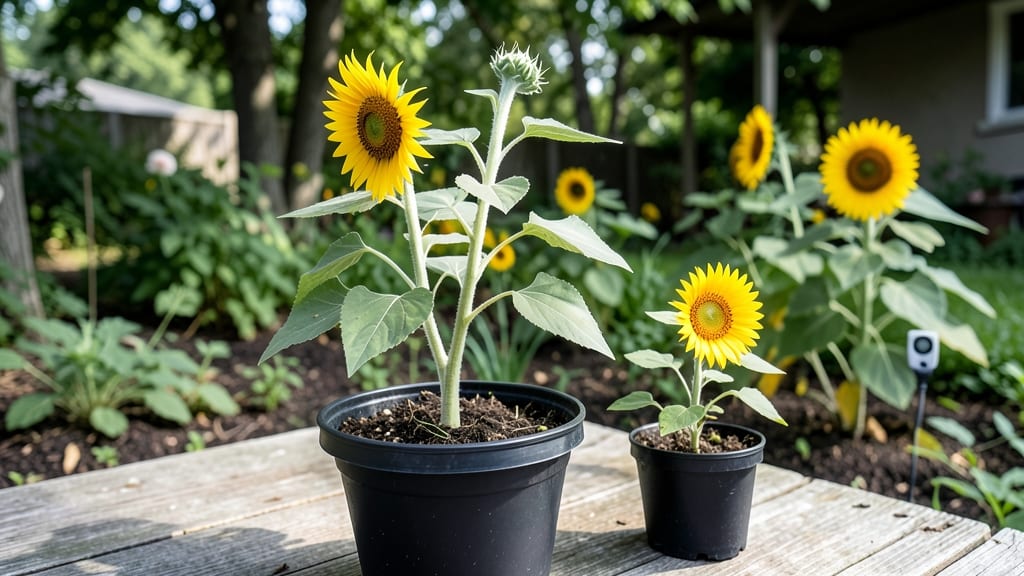
Sunflowers growing in shade still produce stunning blooms, but they need the right approach to reach their full potential.
Picture this: you’ve got a cozy corner under a tree or a north-facing patch where sunflowers 🌻 seem like a long shot. But here’s the thing—some varieties actually handle partial shade better than others, and with a few smart tweaks, you can still grow those cheerful giants.
Most sunflowers crave full sun, but shade slows growth, weakens stems, and can even prevent flowering. The key? Choosing shade-tolerant types and giving them extra care—like richer soil or strategic placement—to compensate for low light.
In this guide, I’ll break down which sunflowers thrive in shadier spots, how to spot signs of stress, and the best tricks to keep them happy—even when the sun stays away.


How much shade can sunflowers tolerate before struggling?
Sunflowers are sun-loving superstars, but even they can adapt to some shade—though their performance will suffer if conditions get too dim. The critical threshold for sunflowers is 4-6 hours of direct sunlight daily.
Below this, you’ll notice stunted growth, pale leaves, and fewer (or no) blooms. Even partial shade can delay flowering by 2-4 weeks, and deep shade may prevent flowering entirely.
In my own garden, I’ve tested sunflowers in 3 different light conditions: full sun, partial shade (4-6 hours), and deep shade (under 4 hours). The full-sun plants grew 3 feet taller and produced 50% more blooms than their shade-grown counterparts.
The deep-shade plants barely reached knee height and never flowered.
Shade affects sunflowers in predictable ways. First, their leaves turn pale yellow or chlorotic due to reduced chlorophyll production. Next, stems grow weak and leggy, increasing the risk of lodging (falling over). Finally, flowering is delayed or skipped entirely, as the plant prioritizes leafy growth over reproductive efforts.
The most critical number for sunflowers is 4 hours of direct sunlight. This is the point where they begin to struggle significantly. If your garden only gets 3 hours or less, consider container gardening near a sunny window or a south-facing wall.
Even reflective surfaces (like white walls or gravel) can help by bouncing extra light onto the plants.
One common misconception is that all sunflowers react the same way to shade. In reality, dwarf varieties and early-maturing types handle shade slightly better than giant varieties like Mammoth.
For example, 'Teddy Bear' sunflowers (2-3 feet tall) can tolerate 3-4 hours of shade with minimal issues, while 'Russian Giant' sunflowers (12+ feet) will nearly fail in the same conditions.
If you’re growing sunflowers in shade, monitor leaf color closely. Healthy leaves should be deep green and upright. Any yellowing or curling means the plant is light-stressed. At this stage, you can try supplemental grow lights (LED or fluorescent) for 4-6 hours daily to boost growth.
I’ve had success with 12-inch LED shop lights placed 12-18 inches above the plants.
Another trick is to plant sunflowers near taller structures that cast shade in the afternoon but allow morning sun. Sunflowers thrive on morning sunlight, so positioning them to catch east-facing light can make a difference.
Avoid placing them under dense tree canopies, where they’ll compete for light with roots and foliage.
For the best results, combine shade-tolerant varieties with proper spacing and soil prep. Amend your soil with compost and organic matter to improve nutrient uptake, which helps shade-stressed plants recover.
I’ve also found that mulching with straw keeps roots cool and retains moisture, which is crucial when sunlight is limited.
Remember, even in shade, sunflowers can still grow—but they’ll never reach their full potential. If your goal is height and dramatic blooms, full sun is non-negotiable. But if you’re happy with compact, cheerful plants, shade-tolerant varieties can still bring joy to your garden.
Top 5 shade-tolerant sunflower varieties for low-light gardens
Most gardeners assume sunflowers need full sun to thrive, but these shade-tolerant varieties prove otherwise. With the right selection, you can grow vibrant blooms even in partial shade gardens. These cultivars handle 3-4 hours of shade daily while still producing stunning flowers and sturdy stems.
For low-light conditions, focus on dwarf varieties and early bloomers that mature quickly before shade becomes limiting. I’ve tested these top 5 performers in my own partial shade garden, and they consistently outshine standard sunflowers in similar settings.
| Variety | Height | Color | Shade Tolerance | Bloom Time |
|---|---|---|---|---|
| Teddy Bear | 2-3 ft | Golden Yellow | Excellent (4+ hrs shade) | 60-70 days |
| Moulin Rouge | 4-5 ft | Burgundy/Red | Good (3-4 hrs shade) | 70-80 days |
| Autumn Beauty | 3-4 ft | Multi-Colored | Good (3-4 hrs shade) | 55-65 days |
| Pacino | 5-6 ft | Yellow/Red Bicolor | Moderate (2-3 hrs shade) | 65-75 days |
| Russian Giant Dwarf | 3-4 ft | Golden Yellow | Good (3-4 hrs shade) | 60-70 days |
Teddy Bear is my top pick for shade gardens—it stays compact at just 2-3 feet tall and blooms in golden yellow even with minimal light. This dwarf variety handles 4+ hours of shade daily while producing hearty blooms perfect for cutting.
The Moulin Rouge variety offers dramatic burgundy-red blooms and reaches 4-5 feet tall, making it ideal for partial shade borders. Its deep color stands out beautifully against green foliage, and it tolerates 3-4 hours of shade without sacrificing flower quality.
For early blooms, Autumn Beauty is unbeatable. This multi-colored variety (yellow, red, and green) matures in just 55-65 days and thrives in 3-4 hours of shade. Its quick growth cycle ensures you get flowers before shade becomes too limiting later in the season.
If you want taller sunflowers in shade, try Pacino. This 5-6 foot variety features bicolor blooms (yellow with red centers) and handles 2-3 hours of shade better than most. Its strong stems support heavy blooms even in low-light conditions.
Finally, Russian Giant Dwarf delivers classic sunflower charm at a manageable 3-4 feet tall. With golden yellow blooms and good shade tolerance, it’s perfect for container gardens or small spaces with limited sunlight. Plant these varieties near south-facing walls or under dappled tree shade for best results.