
Flowers
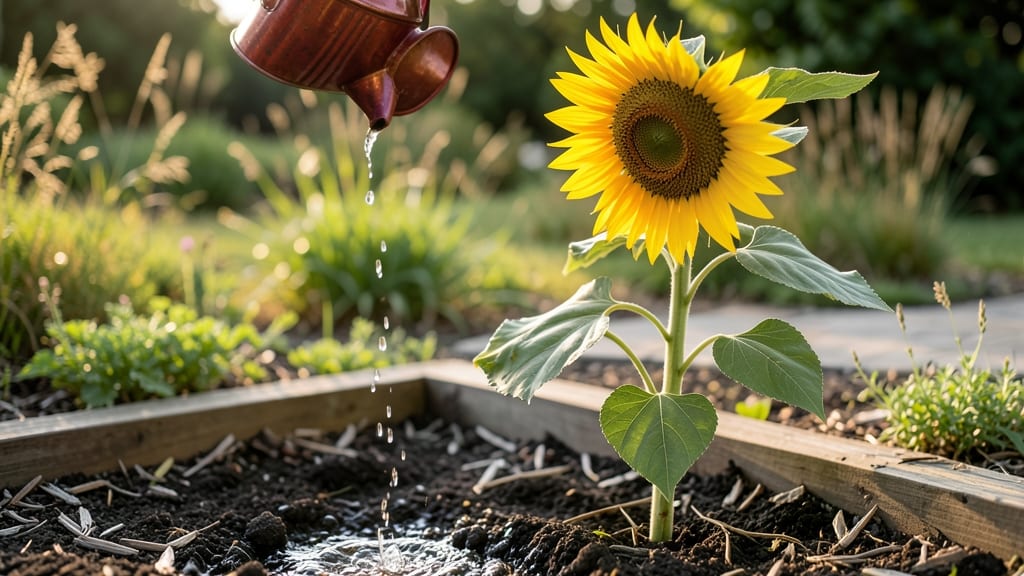
Do sunflowers need a lot of water? Surprisingly, the answer is no—their deep roots reach for moisture, so they thrive on deep soaks rather than frequent shallow drinks.
Picture this: your 🌻 sunflower seedlings wilt after a week of daily watering, then bounce back with a single deep drench. That’s the magic of their root systems at work, and it’s why most gardeners overwater by accident.
In USDA Zone 6a, where I’ve grown them for years, the key is timing and technique. Water early in the morning to prevent fungal issues, and let the top inch of soil dry out between waterings once they’re past the seedling stage.
Below, I’ll break down exactly how much water sunflowers need at each growth stage, how to spot overwatering, and why mulching can cut your watering needs in half during dry spells.
How much water sunflowers actually need (and when)
Sunflowers might look like they need gallons of water to support their towering stems, but their deep roots tell a different story. These plants are surprisingly drought-tolerant once established, thanks to their ability to tap into water reserves 3-4 feet underground.
However, their water needs change dramatically from seedling to full bloom, making a one-size-fits-all approach ineffective.
The key to watering sunflowers lies in understanding their growth stages and matching moisture levels accordingly. Seedlings require consistent dampness, while mature plants can thrive with infrequent deep waterings.
This stage-specific approach not only saves water but also prevents common problems like root rot and fungal diseases that plague overwatered sunflowers.
Let's break down the watering requirements by growth phase, including how sunflowers compare to other common garden plants like tomatoes and marigolds. This comparison will help you adjust your watering schedule based on what's growing in your garden.
| Growth Stage | Water Frequency | Depth | Comparison to Other Plants |
|---|---|---|---|
| Seedling (0-2 weeks) | Every 2-3 days | 1-2 inches | More frequent than tomatoes |
| Vegetative (2-6 weeks) | Every 3-5 days | 3-4 inches | Less than marigolds |
| Flowering (6-12 weeks) | Every 5-7 days | 6+ inches | Similar to zucchini |
| Mature (Post-bloom) | Every 7-10 days | 8+ inches | More drought-tolerant than basil |
During the seedling stage, sunflowers need consistent moisture to establish their root systems. Water lightly every 2-3 days, keeping the soil evenly moist but not soggy. This is when they're most vulnerable to drying out, so monitor soil moisture closely.
Think of this stage like a baby plant - it needs constant attention to grow strong.
As sunflowers enter the vegetative stage (2-6 weeks), you can gradually reduce watering frequency to every 3-5 days. This is when their roots begin developing depth, allowing them to access water from lower soil layers.
Aim for deep waterings that penetrate at least 3-4 inches into the soil, encouraging roots to grow downward rather than spreading shallowly.
The flowering stage (6-12 weeks) is when sunflowers become most drought-tolerant. At this point, watering every 5-7 days is typically sufficient, with each watering session providing 1-2 gallons per plant.
This deep watering approach mimics natural rainfall patterns and helps prevent the shallow root problems that lead to wilting during hot afternoons.
Once sunflowers have finished blooming, you can further reduce watering to every 7-10 days. Mature plants have developed extensive root systems that can access moisture from deep soil layers.
In fact, overwatering at this stage can be more harmful than underwatering, as it promotes fungal growth and weakens the plant's natural drought resistance.
One common misconception is that sunflowers need constant watering because of their size. However, their deep taproots can reach water sources that shallow-rooted plants can't access. This natural adaptation allows them to thrive with less frequent but deeper waterings compared to many other garden plants.
For container-grown sunflowers, the watering schedule shifts slightly due to limited root space. These plants typically need watering every 2-3 days throughout their growth cycle, with 1 gallon per plant per watering. The key difference is the container's smaller volume, which dries out faster than garden soil.
To maximize water efficiency, consider these watering best practices:
- Water in the early morning to reduce evaporation
- Use drip irrigation or soaker hoses for deep watering
- Apply 2-3 inches of mulch to retain moisture
- Avoid overhead watering to prevent fungal diseases
Remember that sunflowers are not thirsty plants despite their impressive stature. Their ability to store water in their stems allows them to withstand brief dry periods. The key is to water deeply and infrequently, encouraging strong root development that will support those towering blooms throughout the growing season.
5 Signs your sunflowers are overwatered (and how to fix it)
Overwatering is one of the most common mistakes gardeners make with sunflowers—even though they need moderate watering, too much moisture can suffocate their deep roots and lead to serious problems.
Sunflowers develop root rot quickly when soil stays soggy, which stunts growth and can even kill your plants before they reach their towering potential.
Most gardeners assume these sun-loving giants need constant hydration, but their deep taproots (up to 6 feet!) actually help them access moisture from lower soil layers. When you water too frequently, you create a waterlogged environment that blocks oxygen, inviting fungal diseases and bacterial infections.
⚠️ Myth Busted: Do Sunflowers Need a Lot of Water?
Sunflowers are drought-tolerant once established—their deep roots access moisture from lower soil layers. Overwatering is far riskier than underwatering! Aim for deep, infrequent watering (1-2 inches per week) rather than daily shallow drinks.
🌱 Pro Tip: Stick your finger 2 inches into the soil—if it's damp, wait before watering again.
Here are the 5 key signs your sunflowers are getting too much water, along with simple fixes to save your plants. Start by checking the soil moisture and adjusting your watering schedule immediately if you spot these red flags.
First, watch for yellowing leaves that start at the bottom of the plant. Unlike nutrient deficiencies (which cause yellowing between veins), overwatered sunflowers show uniform yellowing across entire leaves. This happens because roots can't absorb oxygen in waterlogged soil, causing nutrient uptake failure.
To fix it, reduce watering to every 5-7 days and improve drainage by mixing sand or perlite into heavy clay soil.
Another warning sign is mushy, black stems at the base of your sunflower. This is a clear indicator of root rot, a fungal disease that thrives in soggy conditions. If you see this, stop watering immediately and let the soil dry out completely.
For severely affected plants, remove them from the garden to prevent spreading the disease to healthy sunflowers.
Fungal infections like powdery mildew or downy mildew often appear as white or gray fuzzy patches on leaves when sunflowers receive too much moisture—especially if water sits on foliage.
Improve airflow by spacing plants 12-18 inches apart and water at the base of the plant (never overhead) to keep leaves dry. A baking soda spray (1 tsp baking soda + 1 quart water) can help treat mild cases.
Stunted growth is another silent killer of overwatered sunflowers. When roots suffocate, they can't absorb the water and nutrients needed for rapid vertical growth. If your sunflowers are growing less than 2 inches per week (their normal rate), cut back on watering and focus on well-draining soil.
Raised beds with a mix of compost and coarse sand work wonders for sunflowers.
Finally, pay attention to the smell of your soil. Healthy garden soil has a fresh, earthy aroma, while overwatered soil often emits a musty or sour odor. This happens when anaerobic bacteria thrive in waterlogged conditions.
To fix it, let the soil dry out between waterings and consider adding organic matter like compost to improve structure and drainage.