
Watering
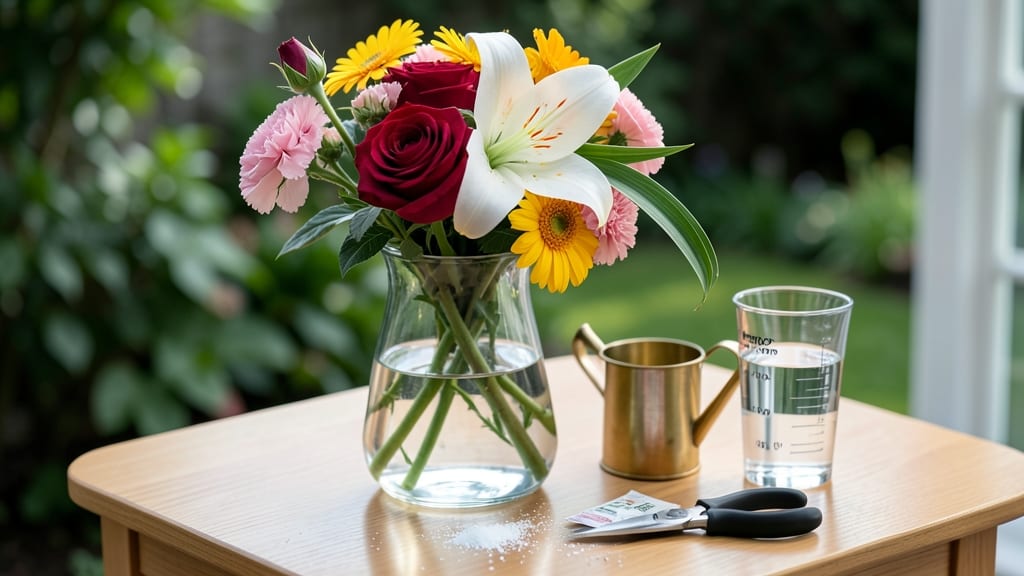
Flowers in a vase need about 1-2 cups of water every 2-3 days—but that’s just the starting point. Most people overwater or underwater without realizing it, which is why your bouquet wilts faster than it should.
Think about it: a single rose can drink a cup of water in a day, while delicate orchids barely sip. The key is matching the water to the bloom type, vase size, and even the season.
No guesswork needed—just a few simple rules to keep your 🌸 flowers fresh for days.
Below, I break down the exact watering schedule for popular blooms like roses, lilies, and sunflowers, plus the one trick that cuts wilting by half. Spoiler: it’s not about how much you add—it’s about how you prepare the water and stems first.
Ready to extend your vase life? You’ll also learn when to change the water (hint: it’s not weekly) and what to add—like a pinch of bleach or a drop of sugar—to keep stems hydrated longer.
Daily water refill rules for common cut flowers by type
Cut flowers are like thirsty guests—they need the right amount of water at the right time to stay vibrant. Overwatering causes mold, while underwatering leads to droopy petals. The key is a science-backed routine tailored to each bloom type.
For example, roses and lilies drink heavily, while orchids prefer less frequent sips. Let’s break down the exact rules to keep your bouquets fresh for days.
Most gardeners change vase water every 2-3 days, but flower type matters. Delicate blooms like peony or tulips wilt faster than sturdy sunflowers. Adding a flower food packet (or a pinch of sugar + bleach) can extend life by 3-5 days.
Always use room-temperature water and trim stems at a 45-degree angle before placing them in the vase.
Here’s the science: Flowers absorb water through their stems, but bacteria and algae clog vessels over time. Chlorine-free water (or rainwater) reduces bacteria growth. Avoid tap water left overnight—it becomes a breeding ground for mold. Now, let’s dive into the exact watering rules for your favorite blooms.
| Flower Type | Water Frequency | Water Amount | Special Notes |
|---|---|---|---|
| Roses | Daily (summer) / Every 2 days (winter) | 2-3 cups (500-750ml) | Trim stems every 2 days; add flower food |
| Lilies | Every 2-3 days | 1.5-2 cups (375-500ml) | Remove lower leaves; avoid direct sunlight |
| Orchids | Weekly (soak stems) | 1 cup (250ml) for 10 mins | Use room temp water; no additives |
| Sunflowers | Every 3-4 days | 3-4 cups (750-1000ml) | Large stems need deep water; recut stems |
| Tulips/Daffodils | Every 2 days | 1-1.5 cups (250-375ml) | Keep in cool spot; avoid sunlight |
| Peonies | Every 2 days | 1.5 cups (375ml) | Heavy blooms need support; change water often |
Roses are the thirstiest blooms on this list, needing daily water in summer heat. I’ve found that adding 1 tsp of sugar and 3 drops of bleach per quart of water keeps bacteria at bay. For sunflowers, their thick stems store water, so they last longer with less frequent changes—but always recut stems to encourage uptake.
Orchids are the outliers—they prefer weekly soaking rather than daily sips. Overwatering orchids causes root rot, so I recommend using a clear vase to monitor water levels. For lilies, remove lower leaves submerged in water to prevent bacterial growth. This simple step can add 2 extra days of freshness.
Season matters too. In summer, I water daily for roses and every other day for lilies. In winter, reduce to every 3-4 days since homes are drier. A humidifier nearby helps maintain moisture levels, especially for delicate blooms like carnations or alstroemeria.
Pro tip: Use a narrow-necked vase for tall stems like gladiolas to minimize water loss. Wide-mouthed vases work better for wildflower bouquets with varied stem lengths. Always place vases away from heat sources like radiators or direct sunlight, which speeds up evaporation.
If you’re unsure whether your flowers
5 Signs your flowers aren’t getting enough (or too much) water
Your cut flowers are like thirsty guests—they’ll show you exactly when they’re not happy. Wilting petals or mushy stems are classic red flags, but there are subtler clues too.
Learning to read these visual hydration signals can save your bouquet from an early demise. The key is acting fast before the damage becomes permanent.
First, check the water level in your vase. If it’s low for more than 24 hours, your flowers are already stressed. But don’t assume more water is always better—overwatering creates its own set of problems, like stem rot or moldy water.
The secret lies in balance, and your flowers will tell you when it’s off.
⚠️ Watering Warning: The Golden Rules for Vase Flowers
Change water every 2-3 days—stagnant water breeds bacteria that clogs stems. Use 1-2 cups of room-temperature water per 12 inches of stem height. Never let water sit below the flower heads—this causes rot. For longer vase life, add 1 tsp of bleach or flower food to each gallon of water.
Look for yellowing leaves or petals—this often means your flowers are overwatered or sitting in dirty water. The discoloration starts at the edges and works inward, signaling the plant is struggling to absorb nutrients.
Another clue? Stems that float instead of standing upright—they’re not getting enough water to stay hydrated.
Don’t ignore mold or slime in your vase. This bacterial growth is a clear sign your flowers are starving for fresh water. The slimy film blocks stems from drinking, causing them to wilt within hours.
If you see this, dump the old water immediately, scrub the vase with soap, and recut the stems at a 45-degree angle before replanting.
Even petal browning can indicate hydration issues. While some flowers naturally fade, premature browning often means they’re either underwatered or exposed to too much direct sunlight after being cut.
Move your vase to bright, indirect light and check the water level—this simple tweak can revive drooping blooms in as little as 6 hours.
Finally, pay attention to the speed of wilting. Flowers that droop within 24 hours of being cut are often severely dehydrated before you even bring them home.
To prevent this, trim stems immediately upon purchase and place them in lukewarm water with a commercial flower food packet—this can add 3-5 extra days of freshness.