
Plants
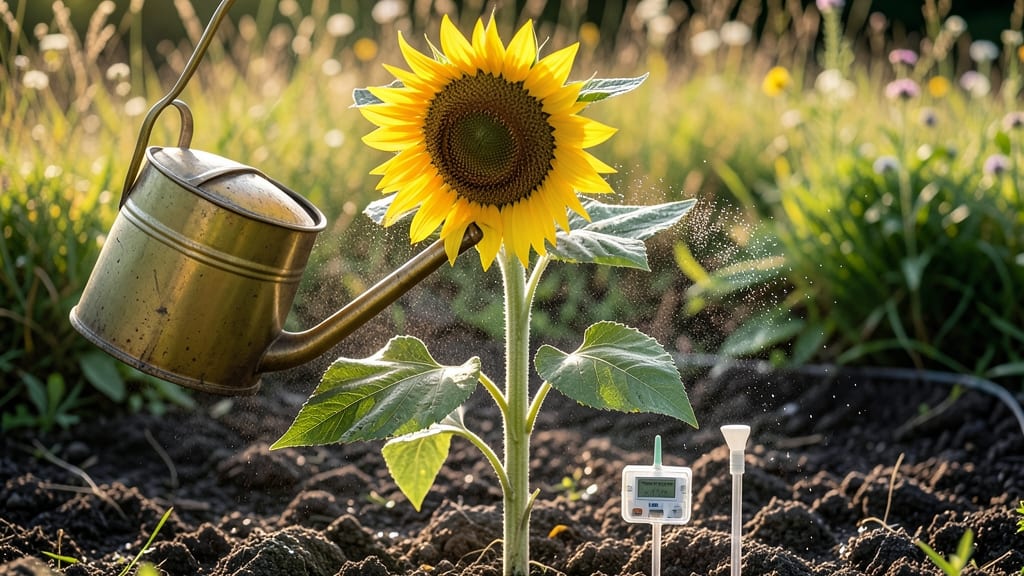
Sunflower plants need about 1-2 inches of water per week once established, but the real trick is how you deliver it—too little and they wilt, too much and roots drown.
Picture this: you’ve spent weeks nurturing your towering 🌻 sunflowers, only to watch them sag like overcooked noodles by midday. That’s the heartbreak of watering wrong, and it’s easier to avoid than you think.
Here’s the secret: deep, infrequent watering beats shallow sprinkles every day. We’ll break down exactly how much to give your sunflowers at each stage—from seedlings to full bloom—and how to adjust for summer heat or container growing.
By the end, you’ll know the exact schedule to keep your sunflowers thriving with minimal effort, plus how to spot when they’re thirsty (or drowning) before it’s too late.
Sunflower watering schedule by growth stage: from seed to bloom
Sunflowers are surprisingly low-maintenance when it comes to water, but their needs change dramatically from seedling to full bloom. Too much water can drown delicate roots, while too little stunts growth—especially during their rapid upward surge.
The key is understanding their three distinct growth phases and adjusting your watering routine accordingly. Whether you're growing dwarf varieties in containers or giant sunflowers in your backyard, this schedule keeps them thriving with minimal effort.
Newly sprouted sunflowers need consistent moisture to establish roots, but once they reach 3 feet tall, they develop impressive drought tolerance. In hot climates, I’ve seen sunflowers survive week-long dry spells with no permanent damage—though their blooms may wilt temporarily.
The trick is deep, infrequent watering that encourages strong root systems. Let’s break down exactly how much and when to water at each stage.
During the seedling stage (first 2 weeks), sunflowers are most vulnerable to drying out or overwatering. I recommend using a moisture meter or the "finger test"—stick your finger 1 inch into the soil. If it feels dry, water lightly.
At this stage, I water early in the morning to prevent fungal diseases like damping off, which can wipe out seedlings overnight. A clear plastic dome over containers also helps maintain humidity without overwatering.
Once sunflowers reach the vegetative stage (2-6 weeks), their water needs increase as they focus on leaf and stem growth. This is when you’ll see them shoot up 2-3 feet in just 2 weeks.
Here, I switch to deep watering—aiming the hose at the base of the plant rather than sprinkling from above. This encourages roots to grow deeper, making them more drought-resistant later.
In my Zone 7 garden, I’ve found that watering every 4-5 days during this phase prevents wilting while avoiding soggy soil.
When sunflowers enter the flowering stage (6-12 weeks), their water needs shift again. The plant is now prioritizing bloom development over leafy growth, and consistent moisture is critical for those iconic yellow faces. However, they can handle short dry spells without permanent damage.
I’ve seen sunflowers recover fully after a week without water, though their blooms may wilt slightly. The key is to water deeply but less frequently, ensuring the soil is moist 6-8 inches down. This is also when mulching becomes invaluable—it locks in moisture and keeps roots cool.
After blooming, sunflowers enter their established phase, where they become extremely drought-tolerant. At this point, I water only when the soil is completely dry—typically every 10-14 days in my climate. The plant’s thick
Signs of overwatering vs. underwatering in sunflowers: what to watch for
Sunflowers may love sunlight, but their roots are surprisingly sensitive to water balance. Overwatering or underwatering can both stunt growth, but the symptoms look completely different. Learning to read your plants' signals early prevents root rot or nutrient deficiencies that could kill your blooms before they open.
For young seedlings, yellowing leaves often signal overwatering, while older plants may show brown leaf edges or drooping stems when thirsty. The key difference? Overwatered sunflowers feel soggy at the base, while underwatered ones have dry, crispy soil around the roots.
Let's break down what to watch for at each growth stage.
💧 How Much Water Does a Sunflower Plant Need?
✅ Pros of Proper Watering
- 🌱 Strong root development
- 🌻 Vibrant blooms and taller stems
- 🛡️ Disease resistance (fungus prevention)
❌ Cons of Over/Under Watering
- 💀 Root rot from excess moisture
- 🍂 Leaf scorch from drought stress
- 🌡️ Stunted growth or wilting
📌 Ideal Watering Schedule
Seedlings: Keep soil moist daily (1-2 inches deep).
Vegetative: Water every 3-4 days (deep soak).
Flowering: Every 5-7 days (reduce frequency).
Mature: Weekly unless drought conditions.
When your sunflowers show yellow leaves with green veins, it's a classic sign of overwatering. This happens when roots suffocate in waterlogged soil, cutting off oxygen.
Check the soil—if it smells sour or feels mushy, you're overdoing it. Pull back immediately and let the top 2 inches dry out before watering again. For established plants, this often means skipping a watering day entirely.
Underwatered sunflowers, on the other hand, develop crispy leaf edges and drooping stems that don't bounce back when touched.
The soil near the roots will pull away from the pot or feel bone-dry. Deep watering is the fix here—aim the hose or watering can at the base until water runs out the drainage holes (for container plants) or seeps 6-8 inches into the ground.
Do this in the early morning to prevent fungal growth.
At the flowering stage, watch for buds that fail to open or drooping petals. Both can signal water stress, but the solution differs: Overwatered buds may stay closed due to root suffocation, while underwatered ones wilt from nutrient starvation.
Test soil moisture by sticking your finger 2 inches down—if it's damp, hold off. If dry, water deeply and mulch to retain moisture.
One trick I use is the "squeeze test" on stems: Gently press a leaf between your fingers. If it springs back, your plant's hydrated. If it stays crushed, it's thirsty. For container-grown sunflowers, weigh the pot—lift it daily to gauge moisture levels.
Heavier pots need less water, while lightweight ones signal it's time to hydrate. Adjust your schedule based on your climate zone and pot size.