
How To
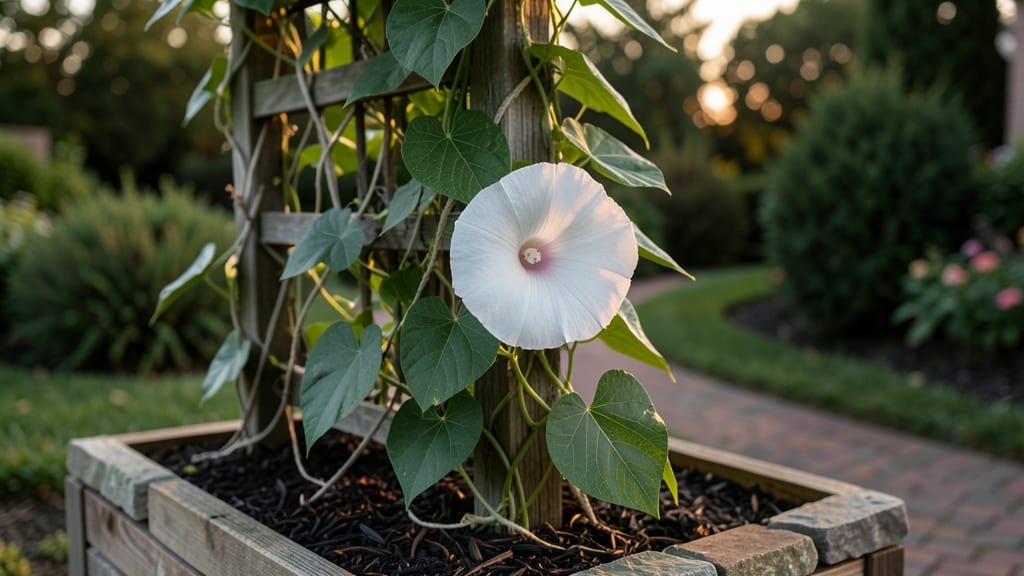
Moonflowers can grow up to 25 feet tall on a sturdy trellis, transforming your garden into a fragrant, moonlit haven 🌙—but their height depends on variety, support, and care.
If you’ve ever dreamed of a magical garden retreat where fragrant, moonlit blooms climb your trellis like nature’s own lanterns, moonflowers (Ipomoea alba) might be your perfect vine—but first, you need to know how tall they’ll soar before planning your space.
Without proper support, these fast-growing annuals (in most climates) can sprawl 10 to 15 feet across the ground, while trained vines reach their full 20- to 25-foot potential. The key? A strong trellis, consistent watering, and a sunny spot—plus a little pruning to guide their growth.
In this guide, I’ll break down exactly how tall your moonflower will grow based on its variety, how to control its height, and the simple care tips to keep it thriving—so you can enjoy those dreamy night-blooming flowers without the chaos.


Moonflower vine height by variety: growth expectations and space needs
Moonflowers (Ipomoea alba) are the stars of the night garden, with vines that can stretch skyward like celestial ladders. But how tall will your moonflower grow? The answer depends on the variety, your climate zone, and the support structure you provide.
Without proper guidance, these fast-growing vines can quickly overtake your trellis—or worse, sprawl uncontrollably across your patio. Let’s break down the height expectations for popular varieties and how to plan your space accordingly.
Most moonflower varieties are annuals in cooler climates but may return as perennials in USDA Zones 9-11. This means their growth habits shift dramatically depending on where you live.
In warmer regions, they can grow aggressively year after year, while in colder zones, they’ll treat your garden like a temporary summer guest. Either way, their vertical growth potential is what makes them so thrilling—and sometimes overwhelming.
Here’s the key question: Are you dreaming of a 10-foot vine that graces your balcony or a 25-foot giant that transforms your fence into a fragrant wall?
The choice depends on the variety and the care you provide. Let’s explore the height ranges and what they mean for your garden layout.
| Variety | Mature Height | Growth Habit | Trellis Needs | Sunlight Needs |
|---|---|---|---|---|
| Ipomoea alba ‘Moonlight’ | 10–15 ft | Fast-climbing annual | 6–10 ft tall trellis | Full sun (6+ hrs) |
| Ipomoea alba ‘Starlight’ | 12–18 ft | Aggressive climber | 10–15 ft tall trellis | Full sun (6+ hrs) |
| Ipomoea alba ‘White Dawn’ | 15–20 ft | Perennial in warm zones | 15–20 ft tall trellis | Full sun (6+ hrs) |
| Ipomoea alba ‘Purple Moon’ | 8–12 ft | Compact annual | 5–8 ft tall trellis | Full sun (6+ hrs) |
| Ipomoea nil ‘Heavenly Blue’ | 10–15 ft | Annual (day-blooming) | 6–10 ft tall trellis | Full sun (6+ hrs) |
The table above shows the mature heights for five popular moonflower varieties, but remember: these are guidelines, not hard rules. A vine given extra sunlight or rich soil can easily exceed expectations, while one struggling with poor drainage or limited support may stay shorter.
For example, my Ipomoea alba ‘Starlight’ reached 18 feet last summer when trained on a sturdy bamboo trellis, but a neighbor’s plant in partial shade only hit 10 feet.
Sunlight is the biggest factor in determining how tall your moonflower will grow. These vines thrive in full sun (6+ hours daily), but even an hour less can stunt their growth.
If your garden only gets partial sun, expect your moonflower to max out at 8–12 feet, regardless of the variety. In shadier spots, consider a dwarf variety like ‘Purple Moon’ or opt for a container garden with a smaller trellis.
Another critical factor is your trellis or support structure. Moonflowers are twining vines, meaning they spiral around supports as they grow. Without proper guidance, they’ll flop onto the ground or smother nearby plants.
A 10-foot trellis is perfect for ‘Moonlight’, but ‘White Dawn’ will need a 20-foot arbor or fence** to reach its full potential. If you’re short on vertical space, prune regularly to encourage horizontal growth instead of vertical.
In warmer climates (Zones 9–11), moonflowers may return year after year, giving them time to establish deeper roots and grow even taller. In these regions, I’ve seen ‘White Dawn’ vines reach 25 feet over three growing seasons!
However, in colder zones, treat them as annuals and plan for a one-season spectacle. If you’re in Zone 8 or below, start seeds indoors 6–8 weeks before the last frost to give them a head start.
Pro tip: If you’re worried about overcrowding, plant moonflowers near low-growing companions like marigolds or basil. These plants will thrive in the shade cast by the moonflower’s leaves while keeping weeds at bay.
Just avoid planting them near competing vines like morning glories or sweet peas, which will fight for the same nutrients and space.
How to control moonflower growth: pruning, training, and support tips
Moonflowers (Ipomoea alba) are fast-growing vines that can reach 15–25 feet without proper guidance, quickly overtaking trellises and fences. The key to managing their height lies in pruning, training, and support systems that encourage controlled vertical growth while preventing overcrowding.
Without intervention, these vines can become unruly, smothering nearby plants or collapsing under their own weight. I’ve found that combining regular pruning with strategic trellis training keeps them both manageable and stunning.
Start by choosing the right support structure—moonflowers thrive on tall trellises, arbors, or sturdy fences that can handle their weight. Wooden lattice panels or metal cages work well, but avoid flimsy materials that may bend.
I recommend installing supports at planting time so the vines have something to climb immediately. This prevents them from sprawling along the ground, which weakens stems and attracts pests. For compact spaces, consider smaller trellises or spiral training to guide growth upward in a controlled manner.
Here’s how to train your moonflower vines for optimal height control:
Set up trellises or cages as soon as seedlings emerge. Use tall, sturdy structures (8–10 feet minimum) to encourage upward growth.
Wrap vines around trellis every 6–12 inches using soft ties (avoid wire, which can damage stems). For spiral training, loop vines around a central pole to create a compact, twisting effect.
Trim excessive side shoots in early summer to redirect energy upward. Cut back overlong vines by 1/3 to prevent sprawling and encourage bushier growth.
Check vines weekly for overgrowth. If they exceed your desired height (e.g., 10–15 feet for a compact look), prune aggressively in late summer to stimulate new blooms before fall.
In late summer, add extra ties or stakes to prevent trellises from sagging under the weight of heavy blooms and seed pods. This keeps the structure stable and vines upright.
Pruning isn’t just about height control—it’s also about encouraging more flowers. When you remove overgrown sections, you stimulate the plant to produce new lateral shoots and blooms. I’ve noticed that moonflowers respond best to light pruning in spring and heavier cuts in late summer.
Avoid pruning too late in the season, as this can reduce fall blooms. For perennial climates (USDA Zones 9–11), prune back vines to 6–12 inches in winter to promote fresh growth in spring.
If your moonflowers are still outgrowing their space, consider container growing with a tall, narrow pot and a built-in trellis. This limits root spread and keeps vines contained. Just ensure the container has drainage holes and is at least 12 inches deep to accommodate the deep roots.
In my experience, container-grown moonflowers reach 8–12 feet with proper training, making them ideal for patios or small gardens.
With the right techniques, you can enjoy tall, fragrant moonflowers without the chaos. Combine early support, regular pruning, and strategic training, and you’ll have a vine that’s both manageable and breathtaking—perfect for transforming any garden into a moonlit sanctuary. 🌙✂️🪴