
Fertilization
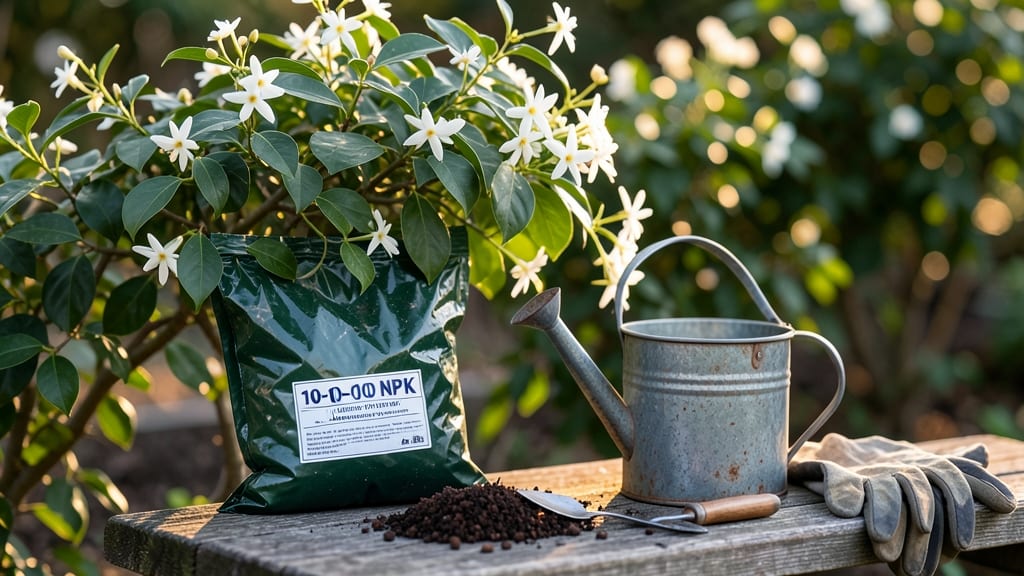
The right jasmine flower plant food can transform your vine from a leafy wall-hugger into a fragrant, blooming powerhouse 🌸 — but most gardeners overlook the NPK ratio that actually matters for those intoxicating blossoms.
Picture this: You’ve nurtured your jasmine all spring, only to stare at a wall of green with zero flowers by summer. The problem? Too much nitrogen pushes lush leaves, while phosphorus and potassium get ignored.
Without the right balance, your plant throws energy into foliage instead of blooms — and that’s a fragrance-free tragedy waiting to happen.
Here’s the game-changer: A 10-10-10 NPK ratio (or slightly higher phosphorus like 5-10-5) is the sweet spot for jasmine, but timing and application matter just as much.
We’ll break down exactly when to feed, how to spot nutrient deficiencies, and why organic options like compost tea can outperform synthetic fertilizers for long-term blooms.
Whether you’re a beginner struggling with sparse flowers or an experienced gardener fine-tuning your routine, this guide gives you the step-by-step schedule to turn your jasmine into a fragrant, blooming machine — without overdoing it.

Optimal NPK ratio for jasmine flowering: science-backed plant food guide
If your jasmine vine is producing lush green leaves but few fragrant blooms, your NPK ratio might be off. Jasmine plants thrive with a balanced fertilizer that supports both foliage growth and flower production.
The key lies in understanding how each nutrient—nitrogen (N), phosphorus (P), and potassium (K)—impacts your vine's performance at different stages.
For most jasmine varieties, a 10-10-10 NPK ratio is ideal during the flowering season. This balanced approach ensures your plant gets equal parts of all three nutrients without favoring leafy growth over blooms.
However, if you notice yellowing leaves or stunted growth, you may need to adjust the ratio or frequency of application.
Nitrogen (N) fuels leaf and stem growth, while phosphorus (P) is crucial for root development and flower formation. Potassium (K), often called the "bloom booster," helps the plant resist diseases and stress, ensuring those jasmine blossoms stay vibrant. The challenge is finding the right balance—too much nitrogen can lead to leafy vines with no flowers, while too little phosphorus can stunt bloom production.
| Growth Stage | Recommended NPK Ratio | Key Nutrient Focus | Fertilizer Type |
|---|---|---|---|
| Vegetative Growth (Spring) | 10-10-10 or 5-10-10 | Balanced N-P-K for root and leaf development | Synthetic or organic granular |
| Early Flowering (Late Spring) | 5-10-10 or 7-9-5 | Higher phosphorus for bloom initiation | Slow-release organic (e.g., bone meal) |
| Peak Blooming (Summer) | 5-10-5 or 3-6-6 | Phosphorus and potassium for flower strength | Liquid bloom booster |
| Post-Bloom (Fall) | 5-5-10 or 2-4-3 | Potassium for stress resistance | Low-nitrogen organic (e.g., compost) |
During the vegetative stage (early spring), a 10-10-10 ratio encourages strong root and leaf development. As your jasmine enters the flowering stage (late spring to summer), switch to a lower nitrogen formula like 5-10-5 to shift energy toward bloom production.
This adjustment prevents your plant from focusing solely on leafy growth at the expense of flowers.
Organic gardeners often prefer compost, fish emulsion, or worm castings for their slow-release nutrients. These options provide a steady supply of nitrogen and phosphorus without the risk of nutrient burn that synthetic fertilizers can cause.
For example, a 5-10-10 organic fertilizer like bone meal can boost phosphorus without overloading your soil with nitrogen.
Synthetic fertilizers, on the other hand, offer precise NPK ratios and faster results. A 10-10-10 granular fertilizer applied every 4-6 weeks during the growing season can keep your jasmine thriving. However, always follow the label instructions to avoid over-fertilization, which can damage roots and reduce blooms.
If your jasmine is container-grown, use a water-soluble fertilizer like 20-20-20 diluted to half strength every 2 weeks during the growing season. Containers dry out faster, so frequent feeding helps maintain nutrient levels. Always water your plant thoroughly after fertilizing to prevent root damage.
Watch for signs of nutrient deficiency or excess. Yellow leaves with green veins indicate a nitrogen deficiency, while dark green leaves with weak stems suggest too much nitrogen. Purple stems or slow growth may signal a phosphorus deficiency, while weak blooms or leaf edges turning brown could mean your plant needs more potassium.
For organic solutions, try a banana peel tea (rich in potassium) or crushed eggshells (calcium boost) to support blooming. Mix these into the soil or use as a foliar spray for a gentle nutrient top-up.
Always pair organic amendments with a well-draining soil mix to prevent nutrient runoff and ensure your
How to apply jasmine plant food: step-by-step feeding schedule for maximum blooms
Your jasmine vine craves the right nutrients to burst into fragrant blooms, but timing and technique matter just as much as the fertilizer itself. Overfeeding can burn roots, while underfeeding starves those delicate white flowers.
The key? A seasonal schedule that matches your plant's natural growth cycle—think spring awakening, summer blooming, and fall/winter rest.
Most gardeners make one critical mistake: fertilizing year-round. Jasmine plants enter dormancy in fall and winter, making spring and summer the only active feeding seasons.
We'll break down exactly when to feed, how much to use, and even DIY organic alternatives that'll have your neighbors sniffing the air for that signature jasmine scent. Let's get started with a foolproof feeding plan.
🌿 Step-by-Step Jasmine Feeding Schedule
- 1 Spring Awakening (March-May): Light feed with 5-10-10 NPK when new growth appears. Use ½ tsp per plant to stimulate root development without burning.
- 2 Summer Blooming (June-August): Feed every 4-6 weeks with 10-10-10 NPK. Apply 1 tbsp per plant during early morning hours to prevent leaf burn from afternoon sun.
- 3 DIY Organic Boost: Mix compost tea (1 part compost to 5 parts water) or crushed banana peels (potassium-rich) into water. Apply monthly during growing season as a foliar spray or soil drench.
- 4 Fall/Winter Rest (September-February): Skip all fertilizing. Let your jasmine conserve energy. Water sparingly (every 2-3 weeks) unless in containers, which dry out faster.
- 5 Signs of Over-Fertilization: Yellowing leaves, leaf curl, or white crust on soil. Flush soil with water to remove excess salts. Reduce feeding frequency by half for 2 months.
Pro tip: Always water your jasmine deeply before applying fertilizer. This prevents root burn and ensures nutrients reach the soil's lower layers where roots actively grow. Think of it like giving your vine a refreshing drink before its meal—hydration first, then nourishment.
For container-grown jasmine, halve the fertilizer amounts since roots have limited space to access nutrients. I've seen potted jasmine thrive with just ¼ tsp of 10-10-10 every 6 weeks during summer, proving that sometimes less is more. The key is consistency—regular light feedings work better than sporadic heavy doses.
Remember, your jasmine's fragrance comes from healthy roots and balanced growth. When you see those first buds forming in late spring, you'll know your feeding schedule is working.
And when your vine bursts into white blossoms that fill your garden with their intoxicating scent, every careful feeding will feel worth it. 🌸