
Pruning
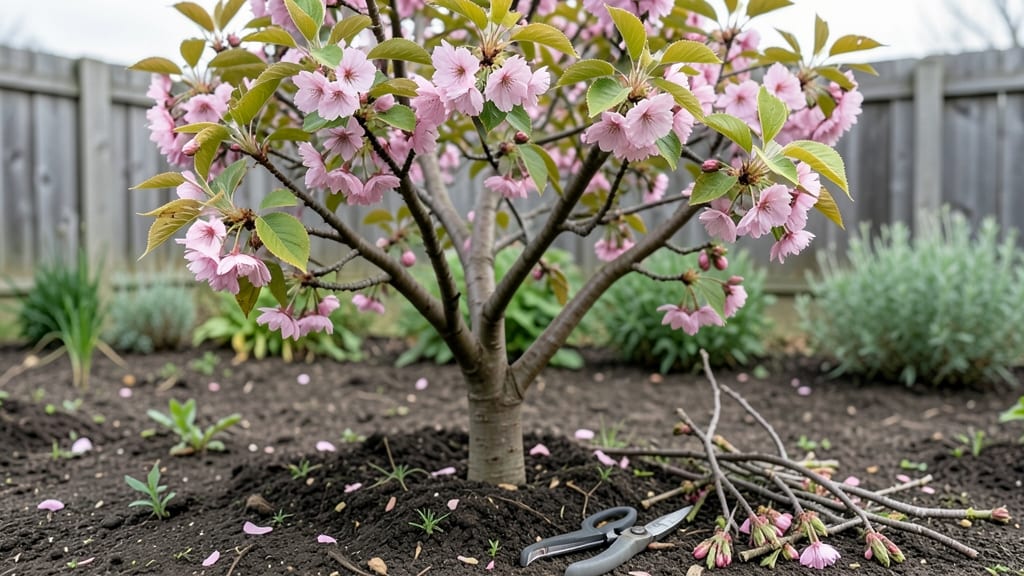
Pruning flowering cherry trees in late winter keeps those stunning spring blooms coming back bigger and brighter every year. I learned the hard way that cutting at the wrong time can leave you with a tree full of leaves but no flowers—so timing is everything.
The key is understanding when to shape, when to clean up, and how to encourage the tree to focus its energy on blooms rather than just foliage.
You’ll need just a few basic tools: sharp pruning shears for small branches, loppers for thicker stems, and a sturdy ladder if your tree is tall. The real trick is working when the tree is dormant, right after the ground thaws but before new buds swell.
This gives the tree time to heal before spring growth kicks in, and it prevents the risk of disease from open wounds.
What you’ll end up with is a tree that bursts into color every spring with vibrant, abundant blooms—not just a few scattered flowers. The branches stay strong and open, letting sunlight reach all the way to the center where new blossoms form.
Plus, you’ll avoid the common mistake of over-pruning, which weakens the tree and can lead to fewer flowers over time.
This approach works for both young trees you’re shaping and mature ones you’re maintaining. Whether you’ve got a single specimen or a whole row of flowering cherries, the same principles apply. Let’s get those shears ready and turn last year’s blooms into this year’s showstopper.
📚 In This Guide
- What you need
- Instructions
- Tips and common mistakes
- Wrapping up and next steps
What you need
- ● Bypass pruners: Sharp, high-quality pruners (e.g., Felco or Fiskars) for clean cuts on small branches (1/4" to 3/4" diameter).
- ● Loppers: For medium branches (1" to 2" diameter). Look for ratcheting or bypass-style for precision.
- ● Pruning saw: A curved-tooth saw for thick branches (2" and up).
- ● Extension pole: A 6–10 ft telescoping pole with a pruner attachment for high branches.
- ● Gloves: Heavy-duty, cut-resistant gloves (e.g., Mechanix or leather) to protect your hands.
- ● Disinfectant: Rubbing alcohol (70% isopropyl) or a pruning sealant (like Tanglefoot) to sterilize tools and prevent disease.
- ○ Pruning sealant: Optional but helpful for sealing large cuts (>1" diameter) to reduce sap loss.
- ● Tarp or drop cloth: To catch debris and protect your lawn.
- ● Ladder (if needed): A sturdy, extension ladder (rated for your tree’s height) with non-slip feet.
- ● Twine or zip ties: For temporarily securing branches during pruning.
- ● Timing: Prune after flowering (late spring/early summer) for flowering cherries, or in late winter/early spring for structural shaping.
- ● Weather: Choose a dry, overcast day to avoid stressing the tree.
- ● Safety gear: Safety glasses and long sleeves/pants to protect from sap and debris.
- ● Tree health check: Inspect for disease or pests before pruning—address issues first!
Instructions for pruning flowering cherry trees
Here’s how to keep your flowering cherry healthy and blooming beautifully every spring.
Prune Immediately After Flowering
Start your pruning right after the blooms fade in late spring. This timing ensures you don’t cut off next year’s flower buds, which form on old wood. I always wait until all petals have dropped completely—this is your signal that the tree has finished flowering for the season.
Focus on removing any dead, diseased, or crossing branches first. These are easy to spot—they’re either brown and brittle or rubbing against other branches. Use clean, sharp pruning shears to make smooth cuts just outside the branch collar, the swollen area where the branch meets the trunk. This prevents water from pooling and causing rot.
Thin Out the Canopy for Better Airflow
Next, thin the canopy by removing about 20-30% of the branches to improve airflow and sunlight penetration. Look for branches that grow inward or upward—these create dense areas where moisture lingers and diseases thrive. Aim to open up the center of the tree so light reaches all the way to the inner branches.
I like to step back every few cuts and visualize the tree’s shape. Flowering cherries naturally grow in a rounded form, so avoid heavy pruning on one side—this can throw off the balance. Remove the smallest branches first, as they’re easier to prune without disrupting the tree’s structure.
Lightly Shape the Tree in Early Summer
In early summer, do a light shaping pass to encourage new growth while keeping the tree’s natural form. This is the time to refine the outline by trimming back any overly long or leggy branches. Cut just above a bud or side branch to promote bushier growth.
Watch for water sprouts—those fast-growing, vertical shoots that pop up along the trunk or branches. These sap all the tree’s energy and should be pruned back to the point where they emerge. Use your fingers to feel for the slight swelling at the base of the sprout before making the cut—this ensures you’re cutting in the right place.
Clean Up and Monitor in Fall and Winter
In fall and winter, your main job is to remove any dead or diseased wood that appears. Also, keep an eye out for suckers—shoots growing from the base of the tree. These compete with the main structure for nutrients, so prune them back to ground level as soon as you spot them.
After pruning, clean up all the debris and sterilize your tools with rubbing alcohol to prevent the spread of disease. Store your pruners in a dry place until next season. During winter, avoid heavy pruning unless absolutely necessary—flowering cherries are dormant, and cutting back too much can stress the tree.
Tips & tricks for pruning flowering cherry trees
A few simple techniques will help you prune like a pro and keep your flowering cherry thriving for years to come.
Timing is Everything: The key to pruning flowering cherries is patience after the blooms fade. I can't stress enough how important it is to wait until every single petal has fallen before you start cutting. This ensures you don't accidentally remove next year's flower buds, which develop on old wood. If you're unsure, do a quick check every few days—when you can see the bare branches without any lingering petals, it's time to begin.
The 20-30% Rule: When thinning the canopy, aim to remove about 20-30% of the branches to maintain that perfect balance. I always step back every few cuts to visualize the tree's shape. Think of it like sculpting—you want to create an open, rounded form that lets sunlight reach all the way to the center. Removing the smallest branches first makes this easier without disrupting the tree's structure.
Cutting Technique Matters: Always make your cuts just outside the branch collar, that swollen area where the branch meets the trunk. This prevents water from pooling and causing rot. I like to use my fingers to feel for that slight swelling before making the cut—it's the perfect guide. And remember, sharp tools make clean cuts that heal faster, so invest in good pruning shears and keep them sharp.
Seasonal Maintenance: Don't forget about those water sprouts and suckers that pop up throughout the year. These fast-growing shoots steal energy from your tree, so prune them back as soon as you spot them. In winter, resist the urge to do heavy pruning—flowering cherries are dormant, and cutting back too much can stress the tree. A light cleanup of dead wood is all you need during these months.
Pro Tips for Pruning Flowering Cherry
- A few simple techniques will help you prune like a pro and keep your flowering cherry thriving for years to come.
- Timing is Everything: The key to pruning flowering cherries is patience after the blooms fade.
- The 20-30% Rule: When thinning the canopy, aim to remove about 20-30% of the branches to maintain that perfect balance.
Frequently asked questions
Got questions about pruning your flowering cherry? You’re not alone! Here are some of the most common queries—answered simply and clearly to help you keep your tree thriving.
When’s the best time to prune a flowering cherry?
The ideal time depends on your tree’s type: late winter to early spring (before buds swell) is best for most varieties. This timing encourages healthy growth and blooms. Exception: If your tree blooms on old wood (like ‘Kwanzan’), prune right after flowering to avoid cutting off next year’s blooms.
Can I prune a flowering cherry in summer?
What about fall?
Summer pruning is risky—it can stress the tree and invite disease. Avoid heavy cuts during warm months. Fall pruning is not recommended unless you’re removing dead wood (do it early in fall). Stick to minimal maintenance in summer and focus on winter/early spring for best results.
What if my flowering cherry has dead or diseased branches?
How do I fix it?
Dead branches? Prune them immediately—use clean, sharp shears to cut just above a healthy bud. For disease (like fungal spots), disinfect your tools with rubbing alcohol between cuts and remove heavily infected branches. If the issue persists, consult a local arborist. Pro tip: Sterilize tools with a 10% bleach solution (1 part bleach to 9 parts water) to prevent spread.
Do I need to prune my flowering cherry every year?
Not necessarily! Young trees benefit from annual light pruning to shape them, while mature trees often only need maintenance pruning every 2–3 years. Focus on removing crossing branches, dead wood, and suckers as needed. Over-pruning can reduce blooms, so less is usually more.
What if my flowering cherry doesn’t bloom after pruning?
No blooms? Check these common causes:
- Pruned too late—if you cut after buds formed, next year’s flowers may be lost.
- Over-pruning—removed too many branches? Reduce cuts next year.
- Improper sunlight—flowering cherries need 6+ hours of sun daily.
- Stress factors like drought or pests can delay blooms.
Wrapping up and next steps
Pruning your flowering cherry tree doesn’t have to be intimidating—it’s all about timing, technique, and a little patience! 🌸 By following the right steps, whether it’s light maintenance in summer or structured pruning in late winter, you’ll keep those stunning blooms coming back year after year.
Remember, the key is to shape with care and prioritize health over perfection.
Now that you’re armed with the know-how, grab those shears and give your tree some love! Start small—even a few strategic cuts can make a big difference. And if you’re still unsure? Check out our FAQs or consult a local arborist for a second opinion.
Happy pruning—your tree (and future blooms!) will thank you! 🌿