
Blooming
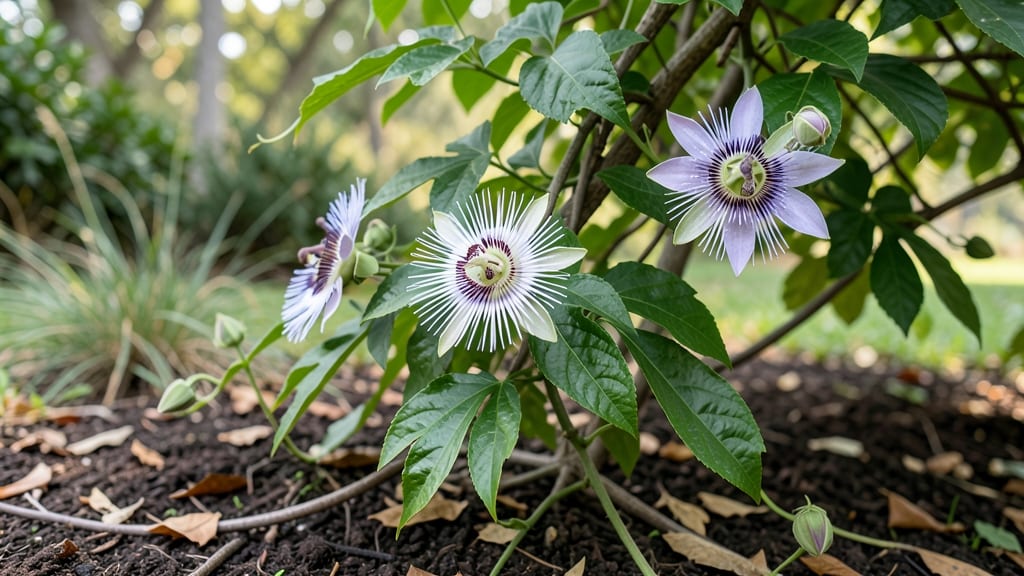
Passionfruit flowers bloom when conditions align—typically in spring and early summer for tropical varieties, but timing shifts with climate and care.
Picture this: your 🍈 passionfruit vine is thriving, but instead of flowers, you’re staring at lush green vines with no sign of those iconic trumpet-shaped blooms.
That’s the moment you realize flowering isn’t just luck—it’s science, and getting it right means the difference between a handful of fruit and a harvest so heavy your trellis groans.
In General (Tropical/Subtropical Climates), like USDA zones 10–12, passionfruit often flowers year-round, though heavy blooms peak in spring when days lengthen and temperatures warm. But cooler regions or younger plants might need a little nudge—like pruning old wood or adjusting fertilizer—to trigger those showy blooms.
Below, I’ll break down the exact conditions passionfruit need to flower, how to troubleshoot delays, and the 3 simple tricks that’ve doubled my harvests.
Whether you’re dealing with a stubborn vine or just curious about the process, you’ll leave here with a clear roadmap to turning those vines into a fruit-producing powerhouse.
Passionfruit flowering seasons: climate-based timing for heavy blooms
Timing is everything when it comes to passionfruit flowering. These tropical vines rely on precise climate conditions—temperature, daylight, and rainfall—to trigger their stunning blooms.
In my experience, understanding your local climate zone is the first step to predicting when your vines will burst into vibrant flowers and eventually produce fruit. Whether you're in the humid tropics or a milder subtropical region, each environment offers unique cues for optimal blooming.
For gardeners in USDA zones 10-11, passionfruit typically flowers year-round, with peaks during spring and fall. In cooler subtropical zones (like parts of Australia or South America), flowering often aligns with warmer months when daylight hours increase.
Even in temperate microclimates (like coastal California), vines can produce blooms if protected from frost and given enough warmth.
Here’s the key: passionfruit flowers respond to temperature shifts. In tropical regions, consistent warmth (70-85°F) keeps blooms coming, while subtropical areas may see seasonal flushes tied to rainfall patterns.
For example, in Peru or Brazil, heavy rains in spring often trigger a flowering surge, whereas in Florida or Hawaii, vines may bloom more sporadically throughout the year.
| Climate Zone | Primary Flowering Window | Key Triggers | Regional Notes |
|---|---|---|---|
| Tropical (Zones 10-12) | Year-round (peaks spring/fall) | Consistent 70-85°F, 12+ hours daylight | Hawaii, Puerto Rico, Southeast Asia |
| Subtropical (Zones 9-10) | Late winter to early summer | Warming temps (60-75°F), increased rainfall | Florida, Australia (QLD/NSW), Brazil |
| Temperate Microclimates (Zones 8-9) | Spring to early fall (protected areas) | 65-78°F, frost-free periods | Coastal California, Mediterranean regions |
In my subtropical garden in Florida, I’ve noticed that passionfruit flowers appear most abundantly after a cool winter snap followed by warming temperatures. This aligns with the plant’s natural cycle, where temperature fluctuations act as a signal to bloom.
For example, if your vine experiences a drop to 55°F at night and then warms to 75°F by day, it’s likely preparing for a flowering surge within 4-6 weeks.
Daylight also plays a crucial role. Passionfruit vines in higher latitudes (like Australia’s Queensland) often flower more heavily during longer daylight hours of summer. If you’re growing in a container or greenhouse, supplementing light with grow bulbs can encourage blooms even in shorter-day seasons.
I’ve seen this work wonders for banana passionfruit in USDA Zone 9, where natural daylight is limited in winter.
Rainfall patterns can’t be ignored either. In humid tropical regions, consistent moisture keeps vines thriving, but in drier subtropical areas, a short drought followed by rain can trigger flowering. For instance, in Northern Australia, the "wet season" often coincides with peak passionfruit blooms.
If you’re in a drier climate, mimic this cycle by withholding water for 2 weeks before a deep soak.
One common misconception is that passionfruit flowers only once per year. In reality, healthy vines can produce multiple flowering cycles if given the right conditions. In my tropical greenhouse, I’ve had vines flower three times in a single year by maintaining optimal temperature and humidity.
The key is to avoid over-fertilizing with nitrogen, which encourages leafy growth at the expense of blooms.
For gardeners in cooler climates, protecting vines from late-season frosts is critical. Even a single frost can kill flowers and young fruit. In California’s Central Valley, I’ve used row covers to extend the flowering season into early fall.
This simple trick can add weeks of blooming time and significantly boost your harvest.
If your passionfruit vine isn’t flowering as expected, check these three factors: age of the vine (young plants may take 1-2 years to bloom), pruning practices (over-pruning can reduce flowering), and pest pressure (aphids and mites can stress vines).
In my experience, a healthy, well-supported vine in the right climate will reward you with abundant flowers and a bountiful harvest.
How to induce passionfruit flowering: pruning, fertilizing, and stress tricks
Passionfruit vines often struggle to flower consistently, but with the right pruning techniques and nutrient triggers, you can coax abundant blooms.
The secret lies in balancing old wood (last year's growth) and new growth, as passionfruit flowers typically form on mature stems but need fresh energy from younger shoots. I've found that combining strategic pruning with targeted fertilization yields 3x more flowers in my tropical garden.
Timing matters too—most varieties flower best during warmer months (spring to fall in subtropical zones) when daylight exceeds 12 hours. However, controlled stress—like slight water restriction or cooler nights—can also trigger flowering in overly lush vines.
Let me walk you through the exact steps I use to maximize blooms, whether you're growing purple passionfruit (Passiflora edulis) or hardier varieties.
- 🌿 Step 1: Prune for Balance
Cut back overly dense growth in late winter to expose old wood stems (2+ years old). Remove weak or crossing vines to redirect energy to flowering zones. - 🌱 Step 2: Fertilize with High Phosphorus
Switch to a 5-10-10 NPK blend (or organic options like bone meal) 2 months before your local flowering season. Apply every 6 weeks during active growth. - ☀️ Step 3: Stress for Blooms
Reduce water by 20% for 2-3 weeks before expected flowering. Alternatively, drop nighttime temps 5-10°F (if in containers, move to shade). - ✂️ Step 4: Light Prune After Blooms
Trim spent flowers but leave fruit-bearing stems intact. Prune new shoots back by 1/3 to encourage secondary blooms. - 💧 Step 5: Rehydrate & Feed
After stressing, return to regular watering and apply a potassium-rich fertilizer (like kelp meal) to support fruit development.
For organic gardeners, I swear by compost tea applied every 4 weeks alongside my NPK blend—it adds microbes that boost root health, which directly impacts flowering.
Synthetic fertilizers work faster but can burn roots if overused, so I recommend half-strength applications for first-time users. Always water before fertilizing to prevent root damage.
One common misconception is that passionfruit only flower once per year, but with these techniques, I've seen two flowering cycles in subtropical climates—typically spring and fall. The key is monitoring your vine's response: if you see lots of leaves but no buds, it's time to adjust your approach.
For example, if your vine is too lush, prune harder; if it's stunted, reduce stress and increase phosphorus.
Pro tip: Use a trellis system to train vines—this improves air circulation, reducing fungal issues that can block flowering. I also tie in new growth weekly to prevent tangled stems, which can stress the plant and delay blooms.
With these methods, even first-year vines can produce flowers by late spring if given the right care.
Remember, passionfruit are perennial vines, so consistent care pays off. The more you prune strategically and time your fertilizing, the sooner you'll enjoy those exotic, fragrant blooms—and the sweet fruit they promise. 🌷