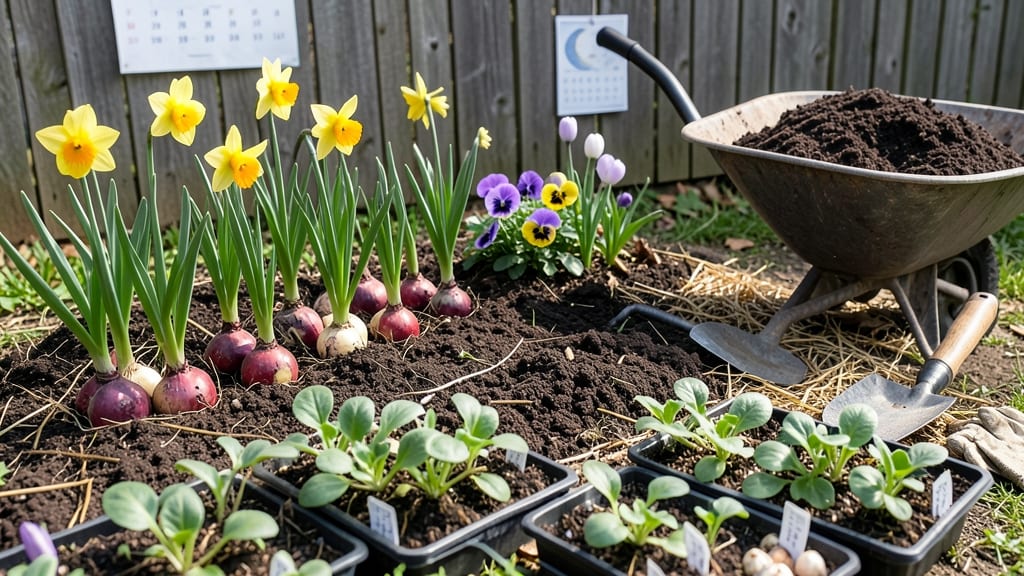
Planting flowers in New England at the right time means the difference between a garden bursting with color and one that barely makes it past the first frost. 🌸
Timing is everything—miss the window by even a few weeks, and you risk fragile seedlings turning into frost casualties. But here’s the good news: with a little regional know-how, you can extend your blooms from spring to fall, no matter where you are in zones 5a-6b.
This guide breaks down the exact frost-date triggers for your area, so you’ll know when to start seeds indoors, when to transplant perennials, and which annuals can handle a late spring chill.
We’ll also cover the top 5 flowers that thrive when planted "outside the box"—like bulbs that love fall planting or perennials that bounce back from a late start.
Ready to transform your garden into a year-round showstopper? Let’s dive into the month-by-month planting calendar that keeps your Flowers happy and blooming longer.
🌸
When to Plant Flowers
Jan
❄️
Feb
🌱
Mar
🌸
Apr
🌸
May
🌱
Jun
☀️
Jul
☀️
Aug
☀️
Sep
🍂
Oct
🍂
Nov
🍂
Dec
❄️
New England frost dates by region: critical planting windows for flowers
New England’s diverse climate means frost dates vary dramatically from coastal Maine to inland Vermont. For gardeners, these dates are the deciding factor between a garden that thrives and one that struggles.
Urban areas like Boston often warm up 1-2 weeks earlier than rural zones due to the heat island effect, while high-elevation spots in New Hampshire can delay spring by 3 weeks or more.
Understanding these regional differences ensures your annuals, perennials, and bulbs get planted at the perfect time.
I’ve broken down the last spring frost and first fall frost for each of New England’s 6 states, along with the ideal planting windows for popular flowers. Whether you’re growing hardy tulips or heat-loving zinnias, these timelines will help you avoid frost damage and maximize blooms.
Pro tip: Use a frost calendar from your local cooperative extension office for hyper-local adjustments.
Comparison Table: New England Frost Dates & Planting Windows
| Region |
Last Spring Frost (Avg.) |
First Fall Frost (Avg.) |
USDA Zone |
Best Time to Plant Annuals |
Best Time for Bulbs |
| Maine (Coastal) |
May 10 |
October 1 |
5a-6a |
May 15-June 15 |
Fall (Sep-Oct) or Spring (Apr) |
| Maine (Inland) |
May 1 |
September 25 |
4a-5a |
May 10-June 10 |
Fall (Sep-Oct) |
| New Hampshire (Coastal) |
May 5 |
September 30 |
5a-6a |
May 15-June 15 |
Fall (Sep-Oct) or Spring (Apr) |
| Vermont (Northern) |
May 15 |
September 20 |
4a-5a |
May 20-June 10 |
Fall (Sep) |
| Massachusetts (Boston) |
April 25 |
October 10 |
6a-7a |
May 1-June 15 |
Fall (Oct) or Spring (Apr) |
| Connecticut (Coastal) |
April 20 |
October 5 |
6a-7a |
April 25-June 10 |
Fall (Oct) or Spring (Apr) |
| Rhode Island |
April 15 |
October 15 |
6a-7a |
April 20-June 10 |
How to adjust planting dates for early bloomers vs. late-season flowers
New England’s unpredictable climate forces gardeners to think strategically about planting dates. Early bloomers like pansies and snapdragons can handle light frosts, while heat-loving zinnias and marigolds need warm soil to thrive.
The key is balancing risk vs. reward—planting too early risks frost damage, but waiting too long cuts your blooming season short.
For cold-hardy flowers, start seeds indoors 6-8 weeks before your last frost date (typically mid-April in most of New England). Heat-lovers, on the other hand, should wait until soil temps reach 60°F+, usually late May or June. This timing ensures roots establish before summer heat arrives.
📌 Numbered Highlights: Adjusting Planting Dates
- 🌱 Early Bloomers (Cold-Hardy): Plant pansies, snapdragons, and sweet peas 4-6 weeks before last frost. Use row covers for extra protection.
- ☀️ Heat-Lovers (Warm-Season): Wait until soil is 60°F+ (zinnias, marigolds, cosmos). Test with a soil thermometer for accuracy.
- 🔄 Succession Planting: Sow fast-growing annuals (e.g., cosmos, sunflowers) every 2-3 weeks for continuous blooms.
- ⏰ Late-Season Extenders: Plant mums and asters in early August for fall color. Use black plastic mulch to warm soil faster.
- ❄️ Risk vs. Reward: Pushing early plantings (e.g., calendulas in April) may yield earlier blooms but risks frost damage.
Succession planting is my secret weapon for a garden that never quits. By staggering plantings every 2-3 weeks, I ensure blooms from May through October. For example, sow cosmos seeds in early May, then again in June and July. Each batch will bloom sequentially, keeping your garden vibrant.
For late-season flowers, focus on heat-tolerant varieties like zinnias and marigolds. These thrive in summer’s heat and often rebloom after a light frost. Plant them in early August for fall color, and they’ll reward you with blooms until the first hard freeze.
Don’t forget to monitor microclimates—south-facing beds warm up faster than north-facing ones. Use this to your advantage by planting heat-lovers on the south side of your garden and cold-hardy flowers on the north side. This simple trick extends your planting windows by 1-2 weeks.
Pro tip: Keep a planting journal to track what works in your garden. Note which flowers thrive when planted early or late, and adjust future schedules accordingly. Over time, you’ll fine-tune your timing for a longer, more reliable blooming season.
★★★★★4.5(2 reviews)
|