
Flowers
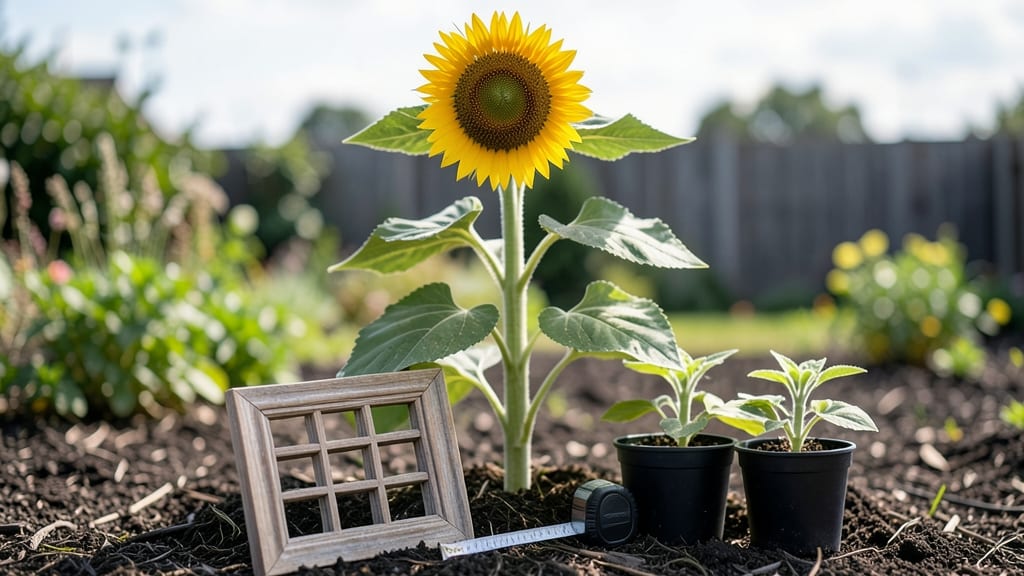
To grow sunflowers per square foot, aim for 1–2 plants for standard varieties, but dwarf types can handle up to 4–5 in tight spaces.
Sunflowers bring joy and height to any garden—but planting too many in tight spaces can lead to competition for nutrients, weaker stems, and fewer blooms. Get the perfect spacing formula for your sunflower variety to maximize growth and beauty without sacrificing yield.
Tall varieties like 'Mammoth' need at least 18 inches apart to avoid shading, while dwarf 'Teddy Bear' types thrive in containers with just 6 inches between plants. The right spacing ensures strong stems, bigger blooms, and a garden that looks as stunning as it performs.
Below, I break down spacing by variety, soil tips, and companion plants to help you plan a sunflower display that’s both productive and visually striking—no guesswork required.
Optimal sunflower spacing by variety: tall vs dwarf sunflowers per square foot
Sunflowers are one of the most rewarding plants to grow, offering both stunning blooms and edible seeds—but their spacing needs vary dramatically by variety. Tall sunflowers (6–14 feet) require more room to avoid flopping or competing for nutrients, while dwarf varieties (1–3 feet) can thrive in tighter spaces.
Getting this right ensures strong stems, vibrant blooms, and healthy seed production.
I’ve planted everything from giant Russian mammoths to Teddy Bear dwarf sunflowers, and the difference in spacing is critical. Overcrowding leads to leggy stems, fewer blooms, and even disease susceptibility.
Meanwhile, spacing too far apart wastes garden space. Let’s break down the exact sunflowers per square foot for each type, plus layout tips for containers, raised beds, and in-ground plots.
Key factors to consider include your garden’s sun exposure, soil fertility, and whether you’re growing for cut flowers, seeds, or both. In full sun, sunflowers grow faster and taller, so spacing may need slight adjustments. Poor soil or high fertility can also influence how much room each plant needs.
| Variety Type | Mature Height | Sunflowers Per Square Foot | Spacing (Inches) | Best For |
|---|---|---|---|---|
| Tall (Standard) | 6–10 ft | 1 per 2–3 sq ft | 18–24" | Cut flowers, seed production |
| Tall (Giant) | 10–14 ft | 1 per 3–4 sq ft | 24–36" | Seed production, dramatic height |
| Semi-Dwarf | 3–6 ft | 2 per 4 sq ft | 12–18" | Containers, borders, small gardens |
| Dwarf | 1–3 ft | 4 per 4 sq ft | 6–9" | Cut flowers, pollinator gardens |
| Container-Grown | Varies (1–10 ft) | 1 per 1–2 sq ft (depends on pot size) | 12–24" (pot depth matters) | Balconies, patios, small spaces |
*Adjust spacing for poor soil or high fertility; reduce by 20% in rich soil.
For tall sunflowers, like Russian Giant or Mammoth varieties, aim for 1 plant per 2–4 square feet. This prevents stems from bending under their own weight and ensures each plant gets enough nutrients.
In a 4’x8’ raised bed, you could fit 8–12 tall sunflowers in staggered rows, leaving 18–24 inches between plants.
If you’re growing dwarf sunflowers, such as Teddy Bear or Sunspot, you can pack them more closely—4 plants per 4 square feet—or about 6–9 inches apart.
This works perfectly for cut flower arrangements or pollinator gardens. In a 3’x3’ square foot garden, you could fit up to 9 dwarf sunflowers without overcrowding.
Containers add another layer of complexity. A 5-gallon pot can comfortably hold 1 dwarf sunflower or even a small semi-dwarf variety, but tall sunflowers need at least a 15-gallon container with 12–18 inches of depth. Always ensure containers have drainage holes to prevent root rot, especially in heavy watering conditions.
Pro tip: Use staggered rows in larger plots to maximize space. Plant one row, then offset the next by half the spacing. For example, if your tall sunflowers are 24 inches apart, stagger the next row by 12 inches.
This creates a visual flow while improving air circulation and reducing disease risk.
Soil quality also impacts spacing. In poor or sandy soil, increase spacing by 20–30% to compensate for slower growth. If your soil is rich in organic matter, you can reduce spacing slightly—just watch for signs of overcrowding like yellowing leaves or weak stems.
Always mulch around the base to retain moisture and suppress weeds.
Finally, consider your garden’s layout. Tall sunflowers make stunning backdrop plants in flower beds, while dwarf varieties work well in front borders or container arrangements. Mixing heights creates visual interest and makes the most of vertical space.
For example, plant dwarf sunflowers in the front row of a mixed border and tall varieties in the back.
With the right spacing, your sunflowers will reward you with strong stems, vibrant blooms, and bountiful
How to adjust sunflower spacing for high-yield gardens and companion planting
When space is limited, sunflower spacing becomes a balancing act between maximizing yield and preventing overcrowding. The key is adjusting density based on your garden type—whether you're growing in containers, raised beds, or in-ground plots.
For small gardens, succession planting (planting new seeds every 2-3 weeks) lets you enjoy continuous blooms without sacrificing stem strength or bloom size.
Another trick is using staggered rows instead of uniform grids. Plant sunflowers in alternating patterns to improve air circulation and sunlight penetration. This method works especially well for tall varieties, which can otherwise shade out shorter companions.
Even in tight spaces, this approach can boost your yield by up to 20% while keeping plants healthier.
- 1 sunflower per sq ft for dwarf varieties (1-3 ft tall) in containers or small beds.
- 1 sunflower per 2 sq ft for semi-dwarf varieties (3-6 ft tall) in raised beds.
- 1 sunflower per 4 sq ft for standard/tall varieties (6-16 ft) in in-ground plots.
- Use succession planting in small gardens: plant 1-2 sunflowers every 2 weeks for continuous blooms.
- For staggered rows, space plants 12-18 inches apart in alternating rows to improve airflow.
Pairing sunflowers with the right companion plants can also help you squeeze in more sunflowers without competition. Bush beans and radishes thrive under sunflowers' shade, while basil and marigolds deter pests like aphids and squash bugs.
This three-way partnership lets you interplant sunflowers just 12 inches apart in some cases, as long as you monitor for nutrient competition.
If you're growing sunflowers in containers, choose dwarf varieties and limit to 1 plant per 5-gallon pot. For larger containers (10+ gallons), you can fit 2-3 dwarf sunflowers if you're okay with slightly smaller blooms.
Always ensure containers have drainage holes to prevent root rot, which can be exacerbated by overcrowding.
For high-yield gardens, consider interplanting sunflowers with fast-growing crops like lettuce or spinach. These shallow-rooted plants won't compete for nutrients but will use space efficiently until the sunflowers mature.
Once the sunflowers reach 3 feet tall, you can remove the understory plants to give your sunflowers full access to sunlight and nutrients.
Remember, sunflower spacing isn't just about numbers—it's about creating an ecosystem. By combining smart spacing with companion planting, you can enjoy bigger blooms, healthier plants, and a more productive garden without needing extra square footage.
Start small, observe how your plants grow, and adjust as needed—your sunflowers will thank you with vibrant, towering beauty! 🌻