
Plants
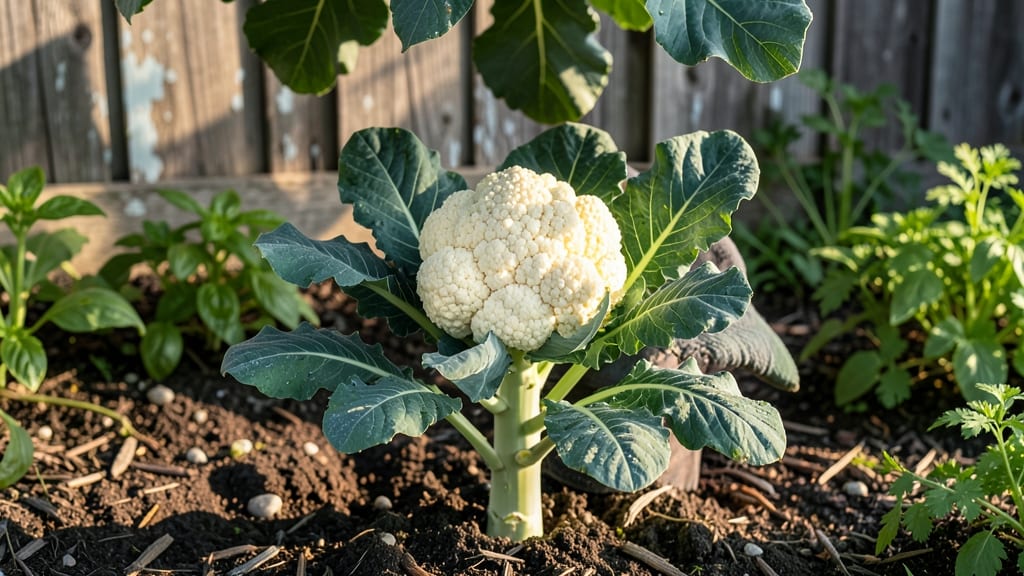
Cauliflower plants grow between 1 and 2.5 feet tall, but that range hides some surprising differences between varieties that can change how you plan your garden.
Picture this: a dwarf Snowball 🥬 hugging the soil like a compact shrub, while a Romanesco towers like a green skyscraper, demanding extra space and support. Those height differences aren’t just about aesthetics—they directly impact your harvest strategy, from spacing to staking.
Taller varieties like Purple of Sicily need room to breathe and might need staking to prevent them from toppling in wind or rain, while shorter types can be tucked into tight spots or even containers. Getting this right means fewer crowded plants and more heads ready to harvest.
Below, I break down the height ranges by variety, how to adjust your garden layout for each type, and the 5 key factors that can make your cauliflower grow taller—or shorter—than expected.


Cauliflower plant height by variety: compact vs. towering types
When planning your garden, knowing how tall cauliflower plants grow can make all the difference in maximizing space and yield. Some varieties stay low to the ground, perfect for containers or small plots, while others reach towering heights that require staking or dedicated space.
The height of your cauliflower plants isn’t just about aesthetics—it directly impacts how you arrange your garden, choose supports, and even select companion plants. For example, a 2-foot-tall variety needs completely different spacing than a 1-foot dwarf.
Let’s break down the key differences so you can plan like a pro.
Cauliflower varieties typically fall into three height categories: dwarf (1-1.5 feet), medium (1.5-2 feet), and tall (2-2.5 feet). Each category has unique growth habits that affect spacing, support needs, and even harvest timing.
For instance, Snowball cauliflower, a popular dwarf variety, stays compact and bushy, making it ideal for small gardens or containers. On the other hand, Romanesco cauliflower can grow tall and leggy, requiring more room and sometimes trellising to prevent flopping over.
Understanding these distinctions helps you avoid overcrowding or underutilizing your garden space.
Spacing is critical for cauliflower success. A tall variety like Purple of Sicily needs at least 24-36 inches between plants to avoid competition for nutrients and sunlight, while dwarf varieties like Miniature Snowball can thrive with just 12-18 inches of space.
Proper spacing also reduces disease risk by improving air circulation. If you’re growing in rows, taller varieties should face north to avoid shading shorter plants. For container gardening, stick to dwarf or semi-dwarf varieties to ensure they don’t outgrow their pots.
| Variety | Height Range | Spacing Needs | Growth Habit | Best For |
|---|---|---|---|---|
| Snowball | 12–18 inches | 12–18 inches apart | Compact, bushy | Containers, small gardens |
| Purple of Sicily | 20–24 inches | 24–36 inches apart | Tall, upright | Large gardens, trellises |
| Romanesco | 18–24 inches | 20–30 inches apart | Leggy, needs support | Vertical gardens, staking |
| Miniature Snowball | 10–14 inches | 12 inches apart | Dwarf, rounded | Containers, window boxes |
| Graffiti | 16–20 inches | 18–24 inches apart | Semi-dwarf, upright | Small gardens, raised beds |
One of the most striking examples of height variation is the Romanesco cauliflower, which often grows taller and more leggy than its white counterparts. This variety’s fractal-like heads are a gardener’s showstopper, but its height—often reaching 2 feet or more—means it needs extra care.
If you’re growing Romanesco in a windy area, consider staking or trellising to prevent the plants from toppling over. Even in ideal conditions, its height can make it prone to lodging (falling over), so providing support early can save your harvest.
For those with limited space, dwarf varieties like Miniature Snowball are a game-changer. These cauliflowers stay under 14 inches tall and are perfect for container gardening or even window boxes.
Their compact size also makes them easier to protect from pests like cabbage moths, which can be a challenge in larger plantings. If you’re growing cauliflower in pots, choose a dwarf variety and ensure your container is at least 12 inches deep to accommodate the roots.
Shallow pots can stunt growth and reduce yield.
Medium-height varieties, like Graffiti cauliflower, strike a balance between space efficiency and yield. These plants typically reach 16-20
How cauliflower height affects your garden layout and support needs
When planning your garden, cauliflower height plays a crucial role in determining spacing, support structures, and companion plant placement. Tall varieties like Purple of Sicily can reach 2.5 feet, while dwarf types like Snowball stay under 1.5 feet.
This height variation directly impacts how you arrange your garden beds and what you plant nearby.
Taller cauliflower varieties need extra space to avoid shading smaller plants, while compact types can be interplanted with herbs or lettuce. Understanding these differences helps prevent overcrowding and ensures each plant gets the sunlight and air circulation it needs for healthy growth.
Tall cauliflower varieties (2-2.5 ft) often require staking or trellising to prevent lodging (falling over) in windy conditions. Dwarf types (<1.5 ft) usually don’t need support but still benefit from proper spacing (18-24 inches apart) to avoid competition.
For tall varieties, consider using bamboo stakes or tomato cages inserted at planting. Place them on the windward side of your garden to catch breezes before they reach your plants. This simple support system can mean the difference between a healthy harvest and a toppled crop.
When arranging your garden layout, place taller cauliflowers along the north side of beds to avoid shading shorter plants. Pair them with low-growing companions like radishes or spinach, which thrive in partial shade. This vertical layering maximizes space while keeping all plants happy.
In windy areas, mulching heavily around the base of your plants adds stability. Use straw or wood chips to anchor roots and retain moisture. For container growing, choose dwarf varieties and place pots on elevated stands to improve air flow and reduce wind damage.
Remember that proper spacing is just as important as height considerations. Give all varieties at least 18 inches between plants and 30 inches between rows to ensure adequate airflow. This prevents disease and makes harvesting easier—no more bending over or reaching into crowded foliage!