
How To
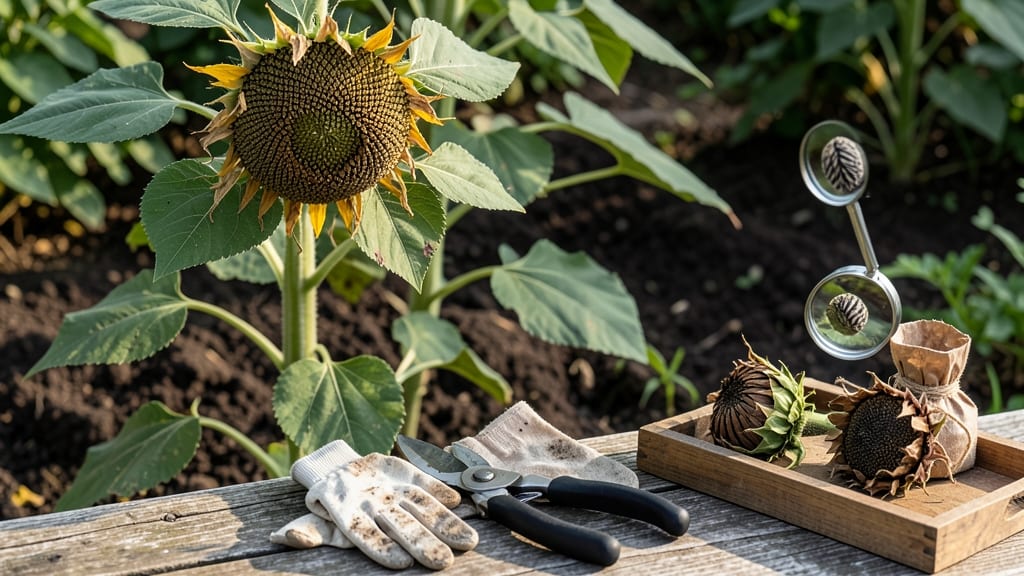
Knowing when sunflower seeds are ready to harvest means catching them at the perfect moment—when the back of the 🌻 head turns golden-brown and the seeds rattle like a tiny drum.
Miss that window, and you’ll either end up with underripe seeds that won’t store well or overripe ones that turn bitter. I’ve made that mistake more times than I’d like to admit, and trust me, the difference between a rich harvest and wasted effort comes down to timing.
This guide breaks down the two key signals—color shifts and the touch test—that tell you exactly when to harvest, plus how to adjust for your climate and intended use, whether you’re saving seeds for cooking or bird feed.
By the end, you’ll know the three foolproof signs of readiness, how to avoid common pitfalls, and even how to dry and store your seeds for long-term use.


Sunflower seed head color changes: the visual timeline from green to ready
Watching your sunflowers mature is like following a natural color palette—each shift in the seed head signals a critical stage of development. From vibrant green to golden-yellow, these changes don’t just look beautiful; they tell you exactly when to harvest for the best seed quality.
Missing these cues can mean the difference between storing seeds for months or watching them spoil within weeks.
Sunflowers progress through four distinct color stages, each with specific harvest implications. Understanding these stages helps you avoid common mistakes, like harvesting too early (underripe seeds) or too late (bitter, scattered seeds).
Regional climate and variety also play a role—dry, hot summers may speed up ripening, while cooler, wetter conditions can delay it.
🌱 Key Insight: The back of the seed head (not the petals) is your best indicator of maturity. Petals may drop early, but the center’s color transformation is what truly matters.
| Stage | Seed Head Color | Seed Maturity | Harvest Window | Notes |
|---|---|---|---|---|
| Early Bloom | Green petals, green center | Immature (not ready) | Avoid harvesting | Petals may drop in 2–3 weeks |
| Late Bloom | Brown petals, green center turning yellow | Developing (wait 1–2 weeks) | Not ideal, but edible if young | Center may feel spongy |
| Ripe (Primary) | Petals fallen, back turns golden-yellow | Fully mature (ideal harvest) | Within 1–3 days of full yellow | Back may split if left too long |
| Overripe | Back turns brown/dry, seeds rattle loudly | Past prime (bitter, poor storage) | Harvest only for birdseed | Seeds may scatter if head splits |
In the early bloom stage, your sunflower’s petals are fully open and vibrant, while the center remains a bright green. This is the immature stage, and harvesting here means you’ll end up with seeds that are too soft, won’t store well, and may even sprout prematurely.
Patience is key—this stage can last 2–4 weeks depending on your climate.
As the sunflower transitions to the late bloom stage, the petals begin to brown and drop, but the center stays greenish-yellow. This is where many gardeners make their first mistake: assuming the seeds are ready because the petals are gone.
However, the seeds inside are still developing and may not have reached full maturity. Wait an additional 1–2 weeks before checking again.
The ripe stage is your sweet spot for harvesting—when the back of the seed head turns a rich, golden-yellow and the petals have completely fallen off. This is the ideal harvest window, typically occurring 70–90 days after planting.
At this stage, the seeds are plump, firm, and ready for storage or immediate use. If you miss this window, the back may turn brown and the seeds could scatter.
Overripe sunflowers are easy to spot: the back turns a dull brown, and the seeds rattle loudly when shaken. While these seeds are technically harvestable, they’re best suited for birdseed rather than culinary or storage purposes.
Overripe seeds often have a bitter taste and may not store as long due to their dry, brittle texture.
Environmental factors like temperature and humidity can significantly alter ripening timelines. In hot, dry climates (like USDA Zone 9+), sunflowers may mature 2–3 weeks faster than in cooler regions. Conversely, wet or cloudy summers can delay ripening by 1–2 weeks, so always monitor your plants closely.
Pro tip: If you’re growing multiple sunflower varieties, note that dwarf varieties (like ‘Teddy Bear’) may ripen slightly earlier than standard varieties (like ‘Mammoth’).
Always check the back of the seed head individually, as some varieties can have asynchronous ripening—meaning not all seeds on a single head mature at the same time.
🌻 Regional Adjustments: In northern climates (Zones 3–6), extend your harvest window by 1–2 weeks due to cooler temperatures. In southern climates, watch for early bolting (premature seed head formation) if planted too early in the season.
The touch test: how to check sunflower seed maturity by hand
Sunflower seeds mature at different rates, and relying solely on color can trick you—especially in humid climates where seed heads may stay green longer. The touch test is my foolproof method to confirm readiness without guesswork.
By combining finger pressure and sound cues, you’ll know exactly when seeds are perfect for harvesting, whether you’re saving them for roasting, birdseed, or oil extraction.
Start by selecting a mature-looking head—one where the petals have fallen and the back has turned from green to golden-yellow or brown. Gently twist the seed head to detach it from the stem.
Now comes the critical step: press a seed between your thumb and forefinger. Ready seeds should feel firm but not hard, with just a slight give—like pressing a ripe peach.
Next, listen for the characteristic rattle when you shake the seed head. Mature seeds create a loud, hollow sound, similar to shaking a handful of marbles. If it sounds muffled or quiet, the seeds are still developing.
This acoustic test works even in low light or when color cues are ambiguous, making it my top backup method for overcast days.
⚠️ Common Mistake: Harvesting Too Early ⚠️
- Pressing seeds too lightly = underripe seeds (soft, greenish, won’t store).
- Ignoring the ‘rattle test’ (seeds should sound hollow when shaken).
- Assuming all sunflowers ripen at once—check multiple heads daily.
For culinary seeds, aim for the golden-yellow stage—this is when they’re sweetest and richest in flavor. If you’re harvesting for birdseed, wait until the back turns fully brown, as the seeds will be harder and last longer. Pro tip: Harvest on a dry morning after dew has evaporated to prevent mold during storage.
One mistake I see often is overlooking seed firmness in favor of color alone. A seed head might look brown but still contain soft, underdeveloped seeds if it didn’t get enough sunlight or water during the growing season.
Always double-check with the touch test—this simple step saves hours of post-harvest drying and prevents wasted effort.
If your seeds feel too soft or mushy, leave the head on the plant for another 3–5 days and retest. Conversely, if they’re rock-hard, they’ve passed their prime and may develop a bitter taste.
The perfect texture is the key to unlocking the best flavor and storage life for your sunflower seeds.