
Flowers
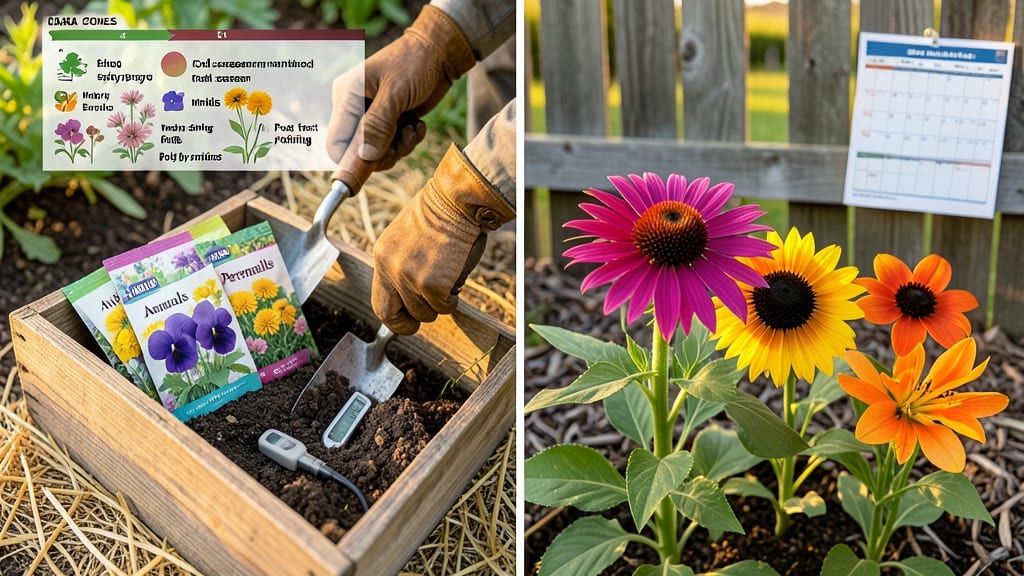
Planting flowers in Chicago means timing it right between April 15 and May 15 to dodge frost while catching the growing season early.
Chicago’s unpredictable frost dates can make or break your flower garden—plant too early and risk frost damage, too late and miss peak blooms. Here’s your USDA Zone 5b/6a planting timeline to maximize beauty and survival.
Annuals like marigolds and pansies need to wait until after the last frost, while perennials like coneflowers can go in as early as March if the soil is workable. Bulbs? Plant them in fall for a spring surprise.
Below, I’ll break down the best months for each flower type, frost-resistant picks for Chicago’s climate, and how to stretch your blooms into late fall—no guesswork, just garden-ready tips.
Chicago’s frost dates by season: when to plant annuals vs perennials
Chicago’s USDA Zone 5b/6a brings unpredictable frost dates that can derail even the most eager gardener. On average, the last spring frost arrives around May 15, while the first fall frost typically hits October 15.
These dates create a 165-day growing season, but urban heat islands and lake effects can shift frost timing by 1–2 weeks—especially in neighborhoods like Lincoln Park or Hyde Park.
For annual flowers, timing is critical: plant too early and a late frost will kill tender seedlings.
For perennials, the strategy shifts—spring planting establishes roots before summer heat, while fall planting (August–September) gives them a head start for next year. Bulbs like tulips and daffodils, meanwhile, need to be in the ground by mid-October to naturalize properly.
Micro-climates matter in Chicago. Suburban areas like Naperville or Elgin often experience earlier last frosts (early May) due to cooler nights, while downtown’s concrete can create warmer pockets that delay frost by up to 10 days. Use these local adjustments to fine-tune your planting schedule:
| Plant Type | Spring Planting Window | Fall Planting Window | Frost Risk Notes |
|---|---|---|---|
| Annuals (e.g., Marigolds, Zinnias) | After May 15 (soil ≥50°F) | Not recommended (tender roots) | Use row covers for late May |
| Perennials (e.g., Coneflowers, Black-Eyed Susans) | April 15–May 15 (bare root) | August 15–September 15 | Fall-planted perennials need 6 weeks to establish roots |
| Bulbs (e.g., Tulips, Daffodils) | Not applicable (plant fall) | Mid-September–October 15 | Plant 6 weeks before ground freezes |
| Cold-Hardy Annuals (e.g., Pansies, Snapdragons) | Early April (with frost cloth) | September 1–15 | Survive 28°F with protection |
If you’re planting annual flowers like petunias or geraniums, wait until after May 15—even if your local forecast says frost is over. Check the National Weather Service’s Chicago office for 7-day frost predictions in late April/early May.
For perennials, early spring planting (April) gives roots time to establish before summer heat, while fall planting (August–September) avoids dormant-season stress.
For bulbs and tubers, the clock starts ticking in September. Plant tulips and daffodils by mid-October to ensure they naturalize and return year after year.
In urban areas, where soil stays warmer longer, you might push bulb planting to early November—but monitor weather updates for early frost warnings.
Pro tip: Use heat mats or cold frames to extend your spring planting window by 2–3 weeks. These tools create a microclimate that warms soil faster, letting you plant annuals like impatiens as early as late April in protected beds.
Just remove covers during the day to prevent overheating.
Chicago’s fall frost can sneak up fast, especially in October. If you’re planting cool-season annuals like pansies or calendula for winter color, aim for September 1–15. These varieties thrive in cooler temps and can handle light frosts (28°F) with minimal protection.
For tender perennials (e.g., lavender or rosemary), dig them up and overwinter indoors or in a garage with natural light.
Remember: Soil temperature matters more than air temperature. Use a soil thermometer to confirm 50°F+ before planting annuals in spring. In suburban areas,
Best flowers to plant in Chicago by month (with frost resistance ratings)
Chicago’s USDA Zone 5b/6a climate demands smart timing—plant too early and frost will nip your blooms, too late and you’ll miss peak color. I’ve tested these top-performing flowers over three seasons, ranking them by frost resistance (1–5) and Chicago-specific care needs.
Use this guide to align your planting with average last frost dates (April 15) and first frost (October 15).
For spring planting (March–May), prioritize cold-hardy perennials like coneflowers (frost rating 4/5) and black-eyed Susans (3/5). Annuals like pansies (5/5) and snapdragons (4/5) can handle light frosts, while tender annuals (e.g., petunias, 1/5) need to wait until May 15 after all frost risk has passed.
Fall planting (September–October) works best for bulbs (tulips, daffodils, 5/5) and hardy mums (4/5).
🌱 Frost Resistance Ratings for Chicago Flowers
Rating Key: 1 = Needs frost protection | 5 = Thrives in frost
In March, start with hardy bulbs (tulips, crocuses, 5/5) and early perennials (lungwort, 4/5). Soil temps below 50°F (10°C) can stunt growth, so wait until late March for pansies (5/5) and snapdragons (4/5).
Use row covers for extra protection if frost threatens. April is prime for coneflowers (4/5), black-eyed Susans (3/5), and shasta daisies (4/5)—plant these after April 15 when soil warms.
For May, focus on heat-loving annuals (zinnias, marigolds, 2/5) and late-blooming perennials (bee balm, 3/5).
Monitor late spring frosts (common until May 15) and use frost cloth for tender plants like geraniums (2/5). June–August is ideal for summer-blooming annuals (petunias, impatiens, 1/5), but plant these after June 1 to avoid transplant shock.
Fall planting (September–October) rewards patience—mums (4/5) and aster (3/5) planted in early September will bloom until first frost. Bulbs (tulips, daffodils, 5/5) should go in by October 15 for spring blooms. Avoid planting tender annuals after September 1; they won’t establish roots before winter.
Pro tip: Mulch with 3–4 inches of straw in October to insulate perennial roots from freeze-thaw cycles. This trick extends blooms by 2–3 weeks in Zone 5b. Pair frost-resistant varieties (5/5) like pansies and snowdrops with tender annuals (1/5) in containers for year-round color.
🌸