
Flowers
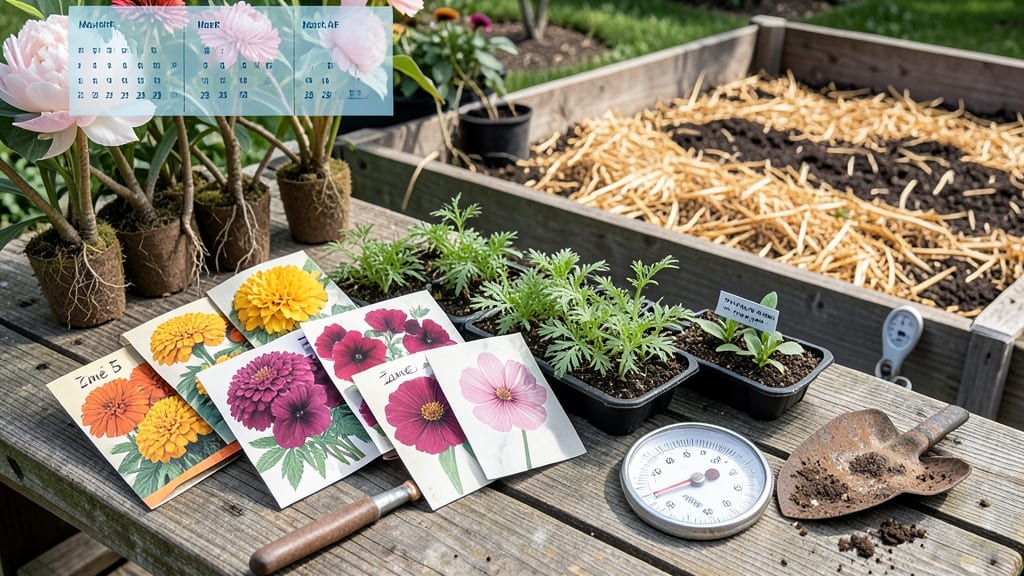
Planting flowers in Zone 5 at the right time means the difference between a garden bursting with color and one that barely makes it past the first frost.
The ideal window is narrow—too early and you risk losing tender plants to late frosts, too late and summer heat arrives before they even bloom.
Zone 5 gardeners face a short but sweet growing season—planting flowers at the wrong time can mean wilting dreams instead of blooming beauty. Timing is everything, and missing the frost-free window could cost you months of vibrant color.
In this guide, I’ll break down the exact months to plant annuals, perennials, and bulbs, including how to adjust for early or late frost years.
Whether you’re planting cool-season flowers in spring or warm-season blooms in fall, you’ll learn the best flowers for each season and how to extend your garden’s life with simple tricks.
From frost dates to soil prep and microclimate tips, you’ll have everything you need to turn your Zone 5 garden into a year-round showstopper—no guesswork required.

Zone 5 frost dates: exact months to plant flowers by type
Understanding Zone 5 frost dates is the key to unlocking a garden bursting with color. In this zone, the average last spring frost typically lands between April 20 and May 10, while the first fall frost usually arrives October 10–20.
These dates create a 165-day growing window—just enough time to coax vibrant blooms from seeds, bulbs, and transplants.
Your planting strategy depends on whether your flowers are cool-season hardy (like pansies or snapdragons) or warm-season lovers (like zinnias or marigolds). Cool-season beauties thrive when planted 4–6 weeks before the last frost, while warm-season stars need to wait until 2 weeks after to avoid frost damage.
Even a few degrees below freezing can turn tender foliage into a sad, mushy mess.
Here’s the exact breakdown of when to plant each flower type in Zone 5, including soil temperature thresholds and microclimate adjustments for northern vs. southern Zone 5 regions.
For northern Zone 5 (e.g., Minneapolis, Buffalo), aim for late April to early May for warm-season plants, as frosts linger longer. In southern Zone 5 (e.g., Nashville, Richmond), you can push planting to mid-May safely.
Always check your local USDA Plant Hardiness Zone Map for precise adjustments—even a few miles can shift frost dates by a week.
Pro tip: Use row covers or cold frames to extend your planting window by 2–4 weeks in spring or fall. I’ve successfully grown tender zinnias in May by covering them until soil temperatures stabilize. Just remember to remove covers during the day to prevent overheating.
Bulbs are the exception to the rule—most need cold stratification to bloom. Plant spring-blooming bulbs like tulips in fall (September–October), while summer-blooming bulbs like dahlias go in spring after last frost.
The key is getting them in the ground before the first hard frost, which can kill tender shoots.
If you’re unsure about your local frost dates, sign up for free frost alerts from your local Cooperative Extension Service. I rely on mine to time my marigold transplants
For container gardening, warm up soil faster by placing pots in sunny, sheltered spots and using black plastic mulch. I’ve had petunias blooming by June 1 in containers, while in-ground plants lagged until mid-June. Containers also let you move tender plants indoors before the first frost. Finally, keep a gardening journal
Best flowers to plant in Zone 5 by season (with planting windows)
Zone 5's short but vibrant growing season means choosing the right flowers—and planting them at the perfect time—is key to a showstopping garden.
Unlike warmer zones, we only get about 165 frost-free days, so timing your plantings to match each flower's temperature preferences will determine whether you get weeks or months of blooms.
From cool-season beauties that thrive in spring to heat-loving annuals for summer and fall-blooming perennials that brave early frosts, here's my curated list of top performers for each planting window in Zone 5.
I've included exact planting months, soil needs, and bloom guarantees so you can plan with confidence.
- Early Spring (March–April) – Plant cool-season annuals like pansies and snapdragons as soon as soil is workable. These tolerate light frosts and bloom by May.
- Late Spring (May) – After last frost (mid-May), sow warm-season favorites like zinnias and marigolds. Wait until soil reaches 60°F for best germination.
- Summer (June–July) – Transplant heat-tolerant perennials like black-eyed Susans or coneflowers. These thrive in Zone 5's hot summers and rebloom until frost.
- Fall (August–September) – Plant bulbs for spring blooms (tulips, daffodils) and fall-blooming asters. Aim for 6–8 weeks before first frost (mid-October) for root establishment.
- Soil Prep Tip: Amend clay-heavy soils with compost in spring. For sandy soils, mix in peat moss to retain moisture for summer plantings.
For spring plantings, focus on cool-hardy annuals like sweet alyssum (Zone 5–10) and lobelia, which handle light frosts and bloom nonstop from May until heat sets in. I always plant these in well-draining soil with a balanced 10-10-10 fertilizer to kickstart growth.
Summer is all about long-blooming perennials that handle Zone 5's humidity and heat. My top picks are Russian sage (drought-tolerant) and bee balm, which attract pollinators and rebloom until first frost. Mulch heavily to retain moisture—these plants hate soggy roots.
Don't overlook fall plantings! Mums (Zone 3–9) and coral bells thrive when planted in late summer and deliver months of color before winter. I always add a slow-release fertilizer at planting to fuel their early-season growth.
Pro tip: Use row covers to extend spring plantings by 2–3 weeks for tender annuals like petunias. Remove covers during the day to prevent overheating—your plants will thank you with bigger blooms!